
 AI · AI-generated
Smart irrigation
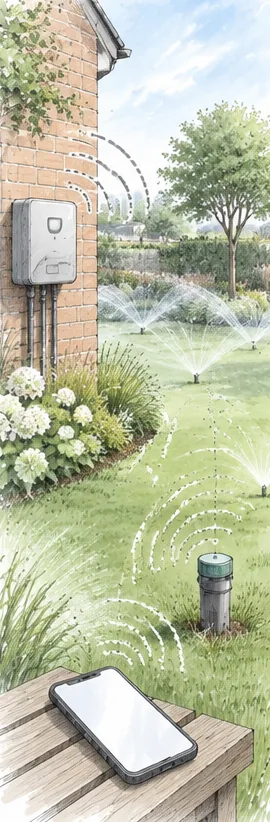
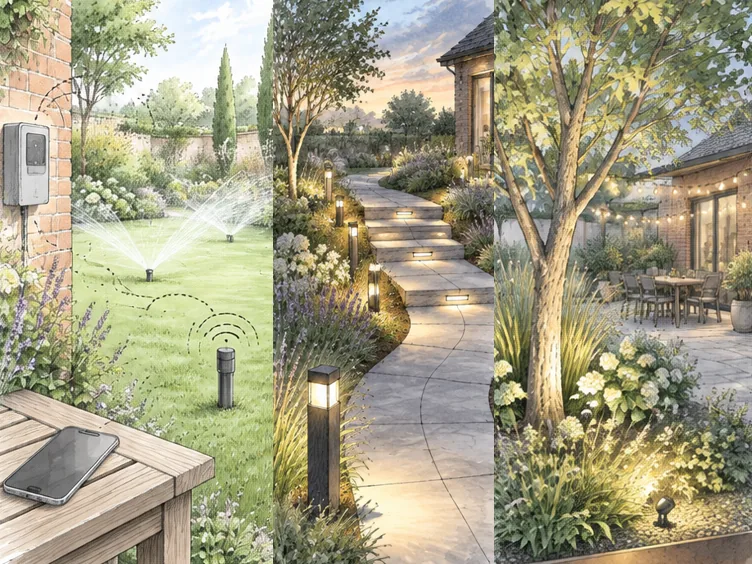
Pop-up sprinklers and drip lines with a controller, rain sensor and soil moisture sensor. The system waters in the early morning and only when the garden needs water.
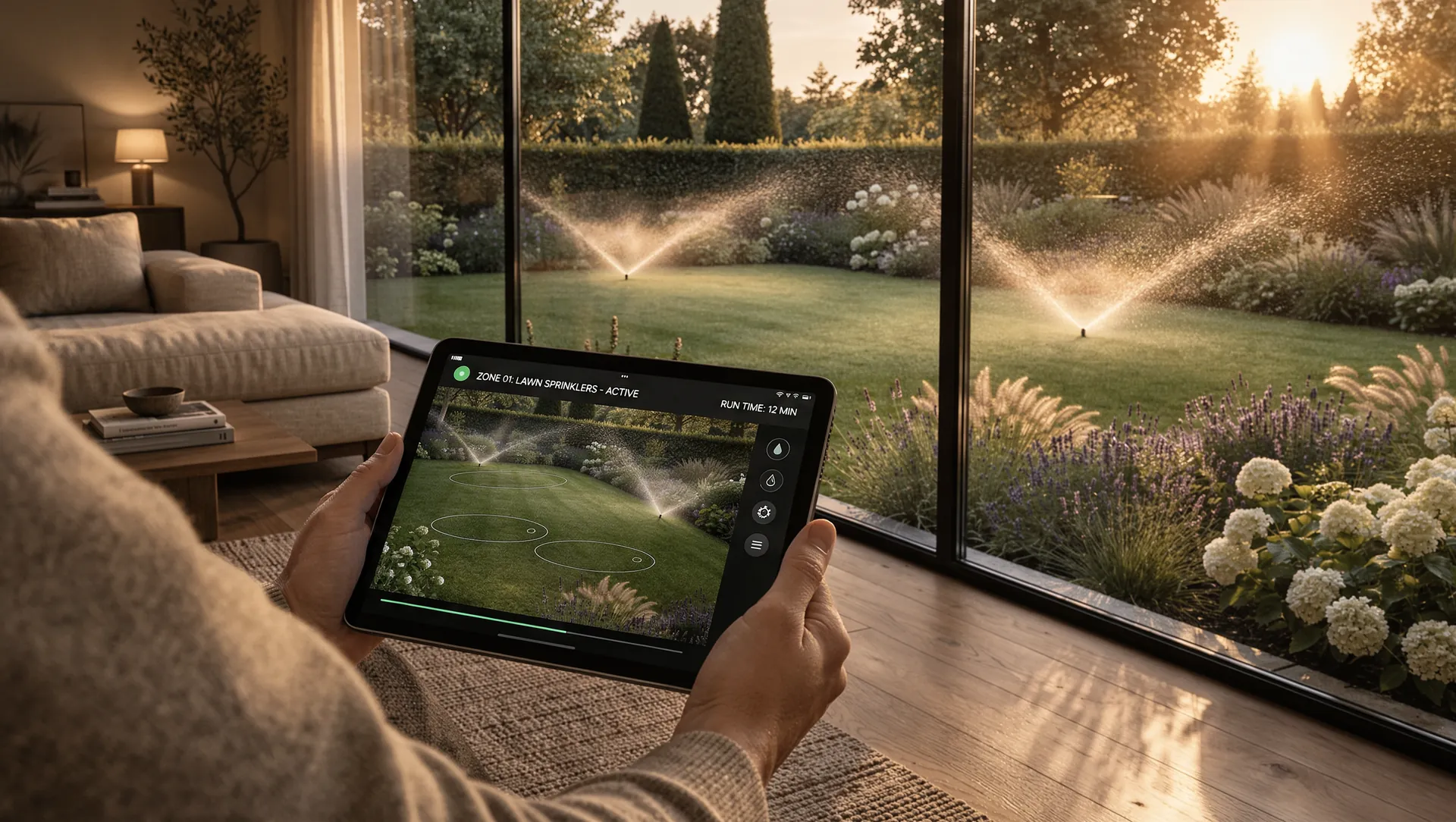
Irrigation, garden lighting and robotic mowers that run by app, schedule or sensor. We plan the technology together with the garden and lay pipes, cables and conduits before the lawn and paving go in.
Smart does not mean complicated. The idea is simple: routine jobs take care of themselves. The garden is watered when the soil is dry, the lights come on when it gets dark, and the lawn is mown regularly.
You stay in control. The app shows you what is happening in the garden and lets you adjust times or start the irrigation while you are out. If you like, you can link the garden to the smart home system in your house.
It saves time and water. Sensor-controlled irrigation waters only when it is needed and pauses when it rains. Lights are on only when you need them.
As a landscaping firm, we look after what lies in the ground: pipes, cables, valves, sprinklers, lights and conduits, carefully planned and laid to last.
Ten days on the Baltic coast, and the forecast for Hamburg says 32 degrees. That used to mean asking a neighbour to do the rounds with the watering can each evening and hoping they remembered. Today a glance at your phone is enough. The app shows that the irrigation ran early this morning, the soil moisture sensor in the perennial bed is happy, and the path lights came on at sunset. If you want, one tap extends the watering time for the lawn.
That is how unremarkable a smart garden is in everyday life. It is not about gadgets, it is about peace of mind: the garden looks after itself and you still know what is going on. For that to work, though, it takes more than a few devices from the DIY store. It takes a plan that considers the technology, the garden and the construction sequence together.
For the technology to run reliably, these three levels have to fit together.
 AI · AI-generated
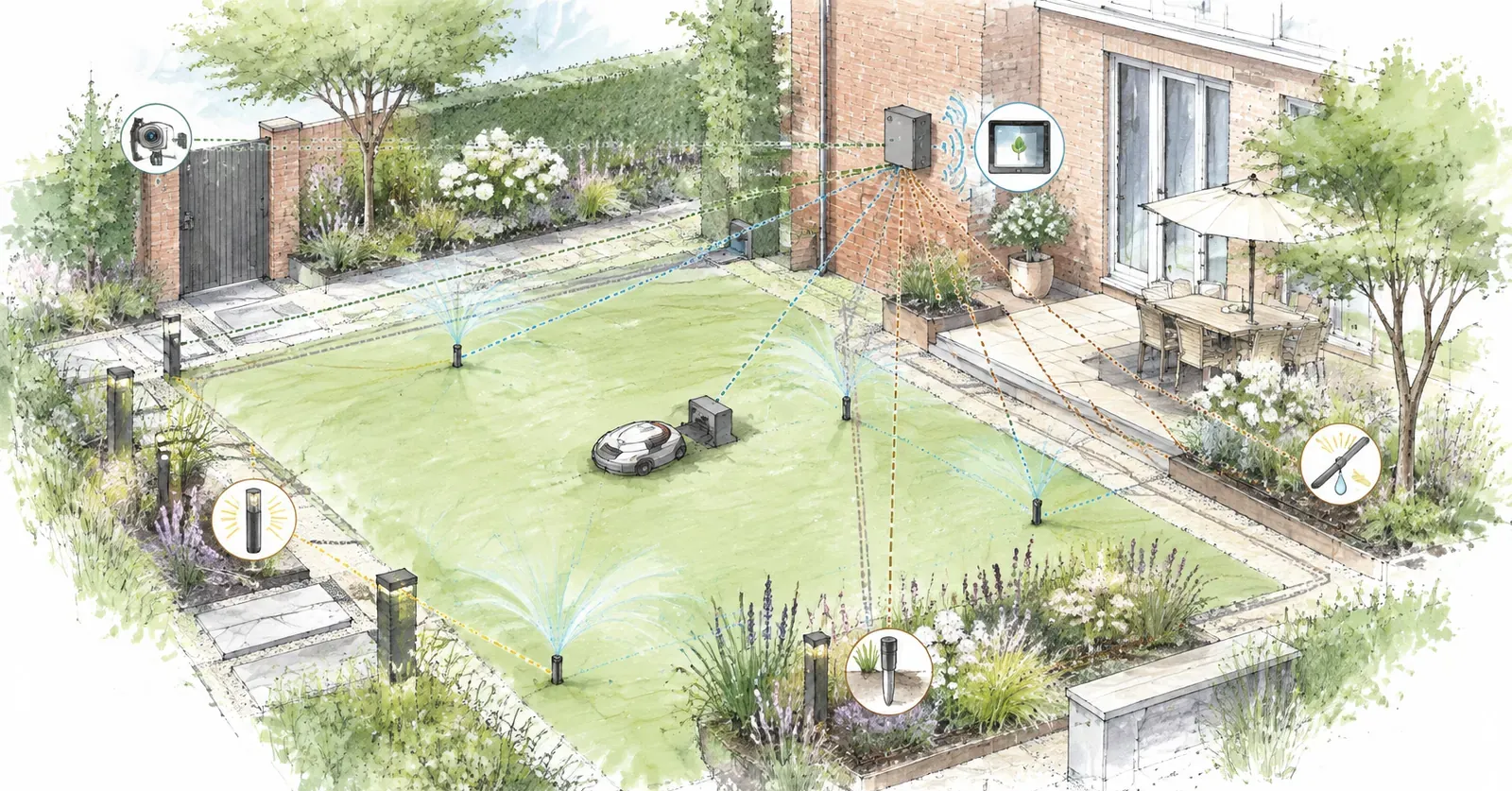
The controller with its app sits at the centre. It switches pop-up sprinklers and drip lines, path lights and spotlights, reads soil moisture and rain sensors, and talks to the robotic mower, gate and camera. The cables for all this run through conduits in the ground, where they are protected.
Water pipes, power cables and conduits are laid at a frost-free depth and properly recorded, ideally before any paving or lawn goes down.
Valves, sprinklers, drip lines, lights, soil moisture and rain sensors, plus the robotic mower with its boundary wire or navigation system.
A controller or hub connects everything. What matters is a stable wireless or Wi-Fi connection that reaches right into the garden.
The most common cause of trouble with smart garden technology is surprisingly simple: no signal. In Hamburg's long terraced-house gardens and on large plots outside the city, the Wi-Fi from the house often does not reach the far end of the garden. So we check coverage in advance and, where needed, plan a weatherproof outdoor access point or a mesh system.
Work on 230-volt cables in the garden is a job for a qualified electrician. We lay cables and conduits and coordinate the connection with the electrician.
AI · AI-generatedPop-up sprinklers and drip lines with a controller, rain sensor and soil moisture sensor. The system waters in the early morning and only when the garden needs water.
 AI · AI-generated
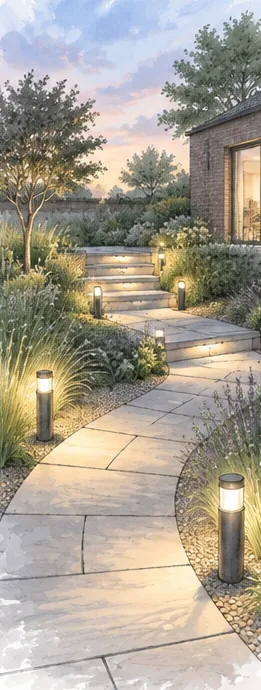
Bollard lights and recessed spotlights make paths and steps safe. With a dusk sensor or motion detector, the light comes on only when it is needed.
 AI · AI-generated
Trees, walls and the patio shown in their best light, with warm white light, lighting scenes and dimmable fittings, all controlled from the app.
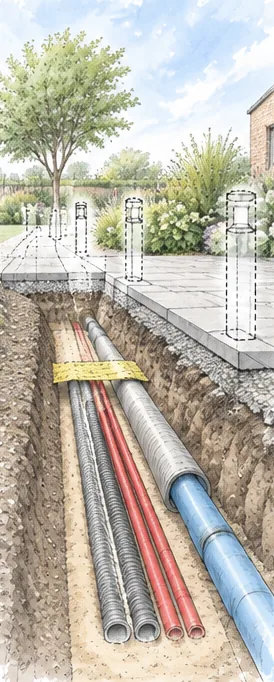 AI · AI-generated
The invisible foundation: we lay cables, water pipes and conduits so that you can add to the system later without digging.
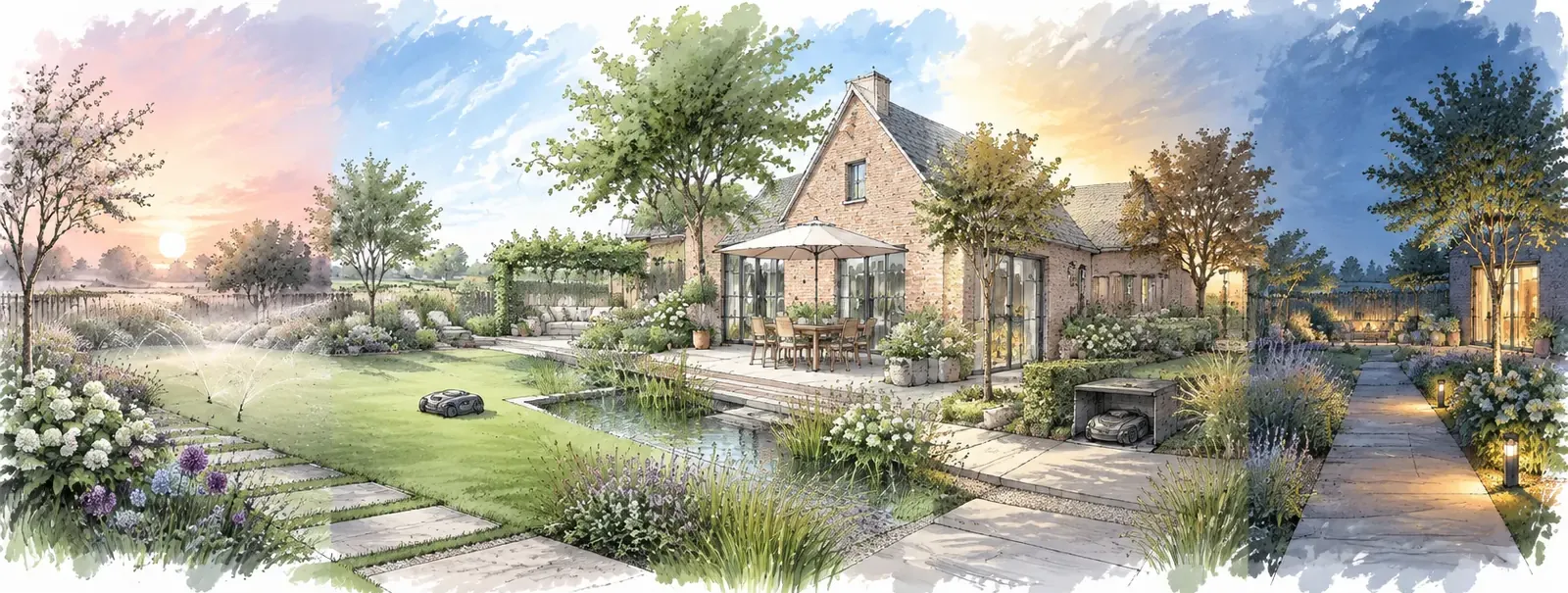 AI · AI-generated
Every device is linked to one controller that switches it by schedule. The irrigation runs early in the morning and skips a cycle when it rains, the robotic mower mows during the day outside quiet hours, and the path lights come on at dusk.
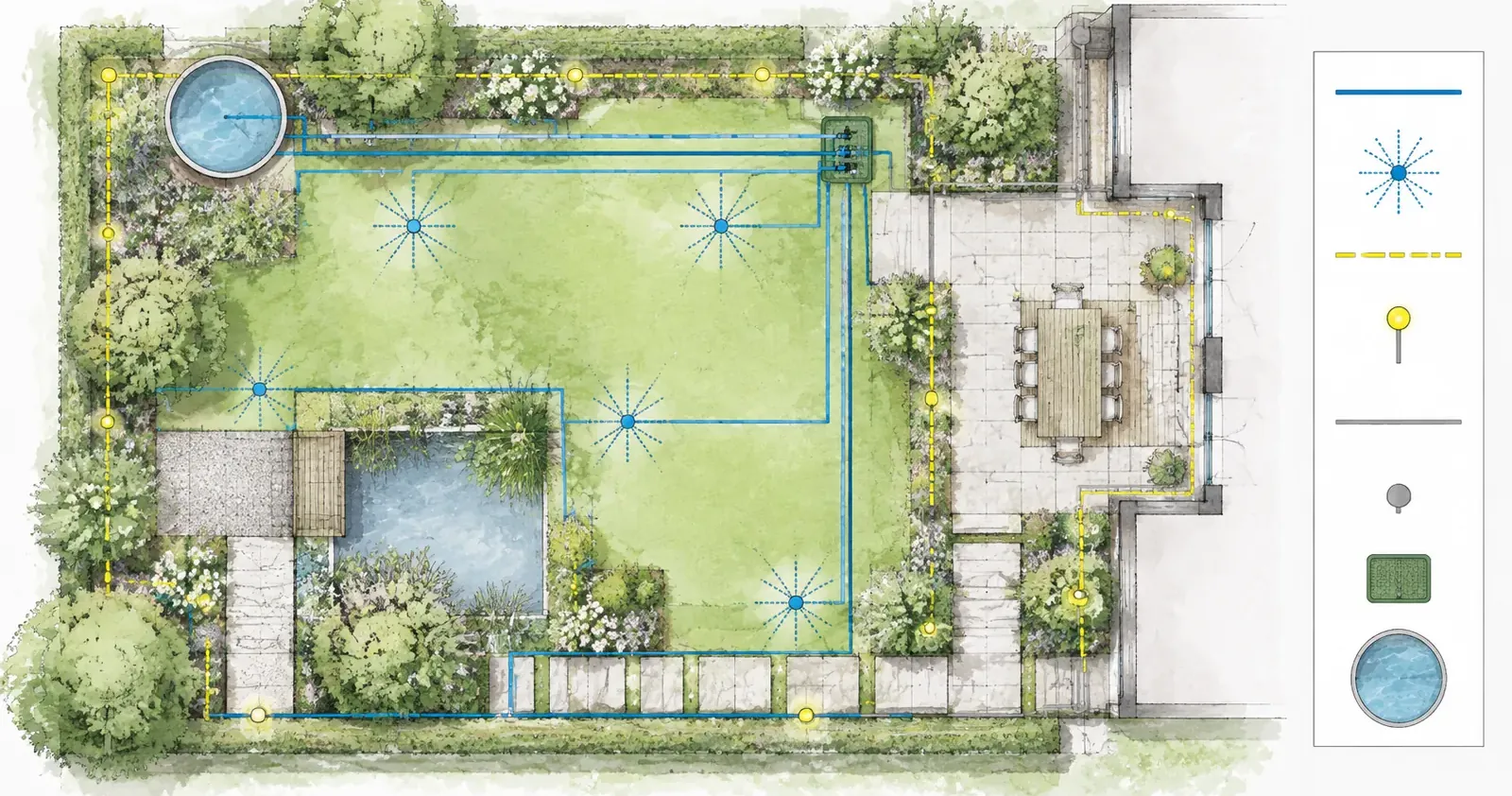 AI · AI-generated
We plan irrigation, lighting and conduits together on one drawing. That way all pipes and cables go into the ground in a single operation, do not cross more than necessary and can be found again later. Conduits with spare capacity make it easy to add technology later.
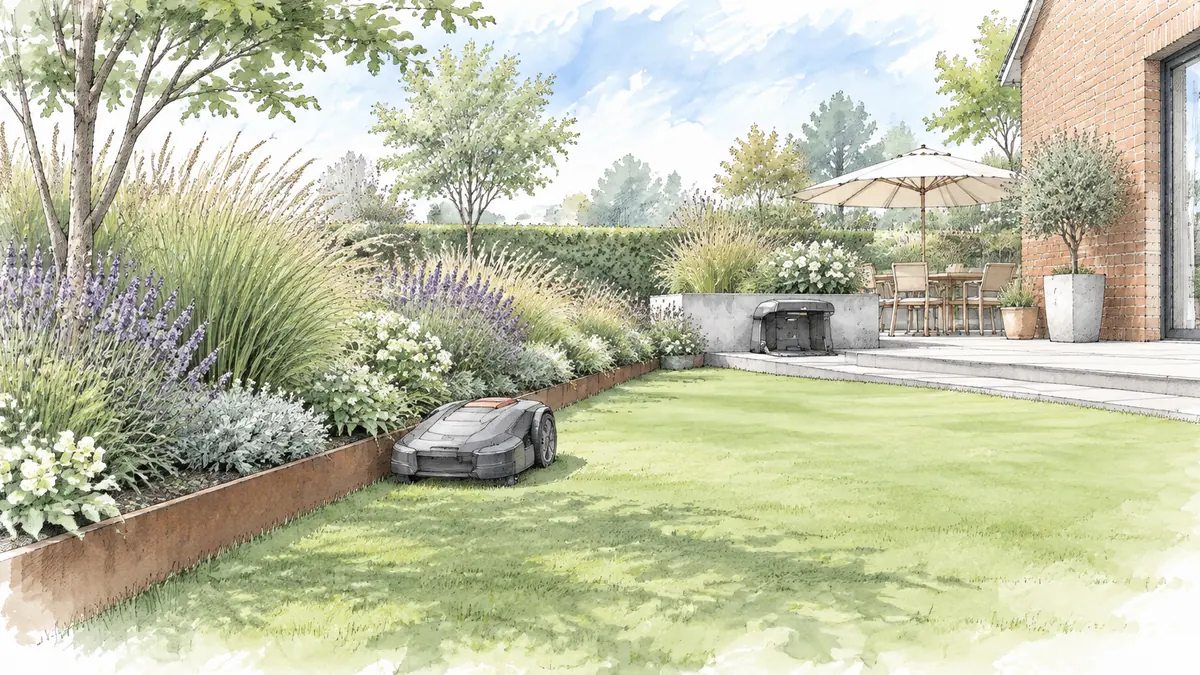
A robotic mower needs a sheltered spot for its charging station, a power cable to it and lawn edging it can follow cleanly. We design lawn areas so that it copes well.
Motion detectors along paths and at the entrance improve security. Cables for cameras, garden gate drives or a bell at the gate can also be laid during construction.
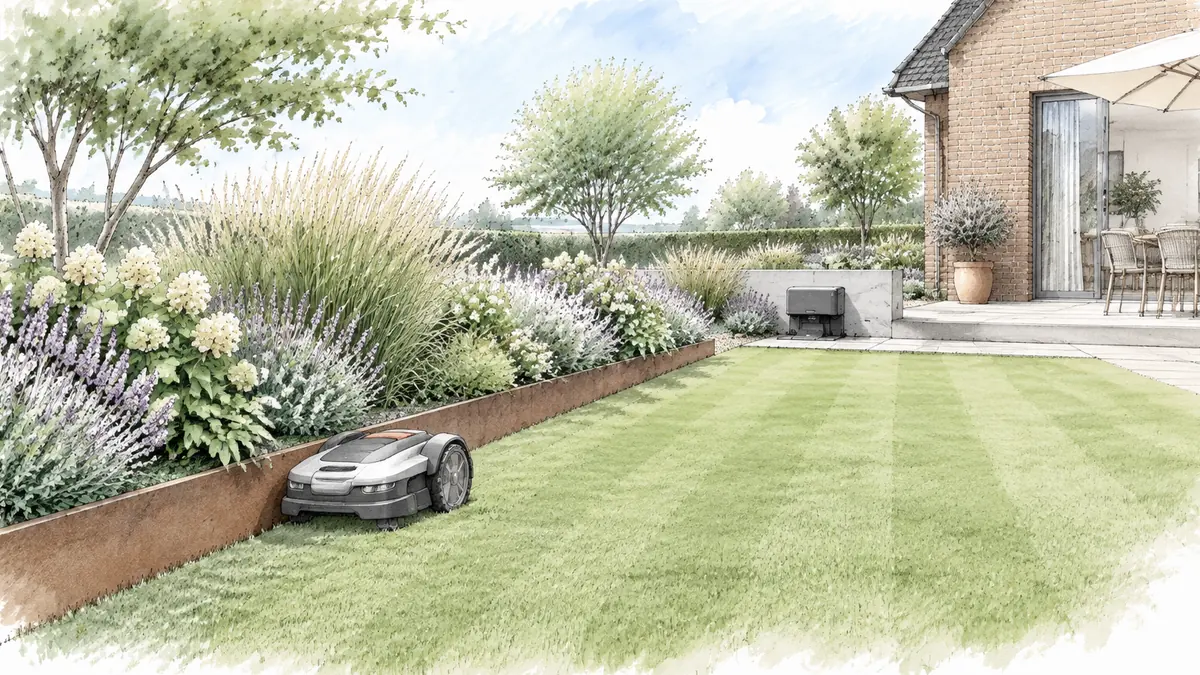 AI · AI-generated
Robotic mowers are among the most popular helpers in the garden. They cut little and often, the clippings stay on the lawn as mulch, and the grass grows denser. Newer models find their way by satellite navigation and need no boundary wire. Conventional models need a cable buried in the ground, which we install at the same time when laying a new lawn.
One point matters a great deal to us: hedgehogs are nocturnal, and robotic mowers that run at dusk or at night can injure them badly. So set the mowing times to daytime. Toads and insects also benefit when a few corners of the garden are not mown every day, such as a strip of meadow along the edge.
Lighting in moderation: Warm white light at around 2,700 kelvin, directed downwards and controlled by a timer or motion detector, is easier on the eyes and disturbs insects and neighbours far less than bright, cool white spotlights.
 AI · AI-generated
Smart garden technology stands or falls on something nobody sees afterwards. A controller can have any number of functions. If the Wi-Fi drops out at the garden shed, or the newly paved patio has to be lifted again for one extra light, the frustration is considerable. That is why we always plan the infrastructure as well, even if only part of it is used today.
Conduits matter most. They cost little during construction but save digging later. We lay them under paths and patios, to beds where a light or sensor might one day stand, and to places where a robotic mower will have its charging station. For power in the garden we use low voltage wherever possible, as it is safer and more flexible. Connections to the house supply and outdoor sockets are handled by a qualified electrical contractor.
To be honest, not every function is worth having. Weather-based irrigation brings the greatest benefit because it saves water and keeps plants healthier. Lighting controlled by time or dusk also adds noticeably to comfort and security. Gimmicks such as colour-changing lights or a long list of scenes, on the other hand, are often barely used after the first summer. So we base our advice on everyday life in the garden, not on the spec sheet.
Rule of thumb: Build the basics properly first: pipes and cables, conduits, a solid controller. Extra sensors, lights or devices can then be added at any time.
The devices are rarely the problem. It is usually something that was forgotten at the planning stage.
Once the patio is finished, every extra cable gets expensive. Conduits under paths and paved areas cost little during construction.
If the Wi-Fi does not reach the controller, app control fails. Wireless range or a cable should be sorted out beforehand.
Three apps for irrigation, lighting and the robotic mower are a nuisance. We make sure the systems work together.
Lights that are too bright or badly aimed dazzle and disturb the neighbours. Warm white light directed downwards is more pleasant.
We talk through what should run automatically and check the water supply, power supply and signal in the garden.
We draw in irrigation zones, lights, pipe and cable routes and conduits, and prepare a quote.
Pipes, cables and conduits are laid in trenches, ideally together with paths, patio or lawn.
Valves, sprinklers, drip lines, lights and sensors are fitted and connected.
We set up the controller and app, create schedules and test every zone.
We show you how everything works and give you a plan of the installed pipes and cables for future reference.
Smart irrigation needs an adequate water supply. Lighting and a robotic mower need power in the garden. We check both and plan the pipe and cable routes.
Electrical connections to the house supply are handled by a qualified electrical contractor. We coordinate with them and lay cables and conduits so that the connection is straightforward.
If you use cameras in the garden, you should know that they may generally cover only your own property. The pavement, the street and the neighbour's garden must stay out of the picture. So we plan camera positions and lighting to secure the entrances without capturing other people's property. Motion detectors at the entrance and garage often improve security considerably on their own, with no recording at all.
A smart garden does not have to be built all at once. What matters is getting the basics right: conduits to the patio, beds and driveway, a place for the controller with power and network access, and water connections for irrigation later on. Devices and sensors can then be added step by step, and replaced when the technology has moved on in a few years. Pipes and cables in the ground last for decades. Apps and devices usually last far less long.
In autumn the irrigation is drained and winterised. In spring it is started up again. Lights and sensors need hardly any care.
Costs depend on the size of the garden, the number of irrigation zones and lights, and the system you choose. It is cheapest to plan the technology in when the garden is being built. The ranges below are a guide. We give you an exact price after the site visit.
 AI · AI-generated
A finished garden can be retrofitted too. Pipes and cables can often be run along bed edges or under the lawn, and lights and sensors added afterwards.
Automatic irrigation is especially worthwhile. Our garden irrigation page explains how it is built up and what it costs.
More about garden irrigation ⟶That depends on the size of the garden, the irrigation zones, the lights and the system. After a free site visit you receive a quote listing every item.
Yes. A smart controller lets you adjust times, start zones manually and have the irrigation pause automatically when it rains, even when you are out.
As a rule, yes, because it waters according to soil moisture and weather instead of fixed times and pauses when it rains.
Many controllers and lights can be connected to common smart home systems and voice assistants. We check this at the planning stage.
Good controllers carry on running their schedules without a connection. Only app control is unavailable for a while.
Yes, especially if conduits have been laid. Extra lights, zones or sensors can then be added without much digging.
A qualified electrical contractor connects the system to the house supply. We lay cables and conduits in the garden and coordinate with them.
In Hamburg, mainly in the west and north, and in the Pinneberg district: Pinneberg, Halstenbek, Rellingen, Wedel, Quickborn, Schenefeld and Tangstedt.
Tell us what should run automatically in your garden. We will get back to you and arrange a site visit.