Garden design, patios, paving, turf, fencing and drainage for Wedel, Schulau, Holm, Hetlingen and the Haseldorfer Marsch, planned for sandy geest soil, the Elbe slope and heavy marsh ground.
Wedel sits where the geest meets the Elbe. The geest is the sandy upland the last ice age left behind. Few towns in the Pinneberg district pack such different garden settings into so small an area: sandy plots on the high ground, wooded slopes on the high bank of the Elbe, and low-lying, heavy marsh soils with high groundwater. For landscaping in Wedel that means one thing: every plot needs its own solution.
Holstein Pflanzen GmbH has been working as a specialist landscaping firm since 2010. We are based in Tangstedt in the Pinneberg district. From there, our own permanent team designs and builds gardens, patios, paths and irrigation systems in Wedel and the neighbouring villages of Holm, Hetlingen and Haseldorf. You deal with the same contacts from start to finish.
For an overview of our work across the whole district, see our page on landscaping in Pinneberg.
In short: Landscaping in Wedel, Schulau, Holm, Hetlingen and the Haseldorfer Marsch: garden design, patios, paving, roll-out turf, fencing, drainage and automatic irrigation. Planned to suit geest, Elbe slope or marsh, and built by our own team. The site visit is free.
Geologically, Wedel is split in two. According to the town's landscape plan, most of the town lies on the geest, on sands deposited during the ice age. To the west and towards the Elbe, the ground drops steeply down the wooded geest slope. Below it the Wedeler Marsch begins, part of the Elbe marshes, and merges into the Haseldorfer Marsch further west. The marsh lies only a few metres above sea level and is protected by dykes (Deiche).
Sandy soils dominate in the residential areas on the high ground, such as the town centre and Schulau above the bank of the Elbe. Rain drains through them quickly, but they hold little water and few nutrients. Lawns and beds here are the first to suffer in a dry spring. Soil improvement, mulch and garden irrigation matched to actual need make up for that. The landscape plan does point out, however, that some geest soils in Wedel are prone to waterlogging despite their sandy surface. That is why we always check the soil on site.
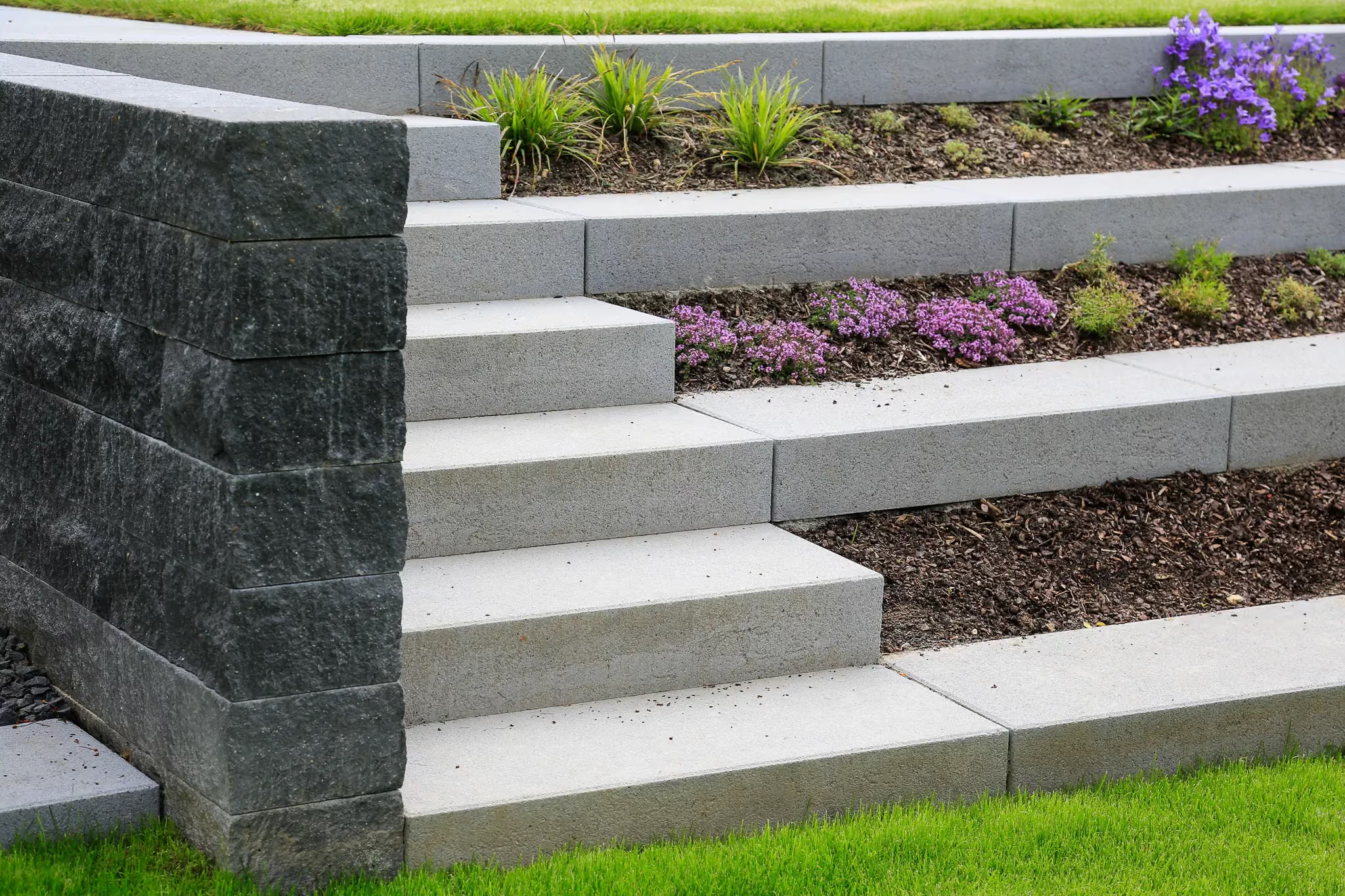
Plots on the geest slope often have a fine view and mature trees, but they bring their own challenges. On a slope the ground has to be retained, for example with natural stone walls, steps or terracing. Paths and seating areas need a fall that carries rainwater away from the house. Water can also seep out of the soil layers at the foot of the slope. Drainage and infiltration then belong in the plan from the very start.
The marsh soils of the Wedeler and Haseldorfer Marsch consist of marsh clay (Klei), the clayey, silty sediment laid down by the Elbe. They are very fertile, but heavy, and they take up water only slowly. Along the edge of the geest there are also patches of fen peat. For patios, driveways and paths that means digging out deep enough, building a frost-proof, load-bearing base and draining surface water away reliably. Otherwise you risk settlement and puddles.
If you live close to the Elbe, for instance in Schulau near the Willkomm-Höft and Schulau harbour, you know the wind. It crosses the river and the open marshland and hits gardens almost unchecked. That shapes the design:
Salt matters less in Wedel than many people assume. Unlike on the North Sea coast, the Elbe here carries mostly fresh water, and the brackish zone lies further downstream. What shapes gardens by the water is mainly wind, humidity and, in the marsh, wet ground.
 AI · AI-generated
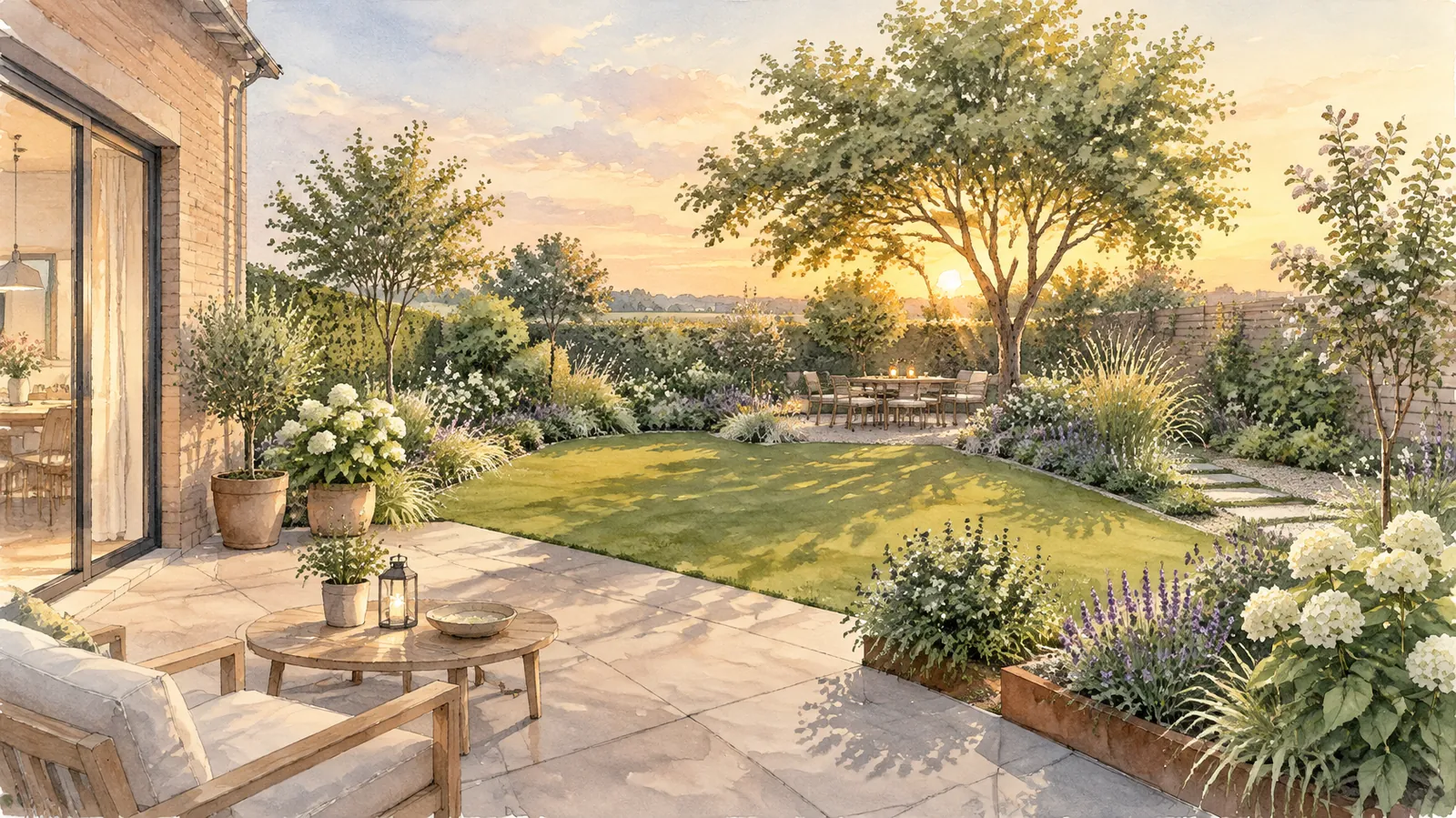
Gardens in Wedel are often open to the wind off the Elbe. Hedges, shrubs and trees along the boundary create sheltered places to sit, and a west-facing patio catches the evening sun.
In the marsh and at the foot of the geest slope the groundwater is high. The Wedel landscape plan gives groundwater levels for the marsh of around one metre below ground, and in places only about half a metre towards the geest slope. On top of that, the cohesive clay soils let hardly any water soak away.
This has practical consequences:
On the geest, by contrast, water tends to be scarce in summer. A rainwater tank and drip irrigation in beds and hedges make particular sense there. With a Smart Garden set-up you can control irrigation by app and according to weather data.
Around Wedel, conditions change markedly from one place to the next:
| Place | Setting and soil | What we look out for |
|---|---|---|
| Wedel-Schulau | High bank of the Elbe and the riverside around the Willkomm-Höft and Schulau harbour | Wind, slopes, mature trees, often tight access |
| Wedel (geest) | Sandy soils in the residential areas on the high ground | Water demand in summer, yet waterlogging in places |
| Wedeler Marsch | Marsh clay and fen peat, a few metres above sea level | High groundwater, load-bearing base, drainage |
| Holm | Geest with sandy soils, close to the Holmer Sandberge (inland dunes) | Dry sites, soil improvement, irrigation |
| Hetlingen | Haseldorfer Marsch between the geest slope and the Elbe dyke | Heavy soils, water run-off, open and windy setting |
| Haseldorf | Marsh village shaped by fruit growing and grassland | Larger plots, wind shelter, drainage |
For garden design in Holm the focus is usually on dryness and building up the soil. Garden design in Hetlingen and Haseldorf, by contrast, is often about water: where does the rain go when the ground will not take it? You will find more places in the district on our page for the Pinneberg district.
As gardeners in Wedel we cover the full range of garden design and landscaping from a single source. Each service has its own page with the process, materials and guide prices:
Many projects combine several trades, such as basement waterproofing followed by a newly laid-out garden. Because one team does it all, you do not have to coordinate different firms.
Wedel has many mature trees, especially on the geest slope and in the established residential areas. The town has a tree protection ordinance (Baumschutzsatzung). It protects trees above a certain trunk circumference. Felling protected trees, or cutting them back heavily, generally needs an exemption permit, which you apply for in writing from the town. The town's building department (Bauverwaltung der Stadt Wedel) can tell you which trees are covered and which exceptions apply. Please ask before work starts.
This information is not legal advice. The current ordinances and the information given by the authorities are what count.
In the marsh, the work depends more on the weather than it does on the geest. After long spells of rain heavy soils can hardly take machinery, so we build in extra time there.
Yes. Besides Wedel and Schulau we work in Holm, Hetlingen, Haseldorf and the Haseldorfer Marsch, and across the rest of the Pinneberg district. Our firm is based in Tangstedt in the Pinneberg district.
The heavy marsh clay and the high groundwater call for a load-bearing base, carefully planned falls and reliable drainage. Soakaways often work only to a limited extent there.
That depends on the tree. Wedel has a tree protection ordinance that protects trees above a certain trunk circumference. For protected trees you generally need an exemption permit from the town. The town's building department (Bauverwaltung der Stadt Wedel) gives binding information.
Robust native deciduous species such as hornbeam, field maple, hawthorn and blackthorn have proved their worth. They slow the wind more evenly than a solid wall.
Yes. We waterproof basement walls from the outside, install drainage where needed and reinstate the garden afterwards. Read more on our basement waterproofing page.
On the sandy geest soils in Wedel and Holm, usually yes, because lawns and beds dry out quickly there in summer. In the marsh the need is often lower. You will find the details on our garden irrigation page.
The site visit is free and without obligation. Afterwards you receive a written quote listing the individual items.
Your garden in Wedel or by the Elbe? Call us on +49 4101 81 23 692 or send us your enquiry with photos. We usually get back to you within two working days and are happy to come out for a free site visit.
