
 AI · AI-generated
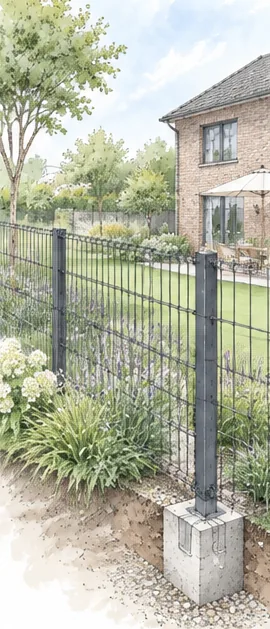
Metal fences
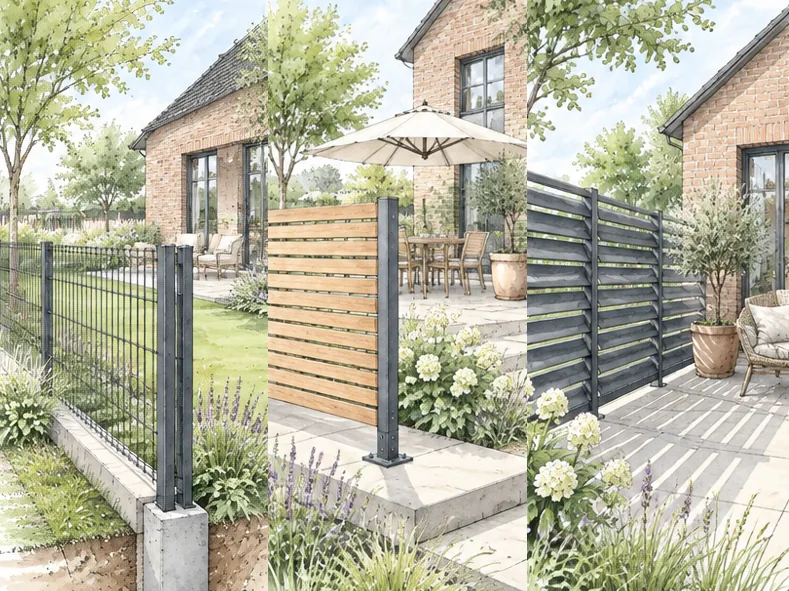
Welded mesh fences, ornamental fences with arches or finials, and plain bar fences: sturdy, low-maintenance and long-lasting. Ideal for front gardens and property boundaries, and they pair well with a hedge.
A fence marks your boundary, keeps out prying eyes and keeps children and the dog safely on your property. We plan and install metal, slatted and timber fences as well as garden gates, all on frost-proof foundations that stand up to storms.
A fence is more than a boundary. It shapes how your house and garden look from the street, creates sheltered places to sit and gives children and dogs room to roam.
In northern Germany a fence has a lot to cope with: wind, rain and frost. In a storm, a solid privacy screen acts like a sail. Without the right foundation it tips over or works loose.
That is why we treat the fence as part of the garden. It should suit the paving, the hedge and the front of the house, run in a clean straight line and have gates that still open easily years later.
As a landscaping firm we also take care of everything around it: foundations, the joins to paving and lawn, and hedges and beds along the fence.
Few parts of a property are as public as the fence. It is the first thing visitors see and the last thing neighbours overlook. A low timber fence with roses says something different from a two-metre privacy screen, and a plain welded mesh fence something different from a wrought-iron gate. So before you choose a material, it pays to ask another question: what should the fence do, and how should it look?
Often it has several jobs at once. The dog should stay in the garden, the patio should be screened from view, and the property should still look friendly and open from the street. Good fence planning solves this section by section: open in the front garden, solid by the seating area, sturdy on the boundary.
Local rules often set how high a fence may be and what it should look like. In many parts of Hamburg, development plans or design rules cover boundary fences and walls, especially in front gardens. In Schleswig-Holstein, neighbour law also sets out when and how properties are enclosed. We check these points before planning and recommend involving your neighbour early. A short conversation often saves long arguments.
Twin-wire mesh panel or privacy screen, these three points decide how firmly the fence stands.
 AI · AI-generated
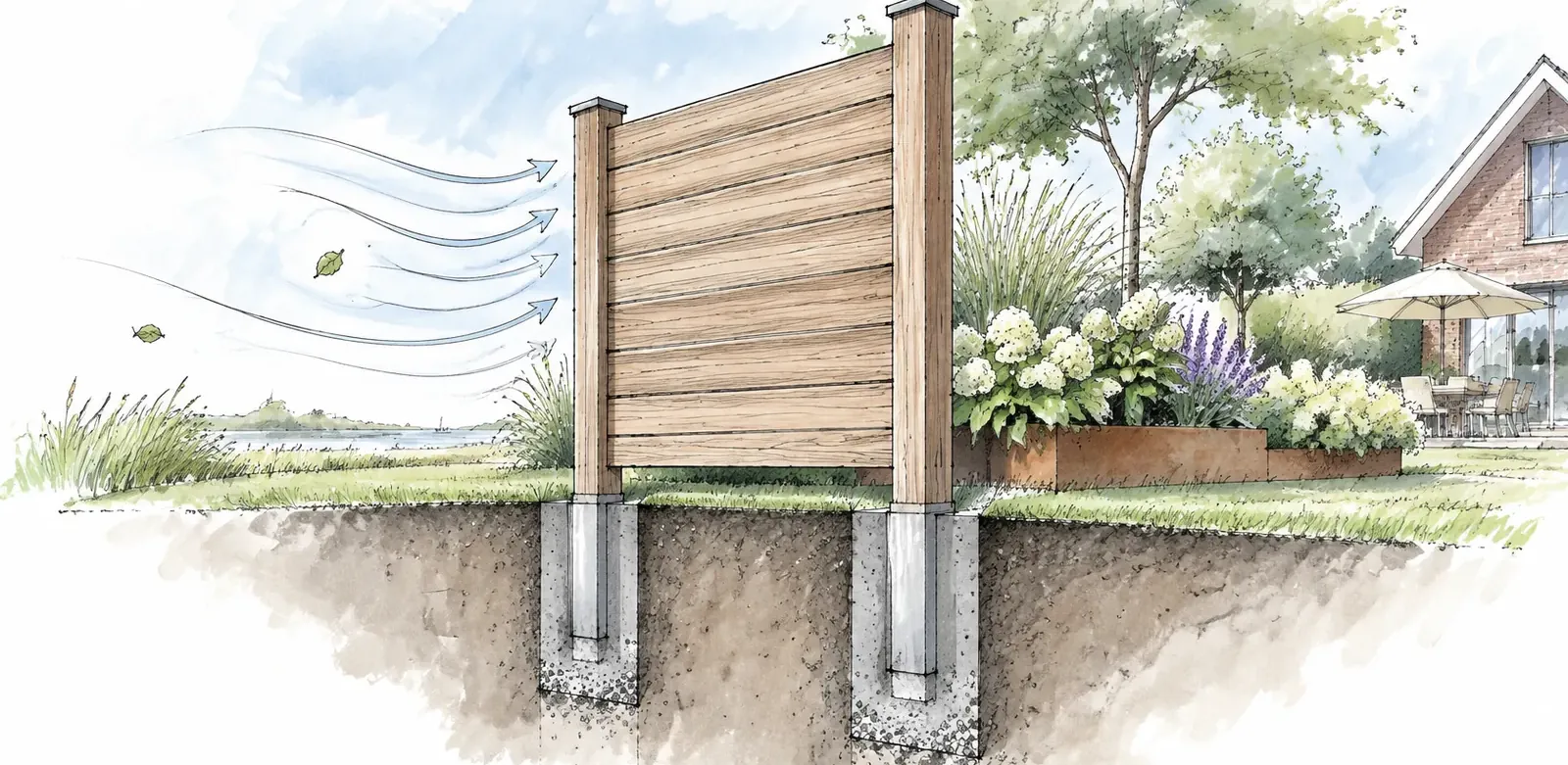
Each post sits in its own concrete foundation. It goes about 80 cm into the ground, below the frost line, and rests on a gravel bed so that water drains away. Solid privacy screens catch a lot of wind, so they need stronger posts and foundations than open fences.
Each post sits in a concrete foundation deep enough that frost cannot lift it. Here in the north that usually means about 80 centimetres.
Post spacing depends on the fence system and the panel width. Privacy screens need stronger posts and often larger foundations.
String line, spirit level and precise heights make sure the fence runs straight and the gates do not jam later.
A fence is only as good as its foundations. In northern Germany, winter frost reaches about 80 centimetres into the ground. Shallower foundations can be lifted by the freezing soil. The result is leaning posts and jamming gates. So we set post foundations below the frost line and match their size to the fence height and the soil.
Structural stability matters even more for solid privacy screens. Whatever blocks the view also catches the wind. In a storm, a solid wall two metres high acts like a sail, and the forces end up in the posts and foundations. On the coast and on exposed plots in the surrounding countryside, we plan stronger posts, larger foundations or a slightly open design that reduces wind pressure.
AI · AI-generatedWelded mesh fences, ornamental fences with arches or finials, and plain bar fences: sturdy, low-maintenance and long-lasting. Ideal for front gardens and property boundaries, and they pair well with a hedge.
 AI · AI-generated
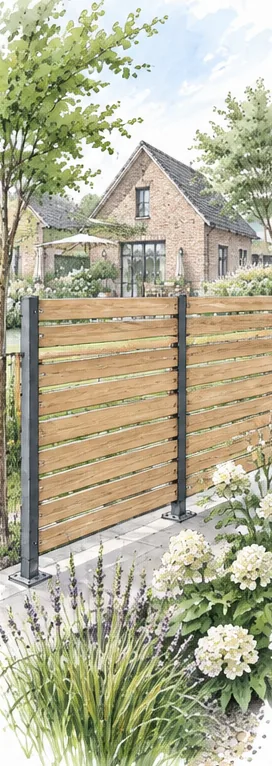
Timber privacy screens create sheltered seating areas and look warm and natural. Set between concrete posts, they are especially stable.
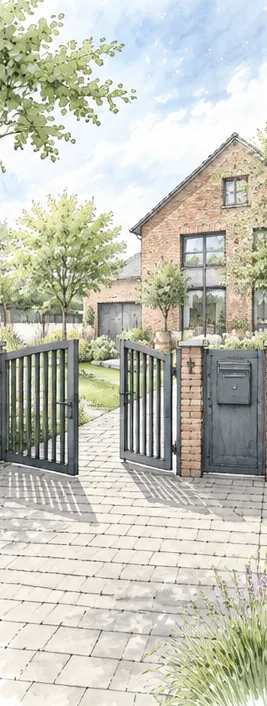 AI · AI-generated
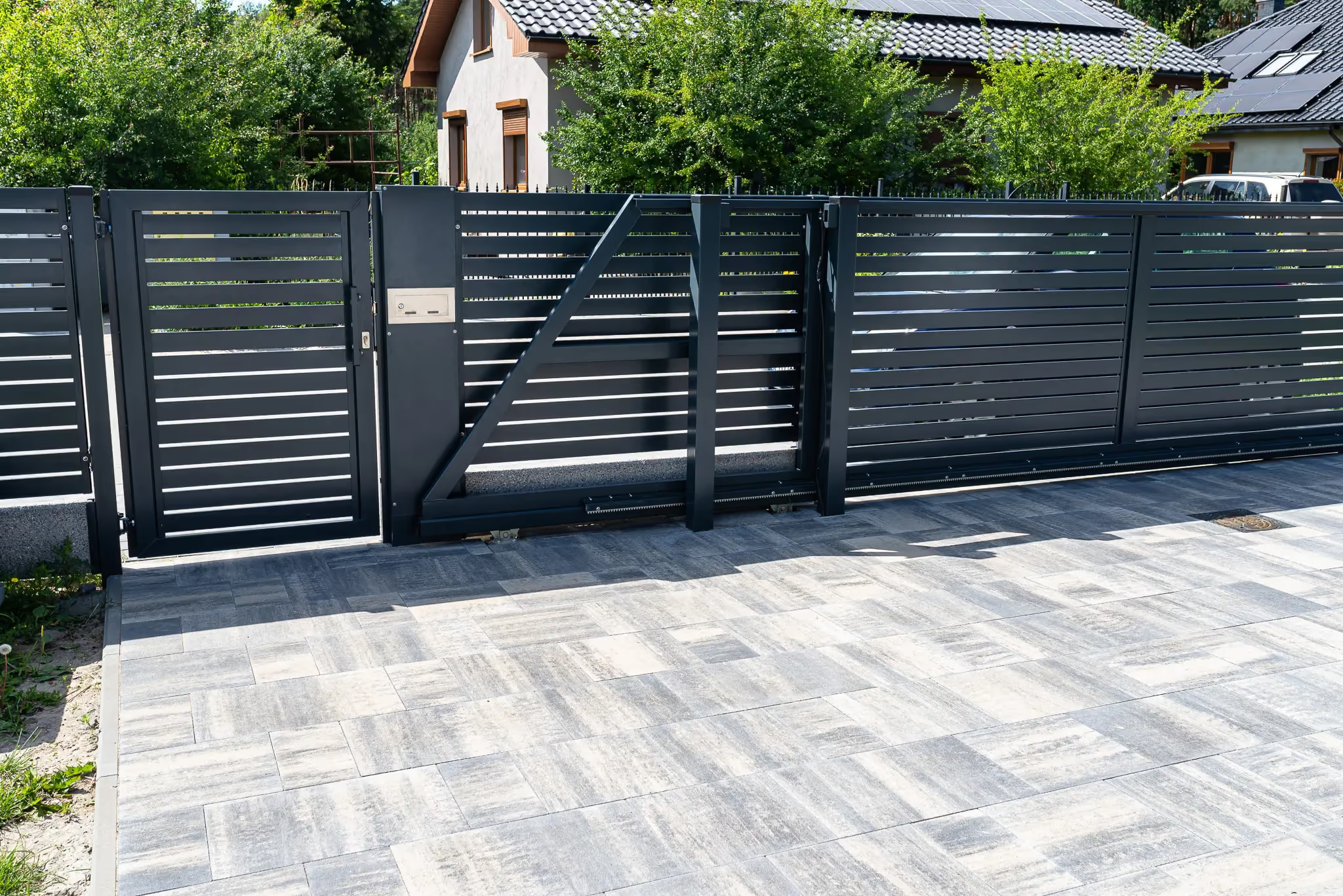
Garden gates, double-leaf gates and sliding gates to match the fence, with a letterbox, doorbell or electric drive on request.
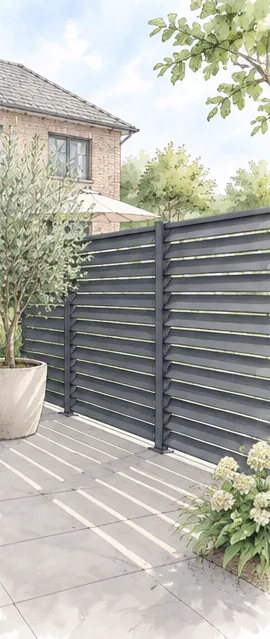 AI · AI-generated
Modern fences made of horizontal slats give privacy without looking heavy. Aluminium does not rust and needs hardly any care.
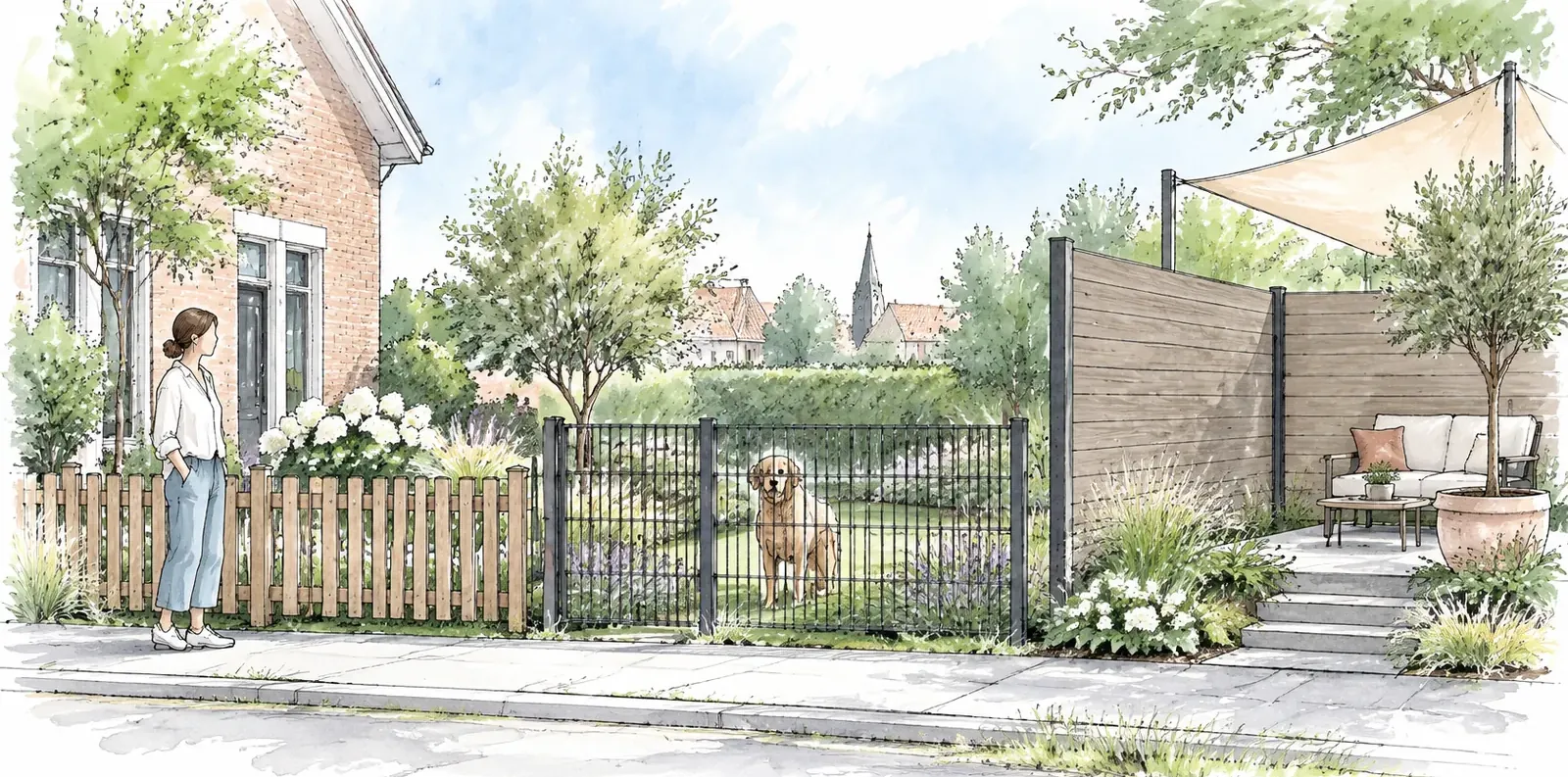 AI · AI-generated
A front-garden fence of around 80 to 100 cm looks open. A welded mesh fence of 120 to 140 cm keeps the dog and children safely in the garden. A privacy screen of around 1.80 m screens the seating area from view. We check the requirements of the development plan and neighbour law beforehand.
In the front garden, low, open fences look friendly. By the seating area, a solid privacy screen at eye level is more comfortable. A combination is often the best answer.
A welded mesh fence with a hedge in front or behind combines security with greenery. The hedge grows through the fence and thickens over the years.
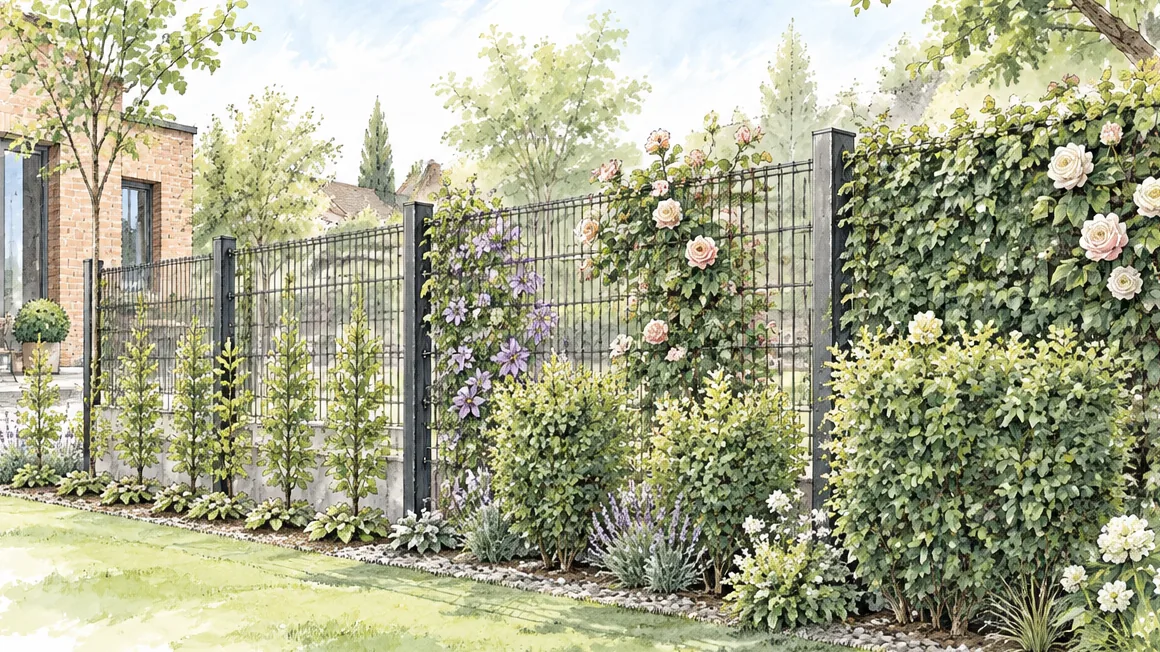 AI · AI-generated
Today, most metal fences are hot-dip galvanised and powder-coated as well. This combination gives double protection against rust and lasts for many decades in the damp north German climate. Timber remains the warmest material. Larch and Douglas fir are fairly durable by nature and weather to a silvery grey if you leave them unpainted. What matters is protecting the timber by design: no permanent contact with the ground, and cappings that let water run off. Gabions and natural stone walls are heavy but practically maintenance-free, and they even dampen noise a little.
A small gap that makes a difference: Leave a gap of about 12 × 12 cm at ground level and hedgehogs can keep moving from garden to garden. Many conservation groups recommend these ‘hedgehog doors’. The opening still keeps the dog in.
A fence is the most visible structure in a garden, and often the most talked about. Trouble frequently starts with something small: the fence stands ten centimetres over on the wrong side, the privacy screen is higher than expected, or the unattractive back of the slats faces the neighbour. All of this can be avoided if a few things are settled before building starts.
First comes the boundary. The boundary markers show exactly where it runs. If they can no longer be found, a land surveyor can help. Then come the rules: the development plan, local bylaws and the neighbour law of the federal state set how high a boundary fence may be and whether it can stand directly on the boundary. Hamburg and Schleswig-Holstein have different rules, and some municipalities in the Pinneberg district have their own design requirements. A quick call to the local building authority saves a lot of discussion.
The service life belongs in the decision too. Powder-coated steel and aluminium last for many decades and need hardly any care. Timber looks warm and natural, but depending on the species it needs regular painting or oiling, or it turns grey. WPC sits in between. If you are planning for the long term, compare not only the price per metre but also the work involved over the next twenty years.
Tip from experience: Plan a narrow strip of gravel or lawn edging between the fence and the bed. That way you can reach the fence for trimming and painting, and plants do not grow into the infill.
A leaning fence or a jamming gate catches your eye every day. These are the mistakes we see most often.
Posts that are only concreted in at a shallow depth are lifted by frost and work loose over time.
Solid privacy screens catch a lot of wind. Posts or foundations that are too weak give way in the first storm.
If the fence is in the wrong place or too high, you face trouble with neighbours or the authorities. Settle the boundary line and the rules beforehand.
Gate posts carry the weight of the leaves. Without a solid foundation the gate sags after a while and drags.
We measure the property, discuss height, material and gates, and take a look at the soil and the lie of the land.
You receive a quote covering the fence system, gates, foundations and installation.
We mark out the fence line, post positions and gate widths on site with a string line.
We dig the post holes below the frost line, then set the posts in concrete and align them.
We fit the fence panels, privacy screens and gates, adjust the gates and check the locks.
We make good the paving, lawn and beds, tidy up and hand over the finished fence.
Before building starts, the boundary line should be certain. If in doubt, boundary markers or a surveyor will help. Agree it with your neighbours and there will be no dispute later.
The development plan, the council and neighbour law set the height allowed on the boundary and towards the street. We recommend asking the local building authority beforehand. We then plan the fence to fit.
A fence does not have to stay bare. Climbers such as clematis, climbing roses or ivy turn a plain metal fence into a green wall within a few years. A hedge in front of the fence combines quick protection with long-term greenery: the fence secures the property from day one, and the hedge gradually grows into it.
If gates are to open electrically, or a doorbell and letterbox unit is being added, we lay conduits and cables during installation. Doing it later is far more work.
Metal and aluminium fences only need an occasional wash. Timber should be painted or oiled every few years, and gate fittings appreciate a little grease.
The cost depends on length, height, material, the number of gates and the ground. Privacy screens are more work than open welded mesh fences. The ranges below are a guide. We give you an exact price after the site visit.
 AI · AI-generated
Rotten timber, rusty panels or leaning posts: we take down the old fence, remove the old foundations and set the new one in a clean, straight line.
It is often worth renewing the driveway or the path to the gate at the same time. You can read more on our paving page.
More about paving ⟶That depends on the material, height, gates and ground. After a free site visit you receive a quote listing every item.
That is set by the development plan, the council and neighbour law, and it varies with the place and location. We recommend checking with the local building authority beforehand.
Deep enough that frost cannot lift the foundation. In northern Germany that is usually about 80 centimetres. Privacy screens often need larger foundations.
Powder-coated metal and aluminium fences. They need little more than an occasional wash.
Yes. Driveway gates can be fitted with an electric drive. A qualified electrician makes the power connection, and we lay the cables and conduits as part of the job.
Yes. We take down the old fence, foundations included, and dispose of it properly.
Yes, that is very popular. A welded mesh fence with a hedge combines security with greenery. We can plant the hedge at the same time if you wish.
In Hamburg, mainly in the west and north, and in the Pinneberg district: Pinneberg, Halstenbek, Rellingen, Wedel, Quickborn, Schenefeld and Tangstedt.
Send us photos and the approximate length of the fence. We will get back to you and arrange a site visit.