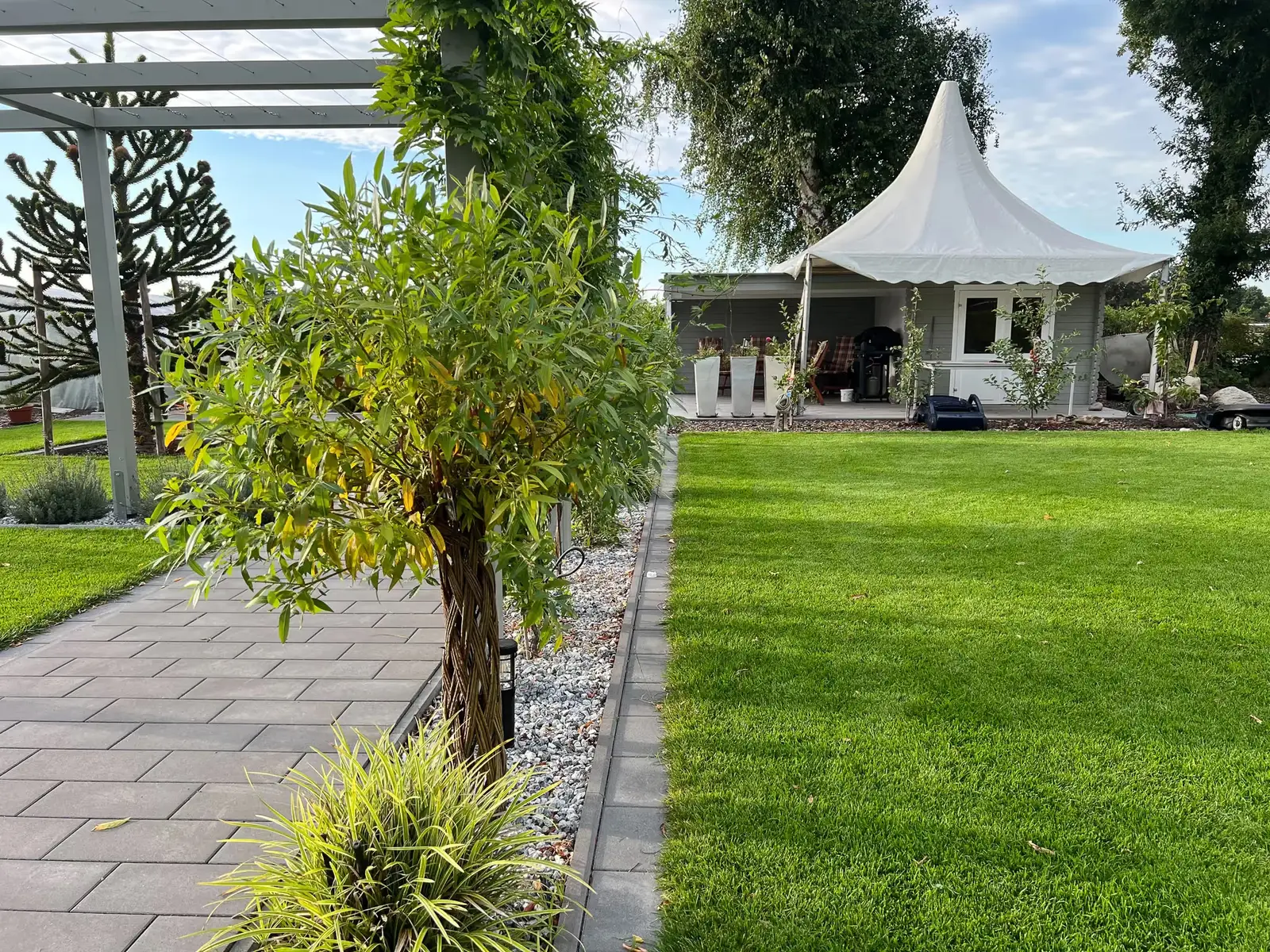
Why a good lawn in northern Germany needs good preparation
Many gardens in Hamburg and the Pinneberg district have two problems at once. Building work leaves the soil heavily compacted, and depending on the location, sandy patches that dry out fast alternate with wet, loamy areas. A new lawn on ground like this soon turns patchy, mossy or develops brown spots.
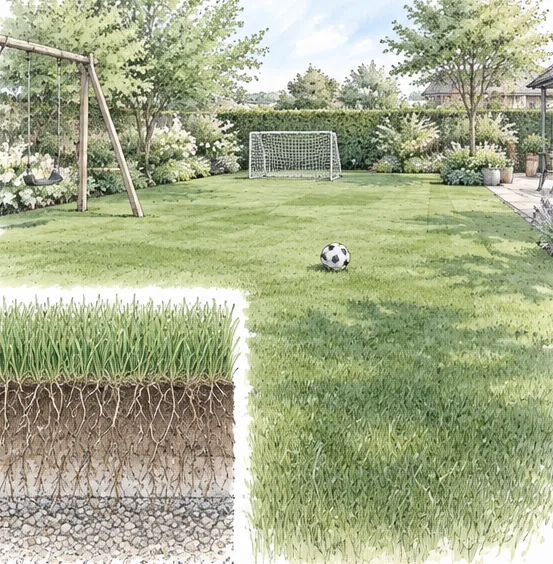
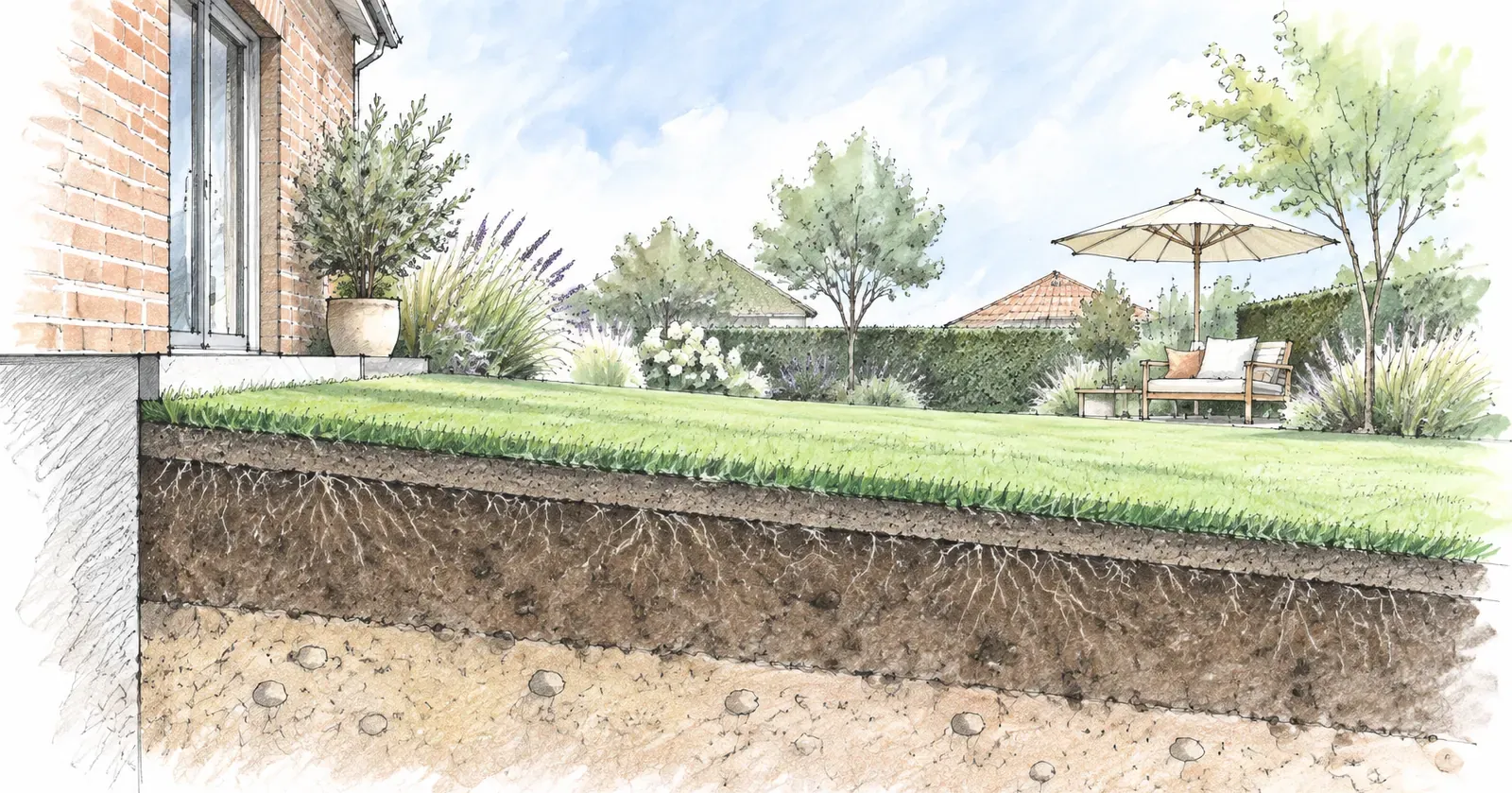
That is why every lawn we lay starts with the soil. We break up compacted layers, remove roots, stones and rubble, fill in hollows and improve the topsoil wherever it is needed. Only then can a lawn root deeply and cope with dry spells as well as long periods of rain.
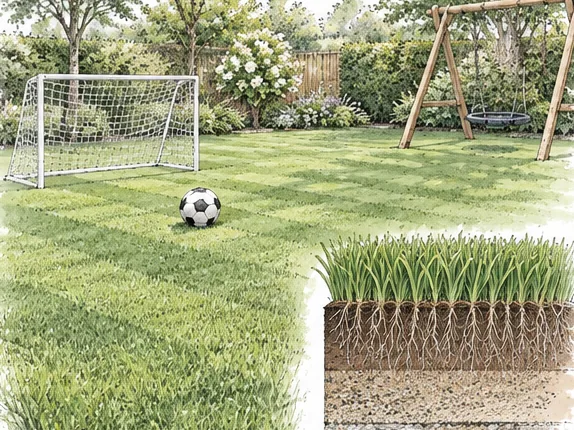
Whether you choose turf or seed, a carefully prepared lawn is denser, needs less fertiliser and water, and leaves little room for weeds and moss. That means less maintenance in the years that follow.
As landscapers, we treat the lawn as part of the whole garden: clean edges to beds and paths, the right fall and, if you wish, automatic irrigation planned in from the start.
The moment everyone waits for: the first cut
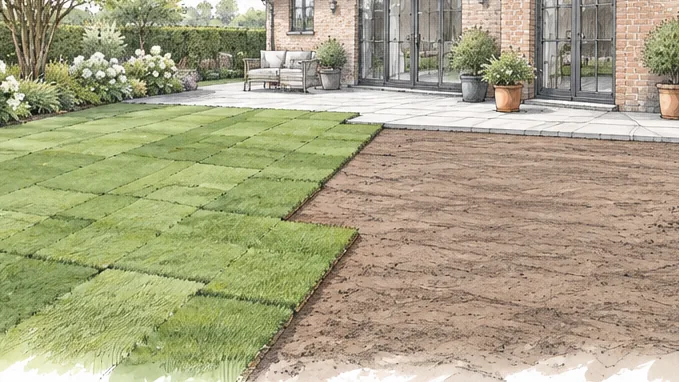
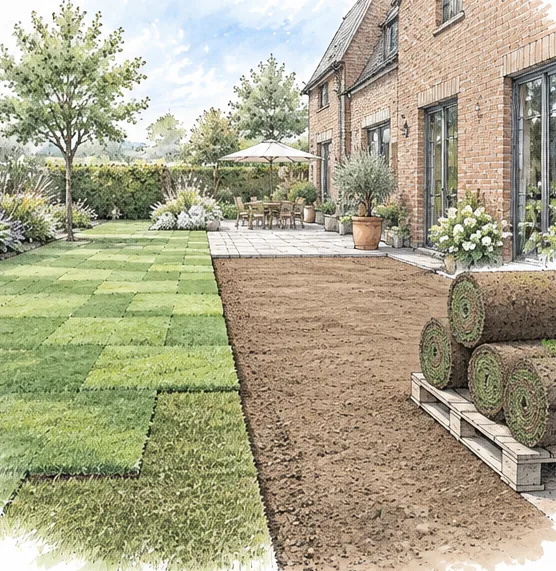
There is something magical about roll-out turf. In the morning you are standing on a levelled surface of fine soil; by the afternoon there is a green carpet. But anyone who has laid turf knows the real test comes two to three weeks later. That is when the lawn is mown for the first time, and it shows whether the turves have rooted, whether the surface is even and whether a hollow somewhere is collecting water.
When the first cut goes well, it is usually down to work nobody saw: loosened ground, roots and rubble cleared away, careful fine levelling and a starter fertiliser matched to the soil. That is exactly where we begin. A lawn that still looks as good after two years as it did on day one is made in the preparation, not when the turf is rolled out.
Geest, marsh, new build: lawns in the Hamburg area
Around Pinneberg, Halstenbek and Rellingen, many gardens sit on sandy geest soil. It drains freely and warms up quickly in spring, but it dries out just as quickly in summer. Here we often work in compost or topsoil so the lawn holds water and nutrients better. In the Elbe marshes and on loamy plots the problem is the opposite: waterlogging, moss and compacted patches. Sand helps there, and sometimes drainage. And on new-build plots where diggers and cranes have stood, the soil is often compacted well below the surface. Without deep loosening, any lawn there will keep causing trouble.

 AI · AI-generated