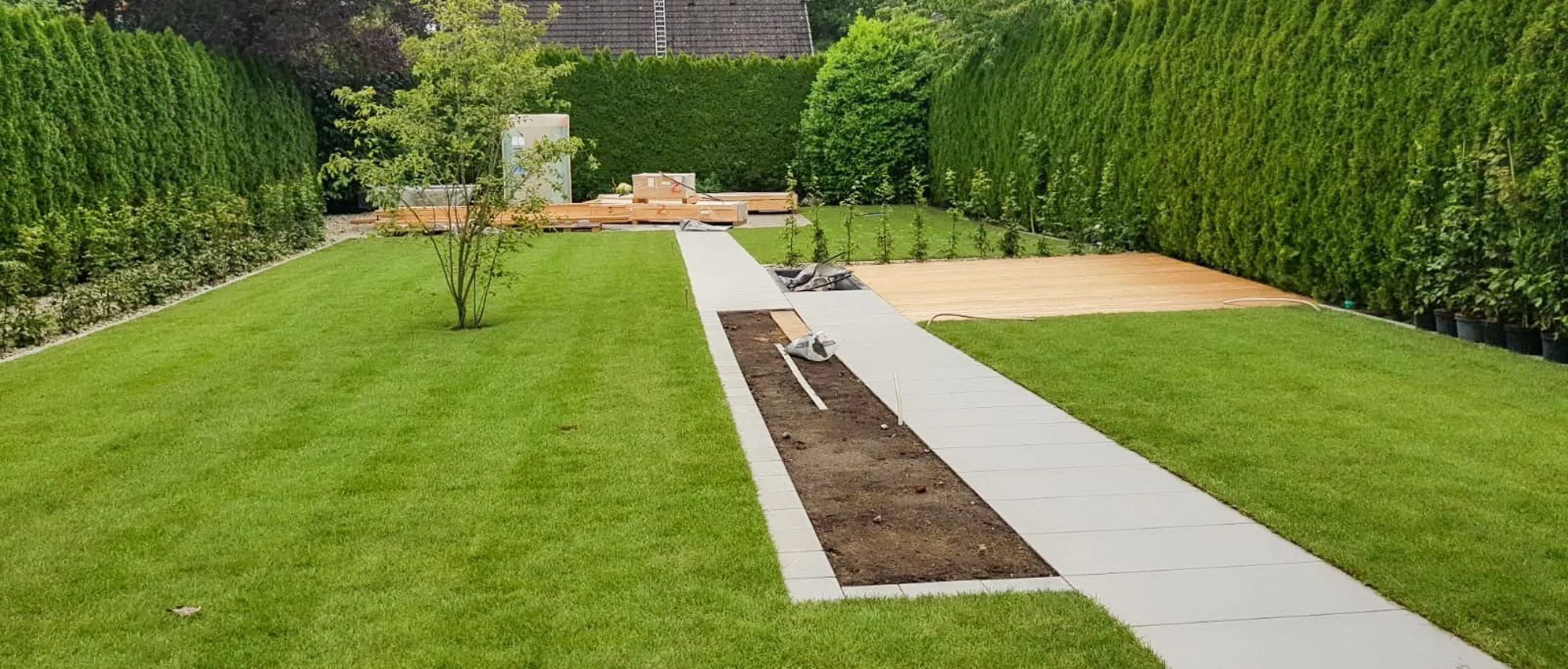
Garden design, patios, paving, turf, fencing and automatic irrigation for Pinneberg, Rellingen, Halstenbek, Wedel and Quickborn, from a landscaping firm based in Tangstedt, in the heart of the district.
We are based in Tangstedt, in the heart of the Pinneberg district and only a few kilometres from the town of Pinneberg, Rellingen and Halstenbek. For gardens in the district that means short journeys, quick appointments on site and a team that knows the local soils and conditions from years of work here.
As Holstein Pflanzen GmbH we have been designing and building gardens, patios, paths and irrigation systems since 2010. We work with our own permanent team, not with changing subcontractors. When you send us an enquiry, you deal with the same people from the first appointment to handover.
The Pinneberg district is a special place for gardens. The Pinneberg tree-nursery belt (Baumschulland) is one of the largest continuous tree-nursery areas in Europe. Many gardens here are old and well established, with large mature trees. At the same time, new-build estates in Halstenbek, Rellingen, Quickborn and Schenefeld have gardens that need planning from scratch. The two call for different approaches. In an established garden the aim is to keep what is valuable and renew selectively. On a new-build plot it is about a load-bearing sub-base, good drainage and a design that still works in ten years.
In short: Garden design and landscaping in the Pinneberg district, from Tangstedt: garden design, patios, paving, roll-out turf, fencing, natural stone and automatic garden irrigation. Our own team, a site visit and a written quote.
If you create a garden in the Pinneberg district, you are dealing with very different soils. Much of the district lies on the Geest, the sandy upland of northern Germany: sandy, fairly nutrient-poor soils that let water through quickly. Towards the Elbe, for example in the Haseldorfer Marsch or around Wedel, you find the Marsch instead, low-lying marshland with heavy clay soils that hold water for a long time. In between there is almost everything, and the soil often changes within a single plot.
Then there is the north German climate: plenty of wind, mild winters that often switch between frost and thaw, and in recent years repeated long dry spells in spring and summer. Materials have to be frost-resistant, joints and sub-base have to cope with the freeze-thaw changes, and plants should tolerate drought. Being close to the region's tree nurseries helps when choosing plants: many shrubs and trees are grown here and are used to the conditions.
 AI · AI-generated
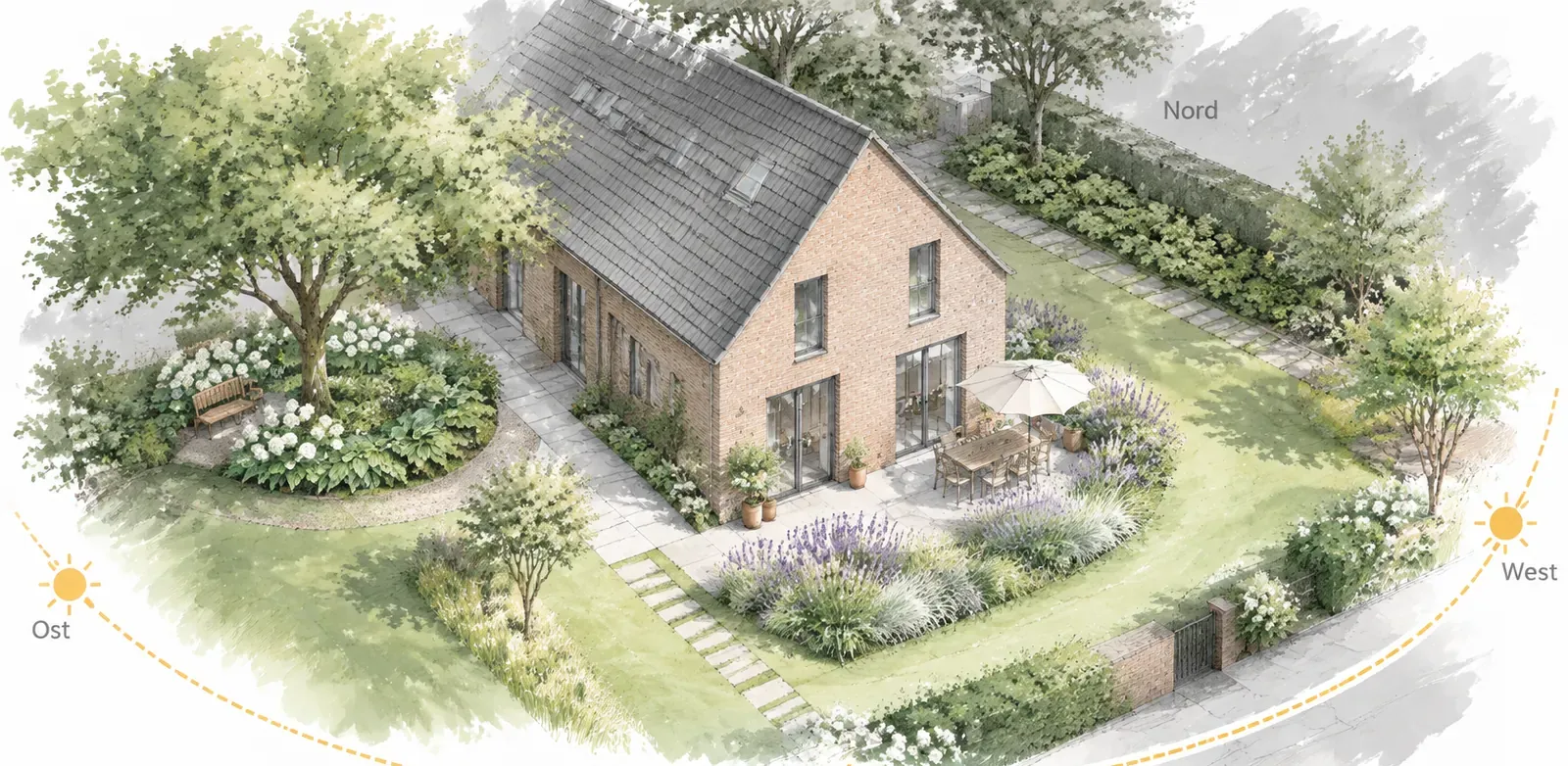
The position of the sun is the main thing that decides which plants thrive where. Lavender and grasses do well on the south side, hydrangeas and hostas in partial shade, ferns and shade-loving perennials on the north side. On the sandy Geest soils of the Pinneberg district, sunny beds also dry out faster.
Gardening in the Pinneberg district has one advantage: the choice of shrubs and trees is huge, and many plants are grown in the region. It still pays to choose carefully, because climate change is altering what grows well in a garden over the long term. Long dry spells in spring are hard on shallow-rooted species. Heavy rain and mild, wet winters encourage waterlogging on heavy soils.
As part of the garden design we put together a planting plan that suits the soil, the aspect and the amount of care you want to give. The aim is a garden that does not need replanting every year.
Recent years have shown that gardens in the Pinneberg district have to cope with both: weeks of drought and short, intense downpours. There are proven solutions for each, and they combine well.
Against drought, good soil preparation helps, as do mulch in the beds and automatic irrigation that only waters when it is needed. With a rain sensor or weather data in the app, the system pauses after rain. Drip line in beds and hedges takes the water straight to the roots without it evaporating.
Against heavy rain, the answers are an adequate fall away from the house, permeable surfaces for paths and parking spaces, and infiltration through soakaways or swales. If you collect rainwater in a rainwater tank, you can use it later for irrigation, and the problem becomes a resource. That is the idea behind the sponge garden (Schwammgarten), which we also describe in our garden trends 2027.
A garden project is more than the build. There are things to agree, materials to be delivered, sometimes follow-up work, and later on questions about care or irrigation. A local firm is on site quickly, knows the ground conditions in the neighbourhood and is still there for you after handover, for example for winterisation and spring start-up of the irrigation system.
We work to the recognised standards of our trade. And because we use our own staff, we know exactly who is on your site.
We offer the full range of garden design and landscaping across the whole district. Each service has its own detailed page covering the process, materials and guide prices:
Our clients often combine several services. With a new patio, the conduits for irrigation and garden lighting go in at the same time. After basement waterproofing, the garden is laid out afresh. Because we carry out everything ourselves, the trades fit together cleanly and you do not have to coordinate several firms.
From Tangstedt we can reach most places in the district quickly. These are the towns where we work most often:
| Town | Typical projects | What we look out for |
|---|---|---|
| Pinneberg | Redesigning older gardens, patios, paving | Mature trees, narrow access in established residential areas |
| Rellingen | Garden design, turf, irrigation | Large plots, sandy soils |
| Halstenbek | New-build gardens, driveways, fencing | Planning sub-base and drainage in from the start |
| Wedel | Patios, drainage, basement waterproofing | Close to the Elbe, heavy soils in places and a high water table |
| Quickborn | Lawns, irrigation, garden paths | Dry sandy soils, water demand in summer |
| Schenefeld | Smaller town gardens, privacy screens, paving | Space-saving solutions, neighbours |
| Tangstedt | All services | Our home village, so the shortest journeys |
We also work in other municipalities in the district and in neighbouring west and north Hamburg. Do get in touch, even if your town is not listed here.
Much garden work needs no permit. You should still check a few points beforehand. We go through them with you at the site visit:
These notes are no substitute for legal advice. They do show why a site visit makes sense: many questions are answered on the first walk round the garden.
Winter is the best time for planning: slots for construction in spring are still easy to get then. Paving, patio work and groundworks are possible almost all year round in frost-free weather. We prefer to lay turf in spring and autumn, when the soil is moist and warm enough.
Yes. We are based in Tangstedt and work in Pinneberg, Rellingen, Halstenbek, Wedel, Quickborn and Schenefeld, among other places, as well as in neighbouring west and north Hamburg.
The site visit is free and without obligation. Afterwards you receive a written quote.
On the sandy Geest soils of the Pinneberg district in particular, lawns and beds dry out quickly. An automatic irrigation system delivers water where it is needed, early in the morning, which saves water and time. You can find the details on our garden irrigation page.
Yes, with the right preparation: loosen the soil, improve it with humus-rich topsoil where needed, level it and water thoroughly after laying. There is more on this on our lawns and turf page.
Yes. We work with our own permanent team and have been a specialist firm in the region since 2010.
Winter is the best time to plan, so that the work can be scheduled well for spring. Paving and patio work is possible almost all year round in frost-free weather. We prefer to lay turf in spring and autumn.
Usually not, but neighbour law and local development plans can set rules on height and distance. We point out possible issues during the site visit. For a binding answer, ask your local building authority.
Your garden in the Pinneberg district? Call us on +49 4101 81 23 692 or send us your enquiry with photos. We usually get back to you within two working days and are happy to come round for a free site visit.
