
 AI · AI-generated
Excavation & stripping
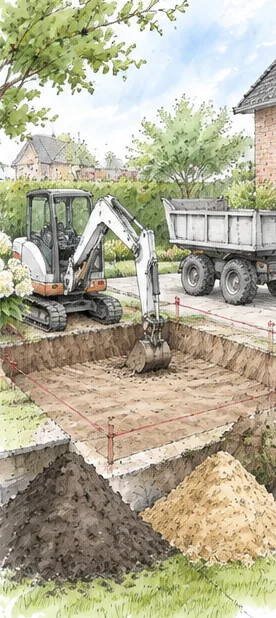
We excavate for patios, walls and ponds, and strip off old turf, roots and topsoil.
Before a garden can grow, the ground has to be right. We excavate, replace soil, dig trenches and install drainage, with the right machinery and an eye on what comes next.
Lawns, patios, driveways and beds have one thing in common: they are only as good as the ground beneath them. If it is compacted, water collects. If there is rubble in it, plants struggle. If there is no fall, rain runs towards the house instead of away from it.
On new-build plots in particular, heavy construction vehicles have often compacted the soil deep down. Leftover concrete, stones and plastic sheeting add to the problem. Sow a lawn or lay slabs straight onto this and you will usually regret it within the first year.
Careful groundworks lay the foundation. We take soil away where there is too much and fill where there is too little. We loosen, replace and shape the ground so that water drains away and plants can root.
As a landscaping firm, we also build everything that comes afterwards. So we plan the groundworks around the finished result from the start, not just as a hole in the ground.
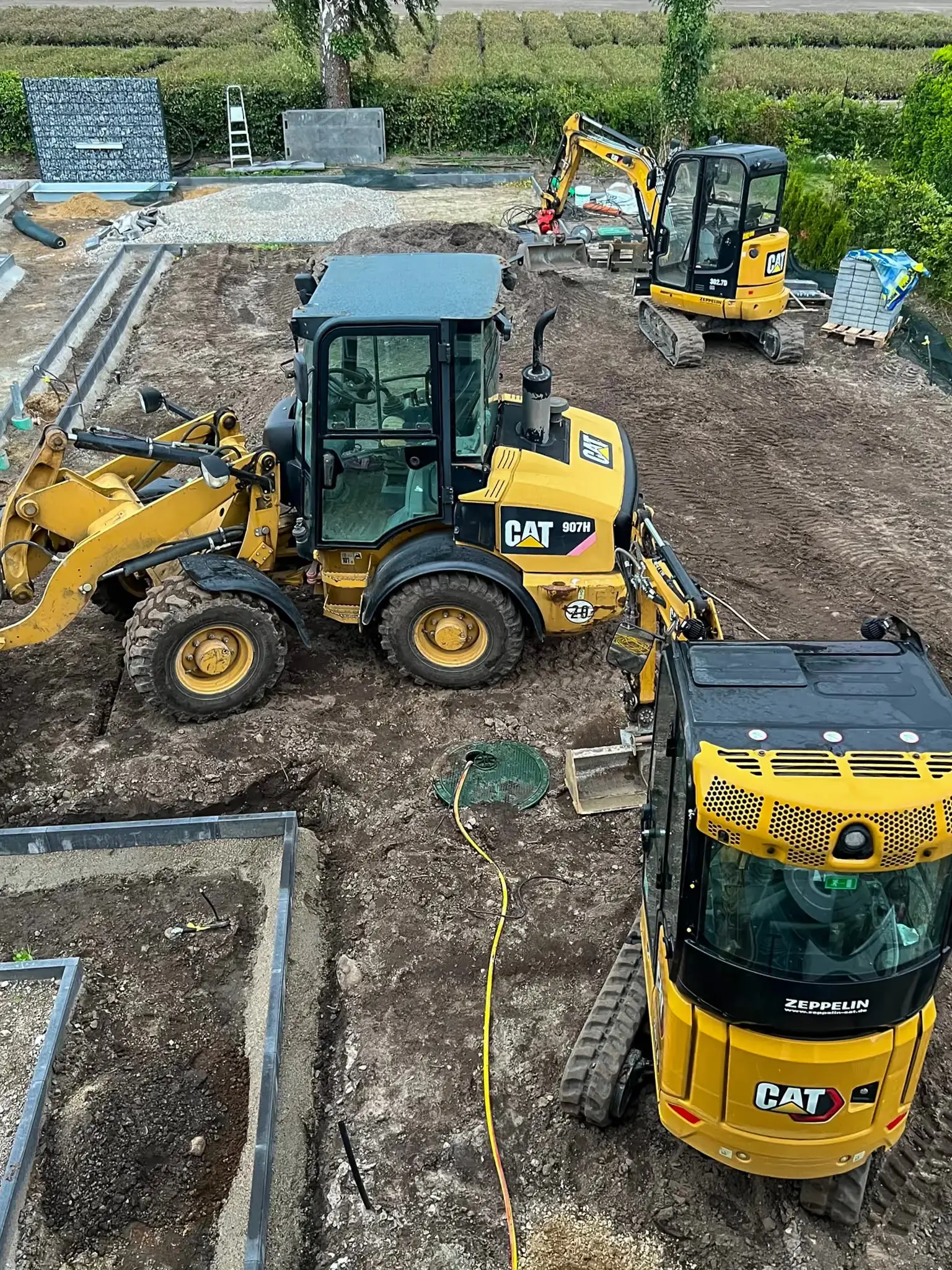
For many homeowners, this is the moment the garden project becomes real. At seven in the morning the low-loader pulls up and the mini digger climbs down. An hour later the garden looks like a small building site. That is intended. What happens over the next few hours decides how your lawn, patio and beds will look in ten years.
Groundworks have a poor reputation: noisy, dirty, “it’s only digging”. In fact they are precision work. A few centimetres out at formation level decides whether rain runs off the patio or stands at the door. A compacted layer that goes unnoticed decides whether a tree takes or starts to fail after three years. That is why we work with a laser and a levelling instrument and never check levels by eye.
Very different soils meet in the Hamburg area. The sandy geest soil around Pinneberg, Halstenbek and Norderstedt drains well and is easy to work, but holds little water. In the Elbe marshes and parts of the Vierlande, heavy, damp soils with a high water table dominate. And on new-build estates we often find made-up ground of unknown origin. Each of these calls for a different approach, from soil replacement and drainage to targeted soil improvement.
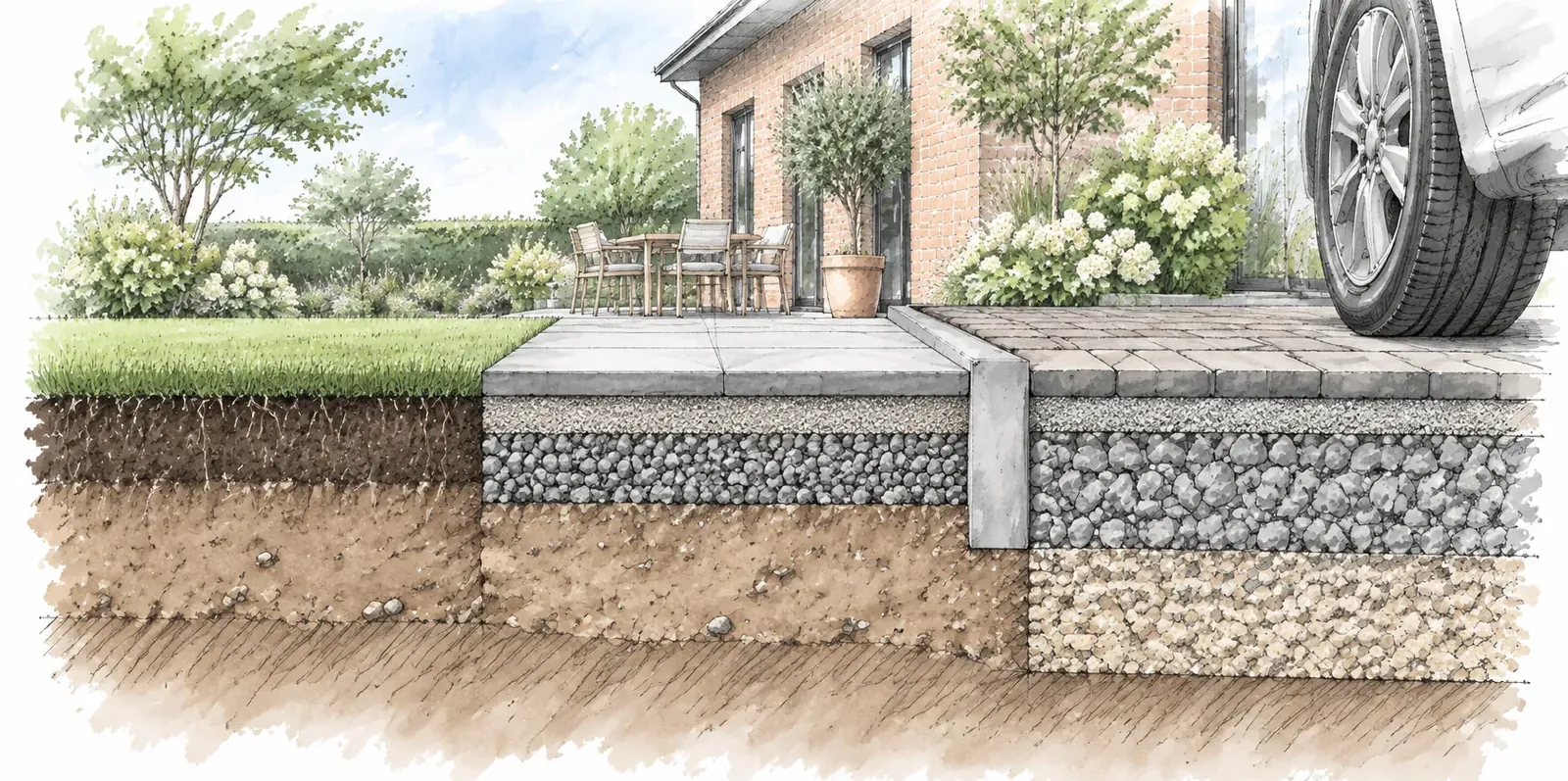
Whether under a lawn, a bed or paving, three layers decide whether an area lasts and thrives.
 AI · AI-generated
A lawn mainly needs loosened ground and a layer of humus-rich topsoil. Beneath a patio lie a bedding layer of grit and a compacted crushed-stone sub-base. A driveway that takes cars gets a much stronger build-up with an extra frost-protection layer, because a car brings far more load. The exact thicknesses depend on the soil and the use.
The natural ground must be load-bearing and free-draining. We loosen compacted areas and drain wet spots.
Beneath paths, patios and driveways comes a compacted layer of crushed stone or graded aggregate. It is frost-resistant and lets water through.
Lawns and beds need humus-rich, crumbly topsoil, free of stones, roots and rubble, usually 20 to 30 cm deep.
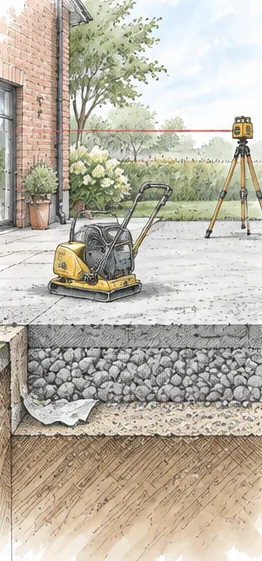
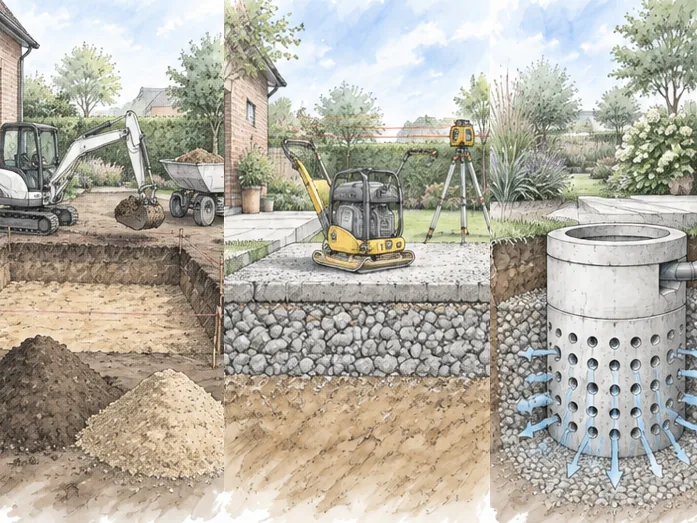
In groundworks, compaction is both a blessing and a curse. Under paths, patios and driveways it is essential: sub-base layers go in about 15 to 25 cm at a time, and each one is compacted with a plate compactor so that nothing settles later. Under lawns and beds, compaction is the worst enemy. Here the soil has to be loose and crumbly so that water can soak away and roots can grow deep.
AI · AI-generatedWe excavate for patios, walls and ponds, and strip off old turf, roots and topsoil.
 AI · AI-generated
We replace poor soil with load-bearing material or fresh topsoil and finish it as an even formation level with a fall.
 AI · AI-generated
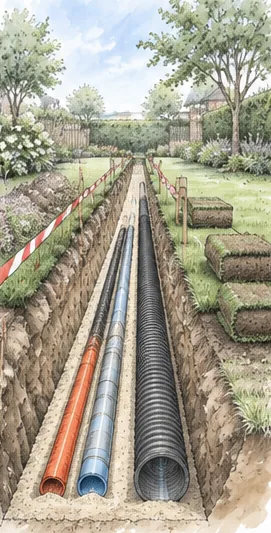
We dig trenches for water, electricity, irrigation and drainage, and backfill them properly.
 AI · AI-generated
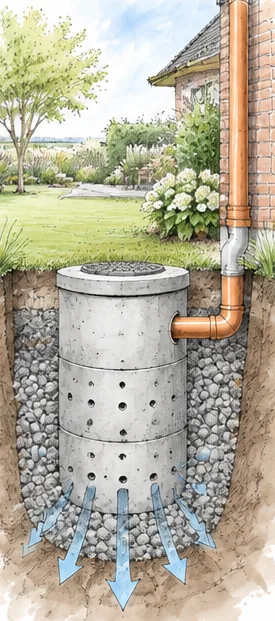
We install drainage, inspection chambers and soakaway chambers so that wet areas dry out and rainwater drains away in a controlled way.
 AI · AI-generated
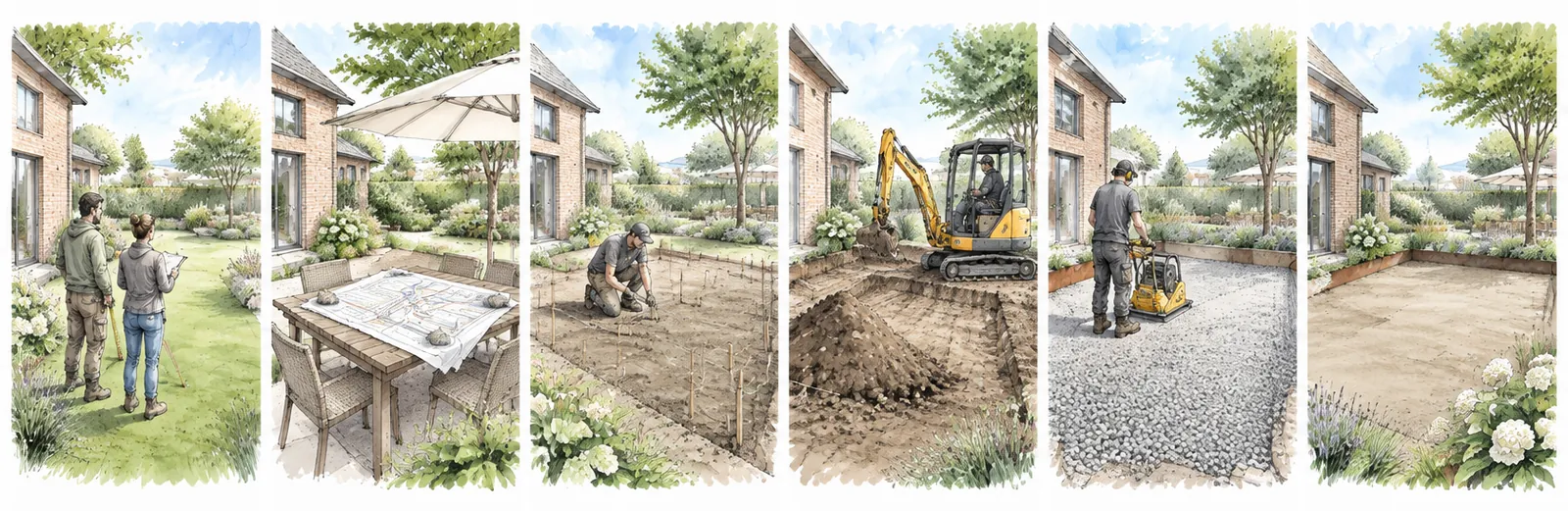
First we talk through on site what is to be built and check the utility plans so that nothing is damaged during digging. Then we set out the areas with pegs and string. The mini digger excavates the soil, and the plate compactor compacts the crushed stone layer by layer. The result is an even formation level with the fall it needs, ready for a lawn or paving.
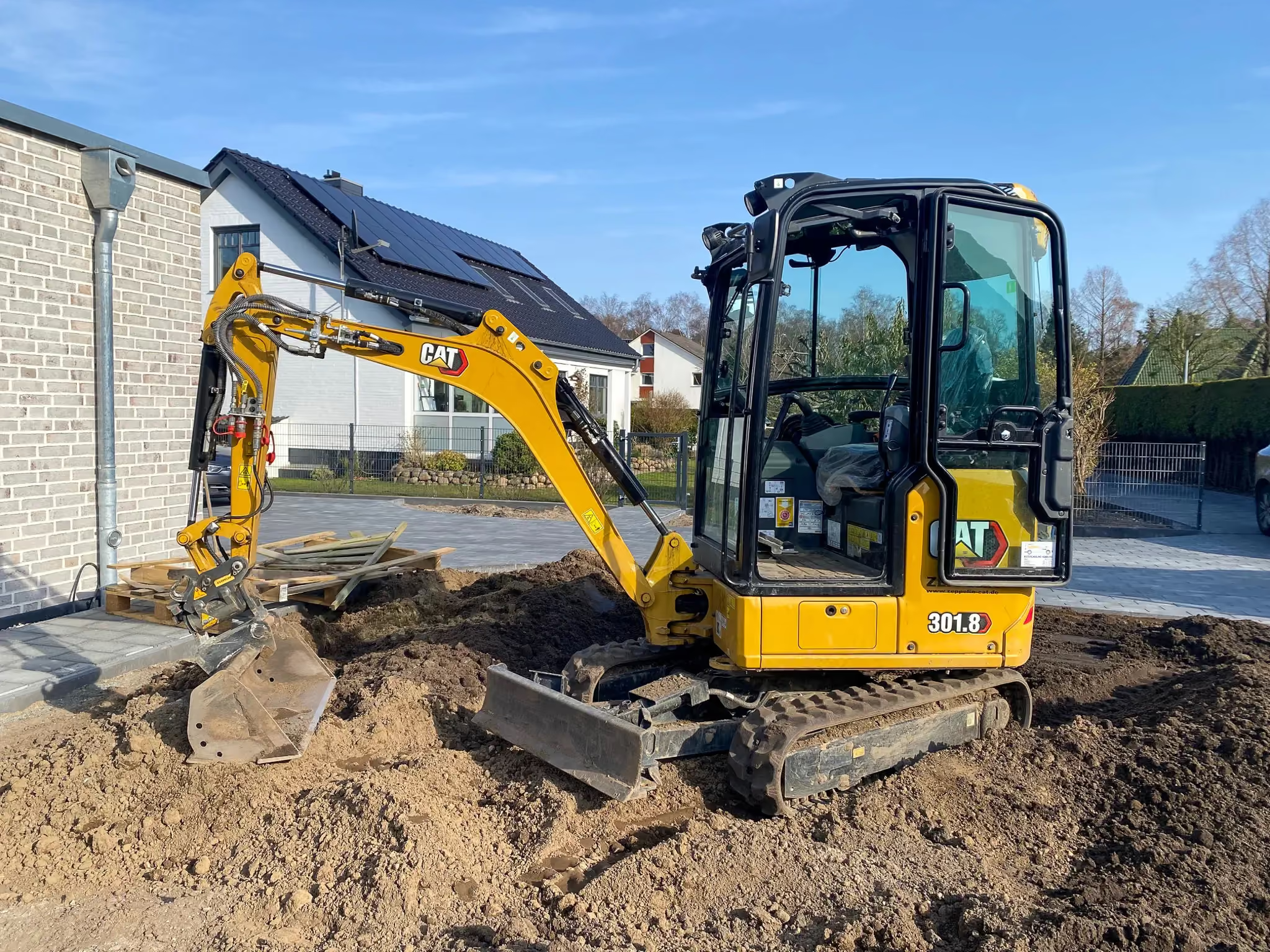
Our mini digger fits through narrow entrances and garden gates. Where needed, we protect lawns and paving with ground protection mats.
Good topsoil is stored and reused. Surplus excavated material and rubble are taken away separately, with documented disposal.
The dark top layer of soil takes centuries to form. It is full of life and nutrients, and it is quickly ruined if it is mixed with subsoil or squashed by heavy machinery. That is why the German Federal Building Code (Baugesetzbuch) expressly requires topsoil to be preserved and protected during building work. We strip it separately at the start, store it loosely in heaps and put it back at the end.
We separate the rest of the excavated material carefully too: clean sand, clay, rubble and contaminated soil are each recycled or disposed of differently. That protects the environment and it also affects the cost, because mixed material is far more expensive to dispose of.
Good to know: A cubic metre of excavated soil weighs around 1.5 to 2 tonnes, depending on the soil. A 30 m² patio with 40 cm of excavation adds up to roughly 12 m³ or 20 tonnes of soil. That is several lorry loads.
Almost every garden project produces spare soil: sometimes a few wheelbarrows, sometimes several lorry loads. What happens to it is not just a question of cost. Topsoil is valuable. It takes centuries to form, and the Federal Building Code expressly requires it to be preserved and reused during building work. So we strip it separately, store it loosely in heaps and later put it back where lawns and beds are planned.
Subsoil and rubble, which are often buried on new-build plots, are a different matter. Anything that cannot stay on the plot is taken away. Since 2023 a nationwide regulation on substitute building materials (Ersatzbaustoffverordnung) has governed how excavated soil must be recycled or disposed of. Depending on the quantity and origin, a soil sample may be needed before a landfill site or recycler accepts the material. We clarify this in advance and list the costs separately in the quote, so there are no surprises later.
A well-planned balance of cut and fill often saves more money than any discount. If you raise a patio slightly or shape a low mound in the garden, some of the excavated soil can go straight back in. That saves journeys, disposal fees and CO₂, and gives the garden a more interesting shape along the way.
Practical tip: Never store topsoil in heaps higher than about two metres, and never where construction vehicles drive over it. Compacted topsoil loses its structure and takes a lot of work to loosen later.
What goes wrong in the ground often only shows months later. These are the mistakes we see most often.
After a house is built, the soil is often compacted deep down. Without deep loosening, water collects and the lawn stays thin.
Stones, concrete and scraps of plastic sheeting in the soil get in the way of roots and water. They need to come out, not just be covered over.
Without a gentle fall away from the house, rain collects against the wall or in hollows in the lawn.
Dig without a utility search and you risk damaging cables and pipes. That is expensive and dangerous.
We look at the ground, the access and the soil, and find out what is to be built on the area later.
We request the utility plans, set levels and falls, and plan machinery and disposal.
Areas, levels and trenches are marked out on site so that everyone knows what is happening.
We strip, excavate, separate the soil and build in load-bearing material layer by layer.
The sub-base layers are compacted, and the formation level is formed with a fall and checked.
The area is ready for a lawn, beds, a patio or paving. If you like, we carry straight on with the build.
How much work the groundworks involve depends on the soil, the quantity and the access. A tight garden behind the house needs different machinery from an open building plot.
Before the first spade goes in, we ask the utility companies where their lines run. We expose critical areas by hand.
Groundworks rarely take place on an open field. Usually they happen in the middle of a residential area. We agree access and working hours, keep the road and pavement clean and protect everything that is to stay. Trees get trunk protection and nothing drives over their root zone. Paving and lawns are covered with ground protection mats.
Wherever possible, we reuse good topsoil on the plot. That saves transport and disposal and benefits the new garden.
The cost depends on the quantity, soil type, access and disposal. After the site visit you receive a quote listing every item.
 AI · AI-generated
In established gardens too, we work as gently as possible with a mini digger and ground protection mats. We protect paths and lawns that are to stay.
It is often worth sorting out rainwater at the same time. A soakaway or drainage can be installed during the groundworks with little extra effort.
More about soakaways ⟶Excavation, stripping of old turf and topsoil, soil replacement, contouring, formation level, service trenches, and drainage and chambers.
Usually, yes. Our mini digger gets through narrow entrances and garden gates. Where that is not enough, we work with smaller machinery or by hand.
Good topsoil is reused wherever possible. Surplus soil and rubble are taken away separately and disposed of properly.
We request the utility plans from the providers. It helps if you know about any private lines, for example to the garage or garden shed.
When the soil is badly compacted, full of rubble or very clayey and wet. Loosening combined with soil improvement is often enough.
For a typical garden, usually between one and a few days, depending on quantity, access and weather.
Yes. We hand over a clean formation level. If you like, we carry straight on with the lawn, patio or irrigation.
In Hamburg, mainly in the west and north, and in the Pinneberg district: Pinneberg, Halstenbek, Rellingen, Wedel, Quickborn, Schenefeld and Tangstedt.
Tell us what you want to build on the area. We will come out, look at the soil and the access, and give you a quote.