
 AI · AI-generated
2 · Smart irrigation
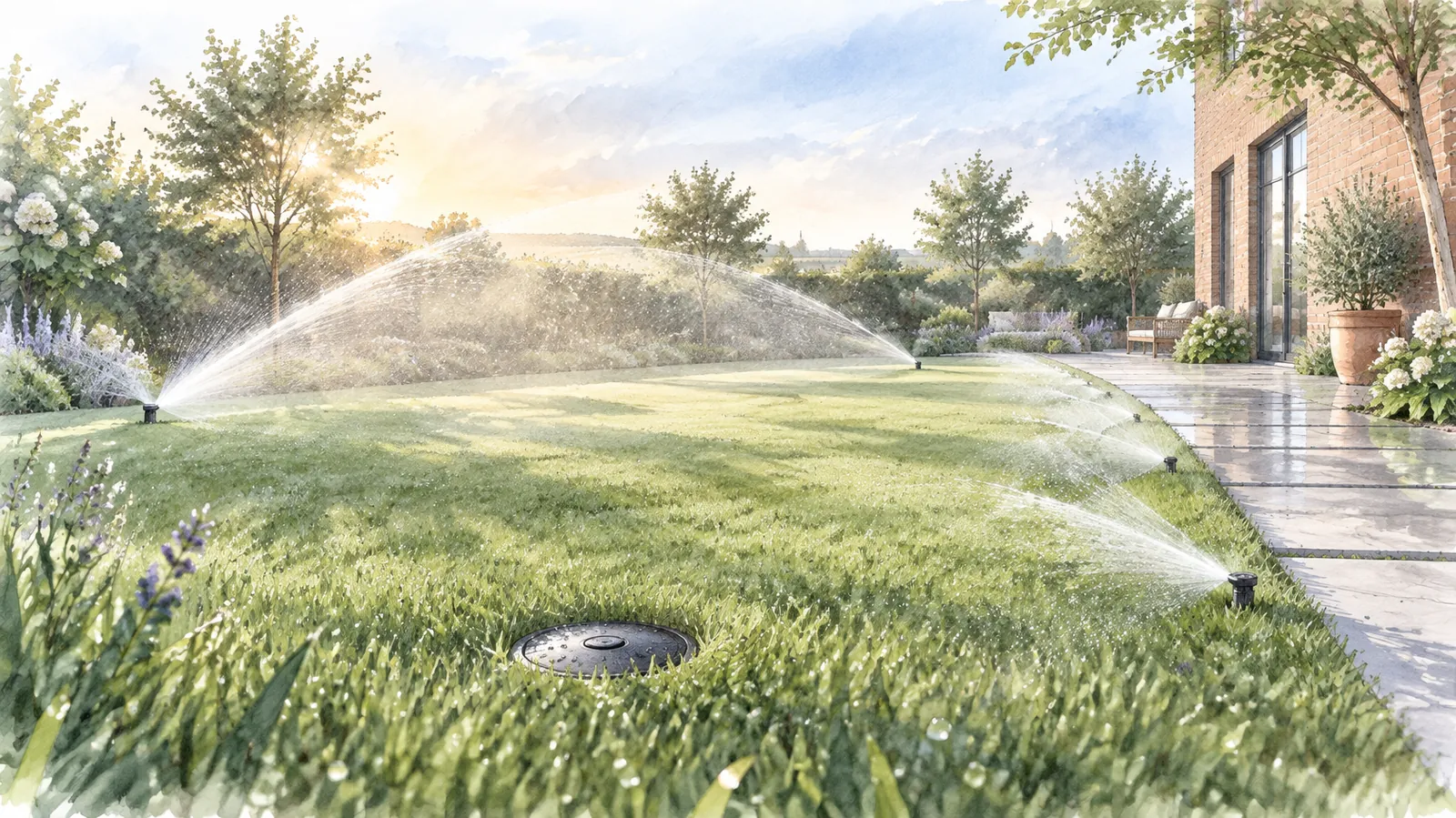
Pop-up sprinklers in the lawn and drip line under the mulch, run by app control with weather data and a soil moisture sensor. The garden is watered only when it needs it.
Less lawn, more life and a smarter way with water. These are the trends that will shape gardens in northern Germany in 2027, and the ones that are here to stay. We look at each of them from our day-to-day work as a landscaping firm based in Tangstedt.
If you have driven through Hamburg, Pinneberg or Tangstedt in recent summers, you will have seen it: brown lawns in July and hedges scorched by drought. A few weeks later came thunderstorms that left patios and basements under water. The climate in the north is becoming more extreme, with longer dry spells and heavier downpours.
At the same time, people expect different things from their garden. It should be living space, a place to retreat to and a habitat for insects and birds, and it should take as little work as possible. That is why many of the trends of the coming years are not fashions. They are answers to these two developments.
We have put together the ten developments we come across most often in conversations and on site, and assessed each one honestly. What is really worth doing? What looks lovely but needs a lot of care? And what suits northern German soils and plots particularly well?
No garden needs all ten trends. Two or three well-chosen changes are often enough to make a garden more future-proof, better looking and easier to care for.
What stands out is how much of the list is about water. Three of the ten trends, the sponge garden, smart irrigation and unsealing, are about holding on to rain and using it wisely. The big trends of the coming years are quieter than earlier fashions. They do not make gardens showier. They make them more resilient, and in the end often more relaxing for the people who live in them.
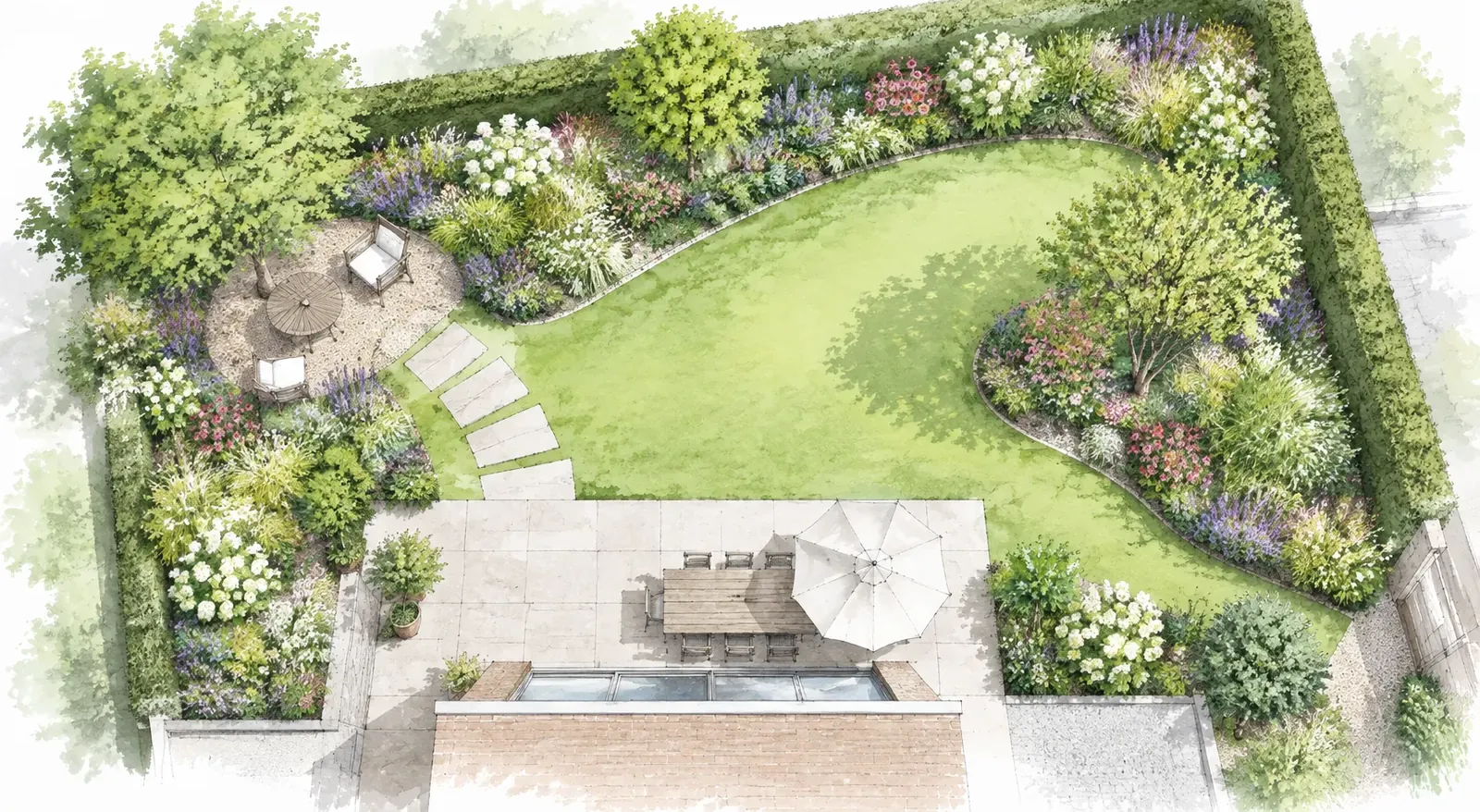
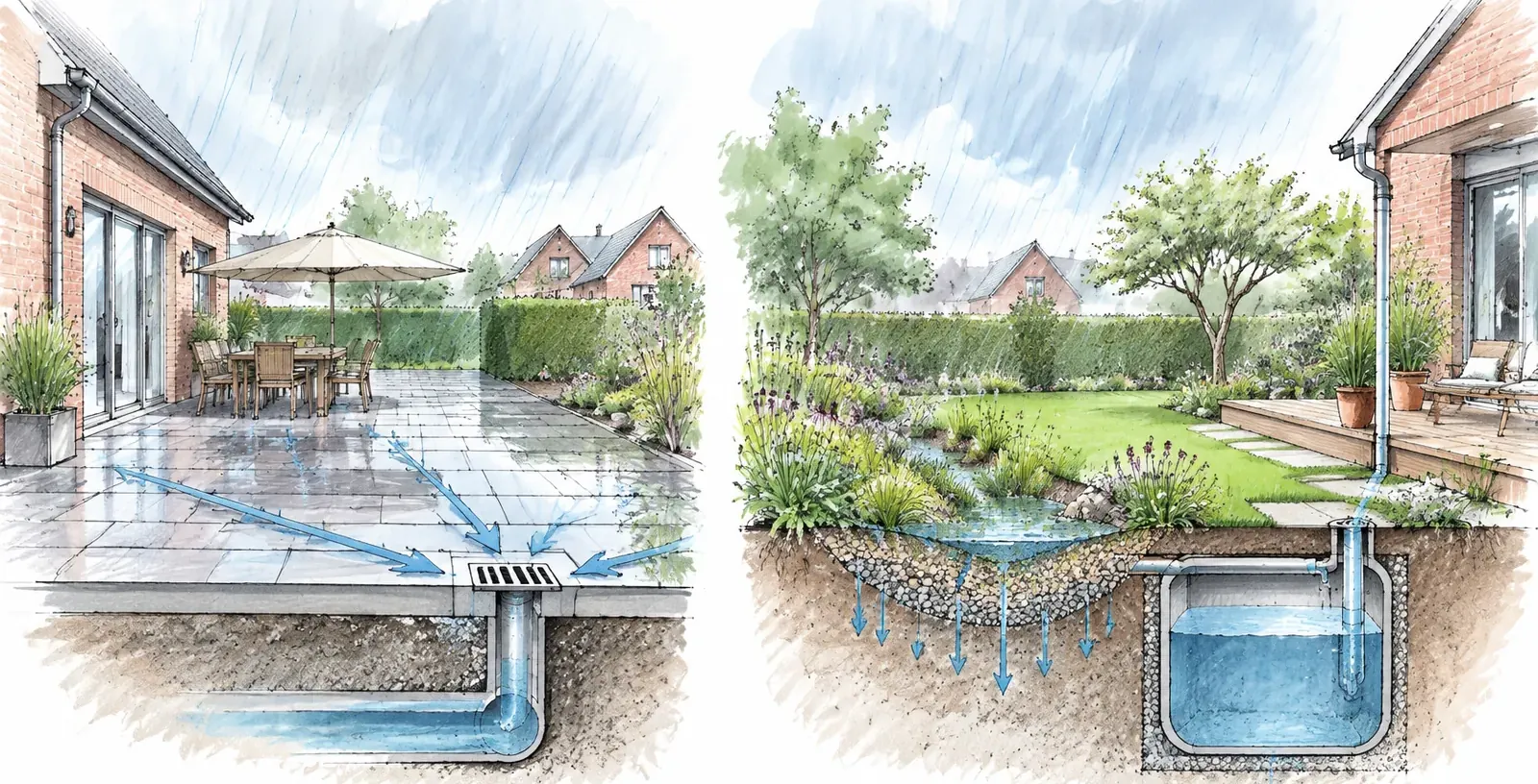
The most important trend is also the hardest to miss. Gardens should take up water, store it and release it slowly, like a sponge. Three elements make that possible.
 AI · AI-generated
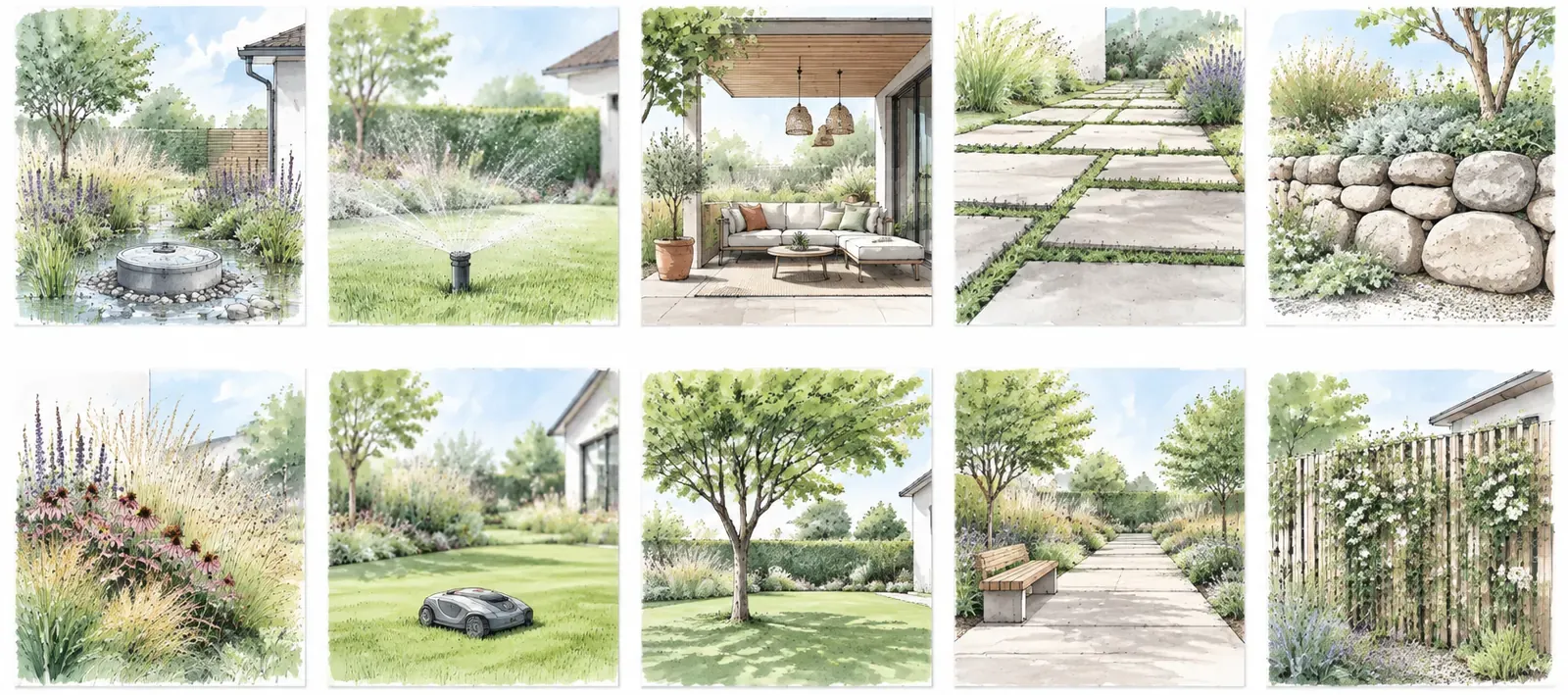
Ten ideas that will shape gardens in northern Germany in 2027, from the rain garden with a rainwater tank to smart irrigation, the outdoor living room, prairie-style borders, climate-resilient trees and planted privacy screens.
Slightly sunken planting areas take up rain from the roof and patio. Tough perennials cope with short spells of wet just as well as with drought.
Underground tanks collect rain for watering. The overflow drains into a soakaway instead of the sewer.
In many parts of the Pinneberg district, groundwater lies within easy reach. A garden well gives you free water for the garden, once its yield and iron content have been checked.
AI · AI-generatedPop-up sprinklers in the lawn and drip line under the mulch, run by app control with weather data and a soil moisture sensor. The garden is watered only when it needs it.
 AI · AI-generated
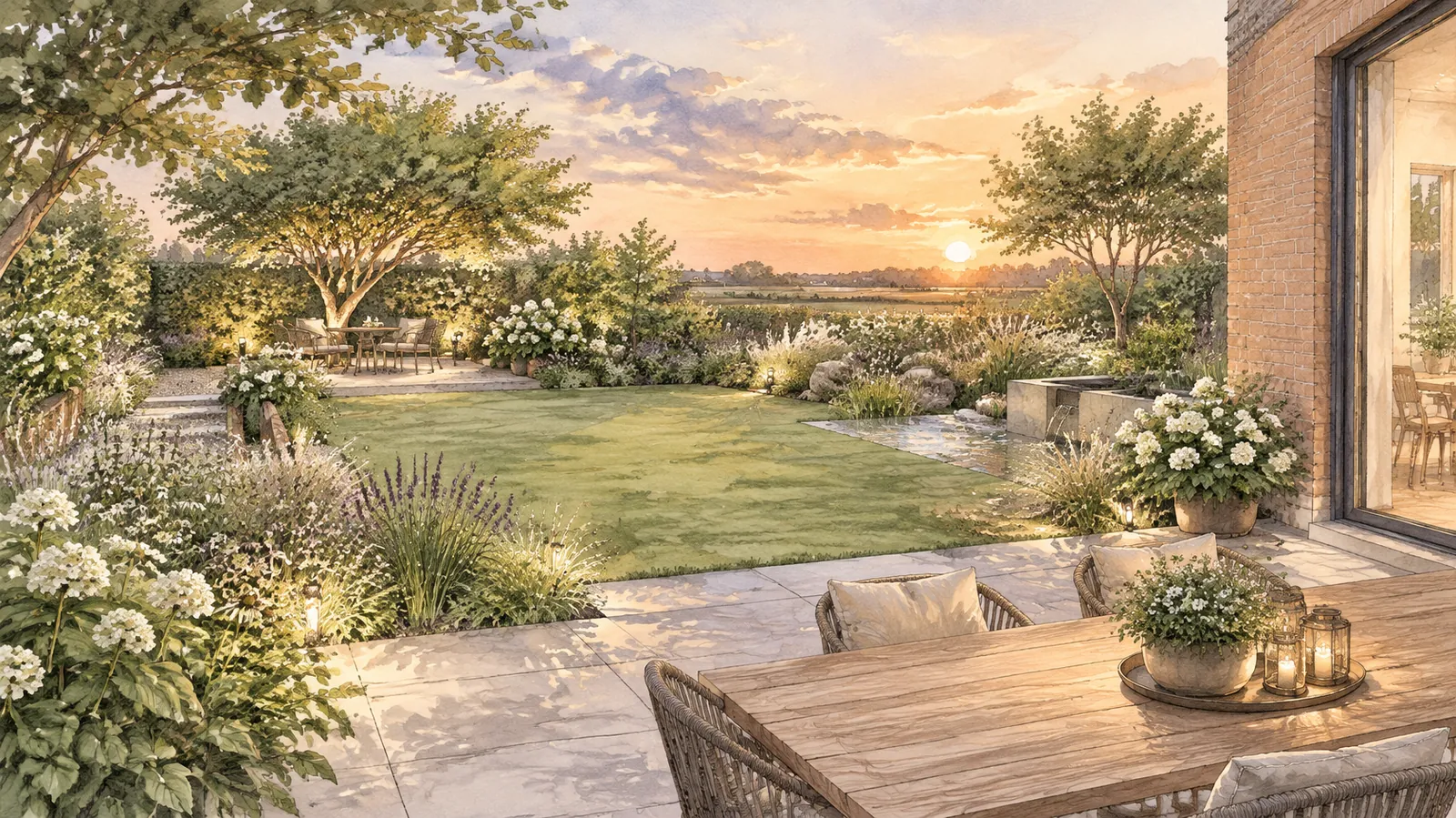
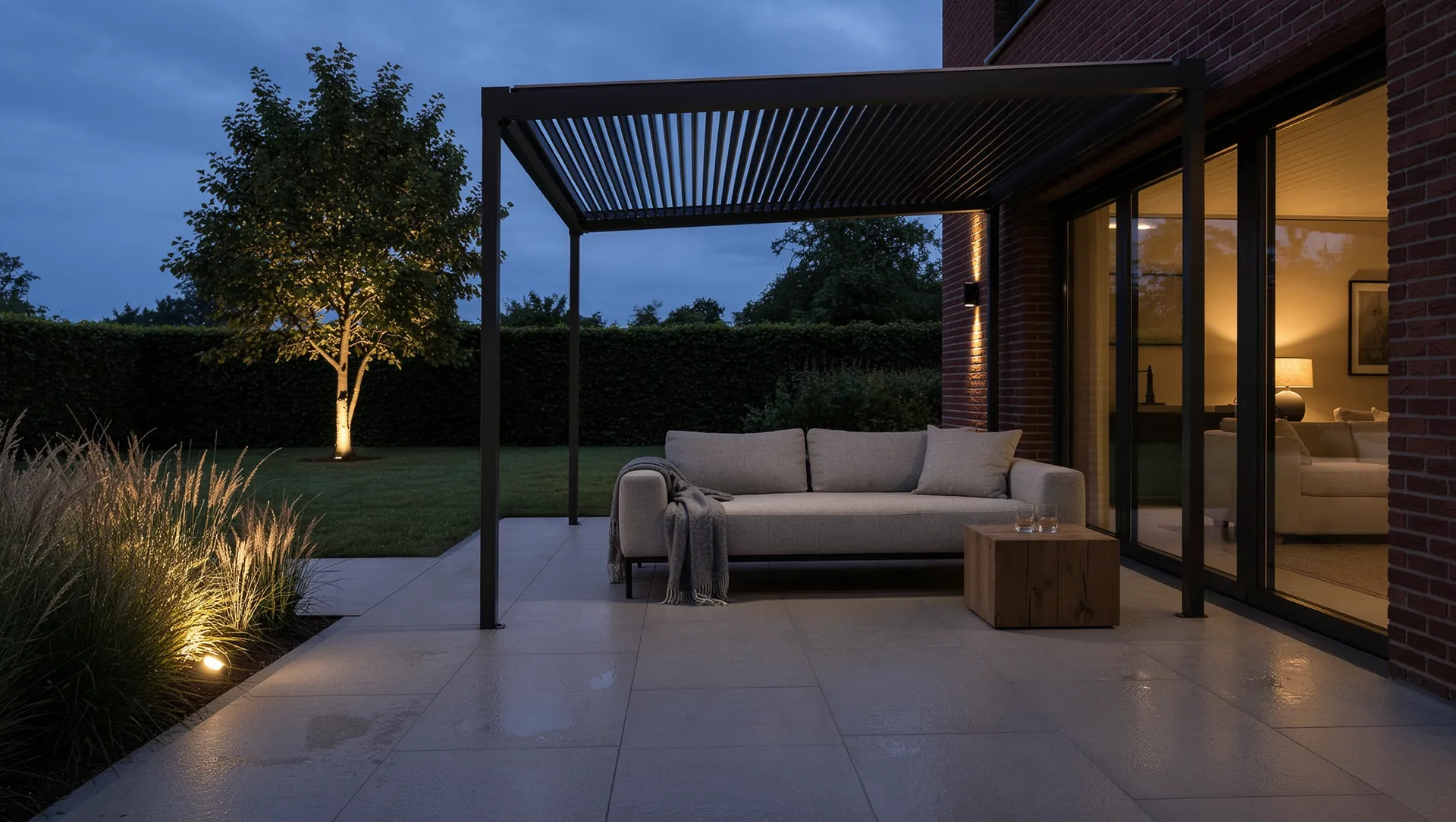
Large-format porcelain slabs, a patio roof and warm, well-placed lighting turn the patio into a room you live in from April to October.
 AI · AI-generated
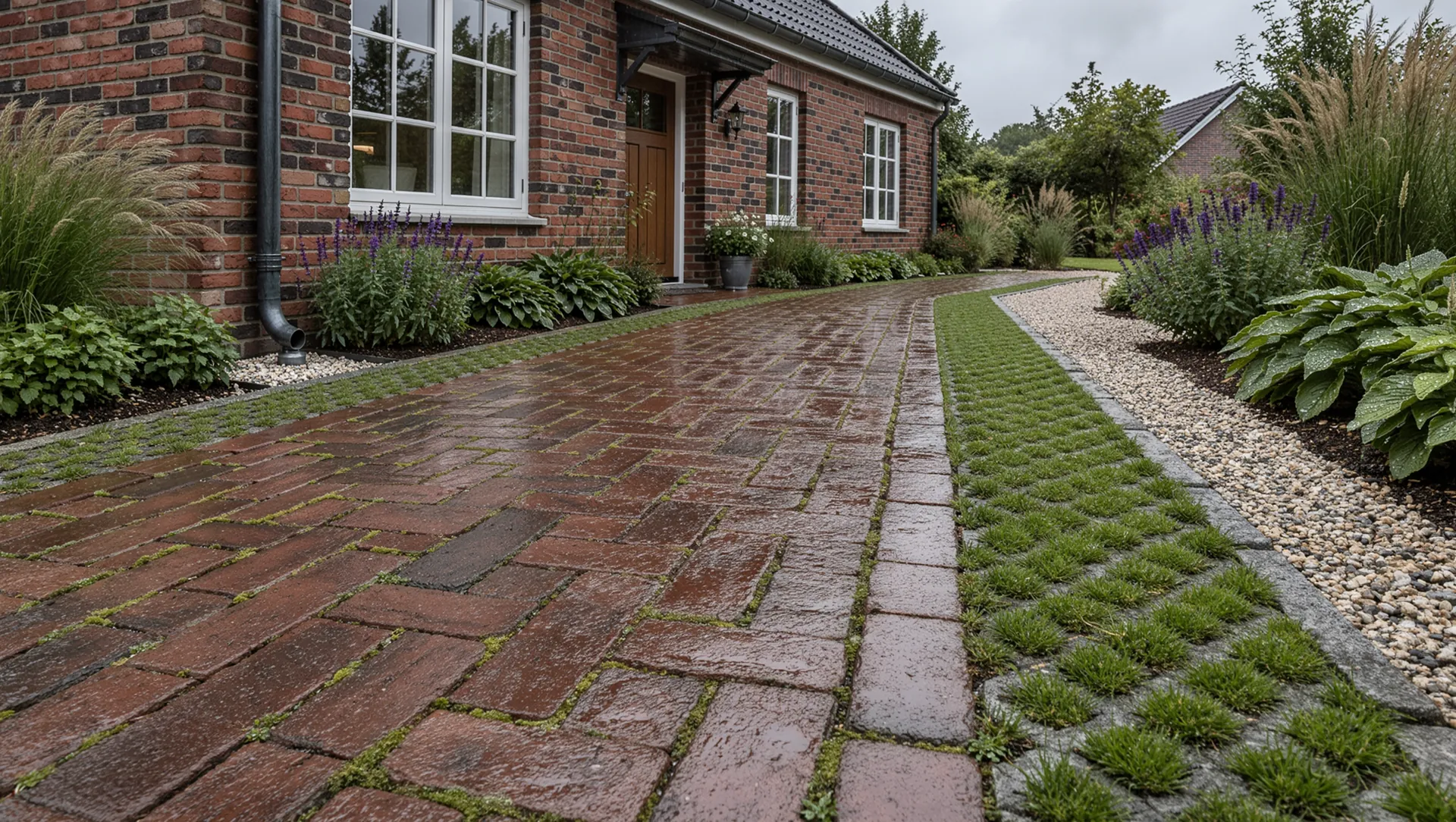
Block paving with wide joints, grass pavers and gravel paths let rain soak into the ground instead of sending it to the sewer. That cools the garden and eases the load on the drains.
 AI · AI-generated
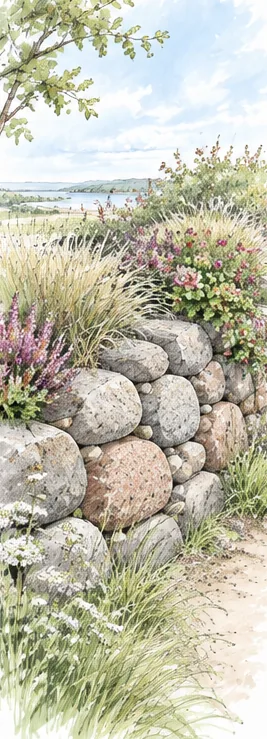
Boulders, dry stone walls and natural stone setts that have not travelled far: long-lasting, repairable and a habitat for lizards and wild bees.
No other trend saves water, time and nerves as directly as a well-planned automatic irrigation system. In the lawn, pop-up sprinklers do the work and sink back into the ground once the cycle is over. In beds and along hedges, drip line lies under the mulch and delivers water straight to the roots, with no evaporation and no wet leaves. Everything runs by app control. Weather data extends the running times on hot days, a rain sensor skips them if it rained overnight, and a soil moisture sensor makes sure the system waters only when the soil is really dry. The water comes from the mains, a well or a rainwater tank. We design every system ourselves, fit branded components and, with our maintenance service, take care of the spring start-up and the winterisation in autumn.
Large-format porcelain slabs have become the standard on patios. They absorb hardly any water, are frost-proof and stain-resistant, and can meet the living room floor almost step-free. What they need is a carefully built, even sub-base with a fall, because large slabs do not forgive unevenness. Lighting belongs here too, the kind that creates atmosphere without spoiling the night: warm white fittings that point downwards, on a timer or a motion sensor. Conduits under the patio make it easy to add more later.
 AI · AI-generated
 AI · AI-generated
Every square metre that lets rain through takes pressure off the sewer and, depending on your municipality, can even save you charges. Permeable paving, grass pavers and gravel are proven ways to do this, provided the sub-base is permeable too. When it comes to materials, people are looking closer to home. Boulders from Schleswig-Holstein, clay pavers reclaimed from demolition and local natural stone have not travelled far. They age well and can still be repaired or reused decades later.
 AI · AI-generated
On the left, rain runs across the sealed surface into the drain and on into the sewer. On the right, it soaks away in a gravel swale and the roof water ends up in the rainwater tank. This is how a sponge garden eases the load on the sewers and saves water for the garden.
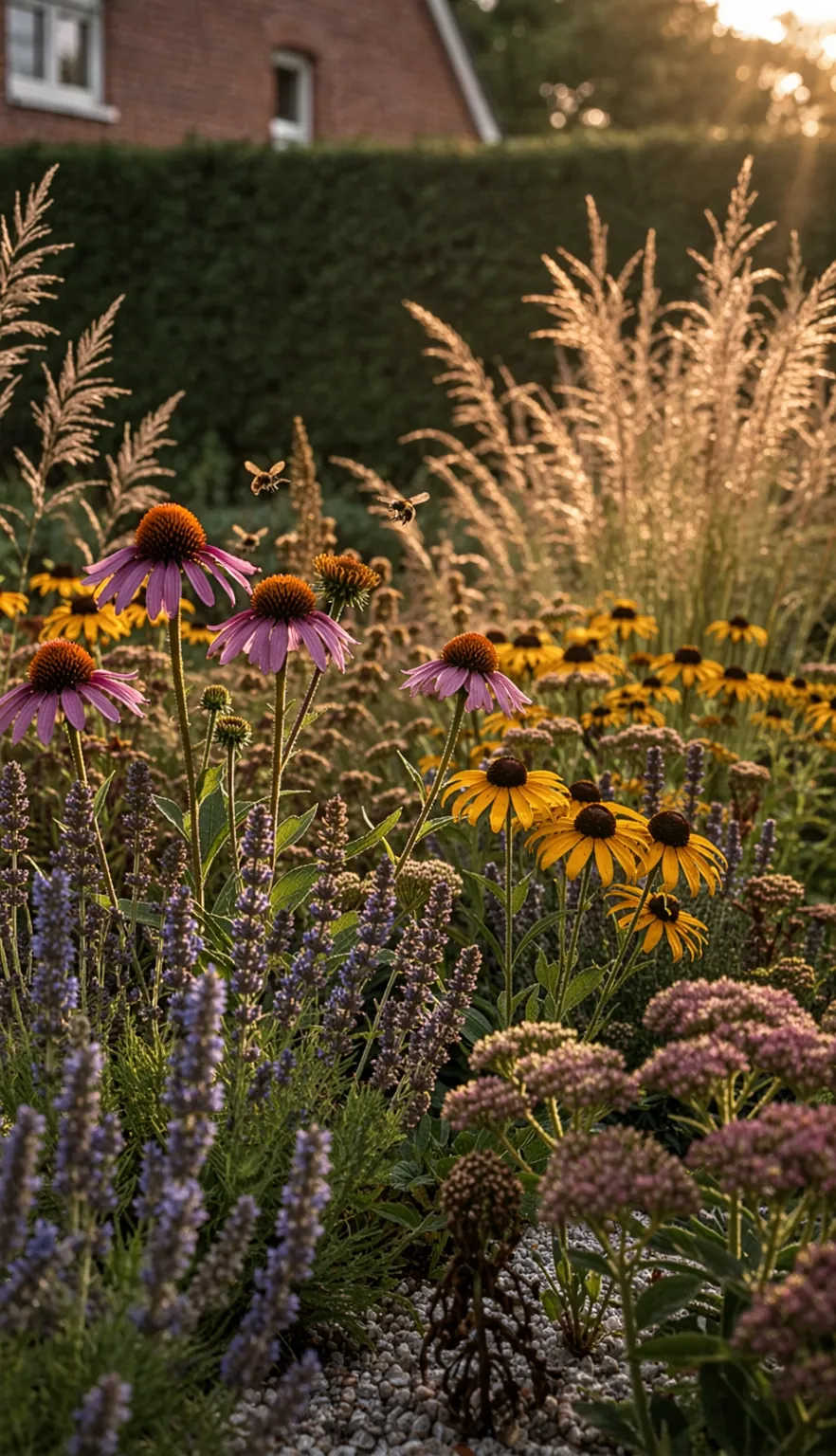
Perennials and grasses in natural-looking mixes replace lawn that is mown but never used. They are drought-tolerant, good for insects and attractive all year round.
Less area but better quality: drought-tolerant lawn mixes or roll-out turf on well-prepared soil, clean edges for the robotic mower and pop-up sprinklers for the hot weeks.
 AI · AI-generated
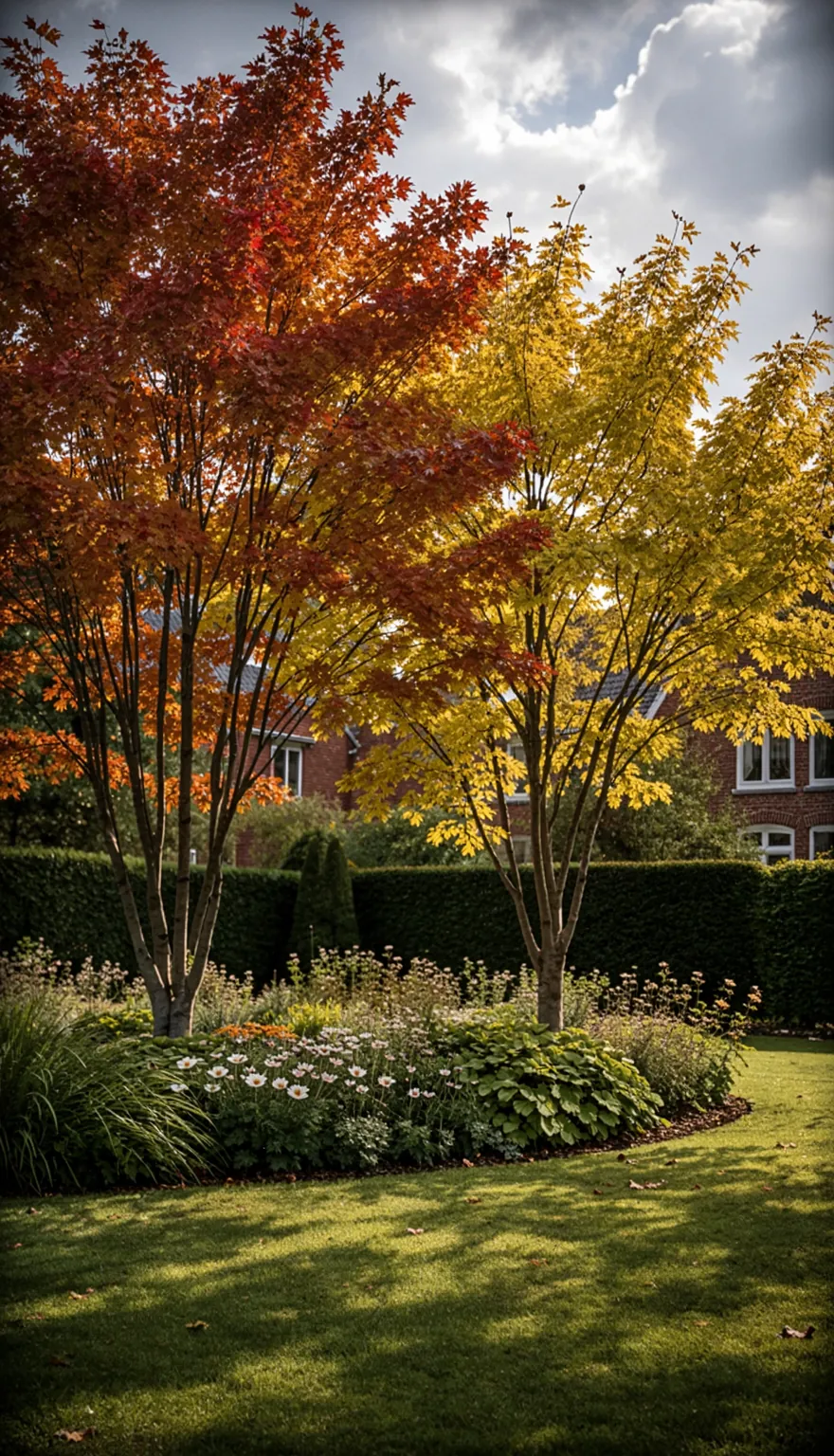
A tree near the house gives shade, cools the patio noticeably and holds back rain. The species in demand are those that cope with heat and drought and still fit a domestic garden, such as field maple, hop hornbeam, ornamental pear or serviceberry. What matters is the position, the soil and the room the crown will need in twenty years. In its first few years a young tree needs a reliable supply of water. A drip ring connected to the irrigation system does the watering for you.
 AI · AI-generated
A garden should grow with the family: with children who play in the sandpit today, and with parents who will not want to climb steps in twenty years. Wide, level paths, gentle ramps in place of steps, step-free thresholds to the patio and raised beds at a comfortable working height make the garden usable for everyone. If you are building from scratch, it is best to plan these details in from the start. Adding them later usually costs more.
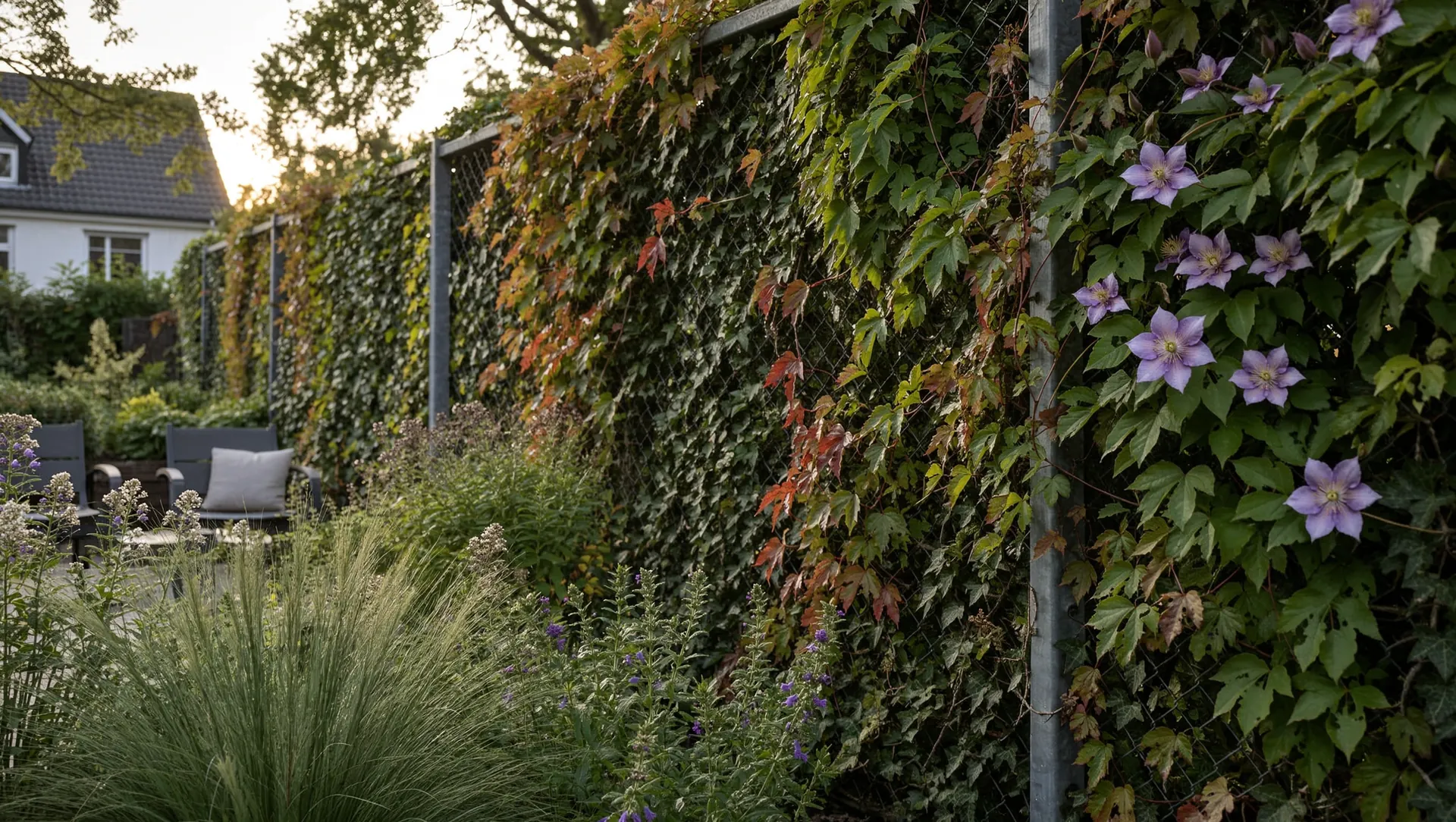
Plastic panels and gabions with no greenery are losing their appeal. People want a privacy screen that is alive: a sturdy welded mesh fence with ivy, Virginia creeper or clematis climbing up it, or a fence with a hedge of hornbeam, privet or yew planted in front. That gives you security and privacy straight away, together with greenery that grows denser over the years and offers birds places to nest. Frost-proof foundations matter, and so does a narrow maintenance strip between fence and hedge.
 AI · AI-generated
In the city it is often a matter of a few square metres. A terraced-house garden in Eimsbüttel, Niendorf or Lokstedt gains most from unsealing, a tree that gives shade and a patio that works like an extra room. Further out, in places such as Pinneberg, Halstenbek, Rellingen, Quickborn or Tangstedt, the plots are larger. That is where the sponge garden pays off most, and where unused lawn can become prairie-style borders or wildflower meadow.
The soil has a say as well. On the sandy geest soil around Pinneberg, drought-tolerant perennials and gravel beds do extremely well. In the heavy, damp ground of the marshes, the answer is swales, soakaways and plants that do not mind wet feet.
Planting examples for the north: woodland sage, catmint, hardy geranium, sedum, coneflower and feather grass for sunny, dry beds; purple loosestrife, burnet and iris for swales that are wet at times.
Reading this list does not mean digging up the whole garden tomorrow. Most of the trends can be introduced step by step, and that is how the best gardens come about: not all at once, but over time. A realistic plan spreads the work over several years and starts with whatever makes everything else possible.
There is a practical reason for this order. Cables, pipes and the sub-base lie beneath everything else. Build them first and you will not have to dig anything up again later. And trees need time: the sooner they are planted, the sooner they give shade.
Not everything that magazines and social media celebrate as a trend suits a garden in northern Germany. Colour fashions come and go, and some materials are out of favour again within a few years. The developments on this page stand on firmer ground. They respond to changing summers, heavy rain, rising water prices and the wish to really use the garden. That is why we talk about directions more than fashions, and why we suggest combining them with your own taste instead of copying a picture from the internet.
Our advice: Start with a garden plan. It shows which ideas suit your plot, what order makes sense and roughly what it will cost.
Not everything that is popular right now is good for the garden. We are wary of these ideas, and we have better alternatives.
It heats up, offers no habitat and is restricted in many places. Better: a living gravel bed with perennials.
It gets very hot in summer, seals the soil and sheds microplastics. Better: a hard-wearing lawn with good irrigation.
It disturbs insects, birds and neighbours. Better: warm light on a timer or a motion sensor.
Individual devices from the DIY store, with no conduits and no overall concept, end in a tangle of cables. Better: plan cables and controls in from the start.
We look at the soil, where water flows, the light and how you use your garden.
What should the garden be able to do, and how much care are you willing to put in?
We recommend the two or three ideas that best suit your plot and your everyday life.
A design shows how everything fits together, even if you build in stages.
Water and technical systems first, then the surfaces, and the planting last.
For the first two years we look after the planting and irrigation until the garden is established.
A small terraced-house garden in Eimsbüttel needs different answers from a large plot in Tangstedt or a new build in Halstenbek. Not every trend fits everywhere.
So we begin with an honest look at your everyday life. How much time do you want to spend in the garden, and how much of it working?
Trends come and go, in the garden just as in fashion. But some developments have what it takes to last, because they solve real problems. How we deal with rainwater is one of them. So are robust planting schemes and irrigation that waters only when it is needed. Money spent here is money spent on the coming decades.
Other ideas are more a matter of taste. An outdoor living room with an outdoor kitchen is wonderful if you use it, and an expensive backdrop if you do not. Our advice after many conversations: start with what makes the garden more resilient, then add what gives you pleasure.
Better to do two trends properly than five by halves. Water and plants come first. Lighting and technical systems are easy to add later if the conduits are in place.
Trends do not have to be expensive. Many can be introduced step by step, and most cheaply when building work is going on anyway. The figures are guide prices for the Hamburg area.
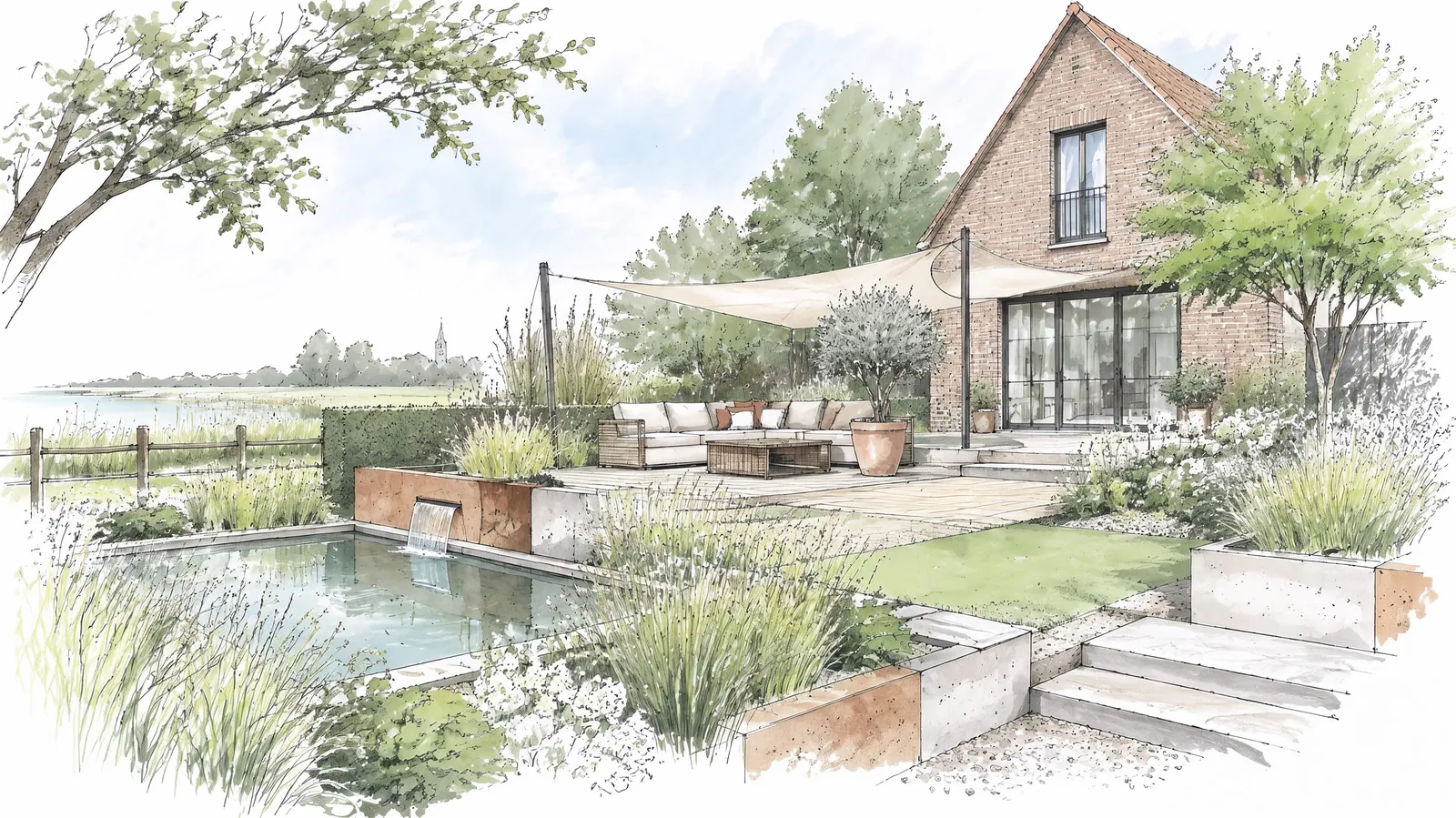 AI · AI-generated
Hardly anyone rebuilds their garden from scratch. Far more often, the aim is to get an existing garden ready for the coming decades, one step at a time: turning part of the lawn into a perennial bed, leading a downpipe into a swale, replacing the old patio with a larger one.
We help you find the right order, so that each step fits the next.
More on garden design ⟶Using water wisely: storing rain, letting it soak away and using it for watering where it is needed. That pays off in dry spells and in heavy rain alike.
No. Gravel laid over a membrane heats up, offers no habitat and is restricted or banned in many municipalities. Living gravel beds with plants are the better alternative.
No. A lawn still makes sense where it is used, for playing and lying on. Leftover areas that are only ever mown often work better as a perennial bed or wildflower meadow.
Yes, once they have settled in, which takes about two years: cut back once a year and weed now and then. In the first few months they need water and attention.
Yes. Even in the rainy north there are long dry spells. A rainwater tank gives you free water for the garden and can be combined with irrigation and a soakaway.
Species that cope with heat and drought, such as field maple, hop hornbeam, ornamental pear or serviceberry. What matters is the position, the soil and the room for the crown.
Yes, ideally with a master plan. That way each step fits the next, and cables and conduits are in the right place from the start.
In Hamburg, mainly in the west and north, and in the Pinneberg district: Pinneberg, Halstenbek, Rellingen, Wedel, Quickborn, Schenefeld and Tangstedt.
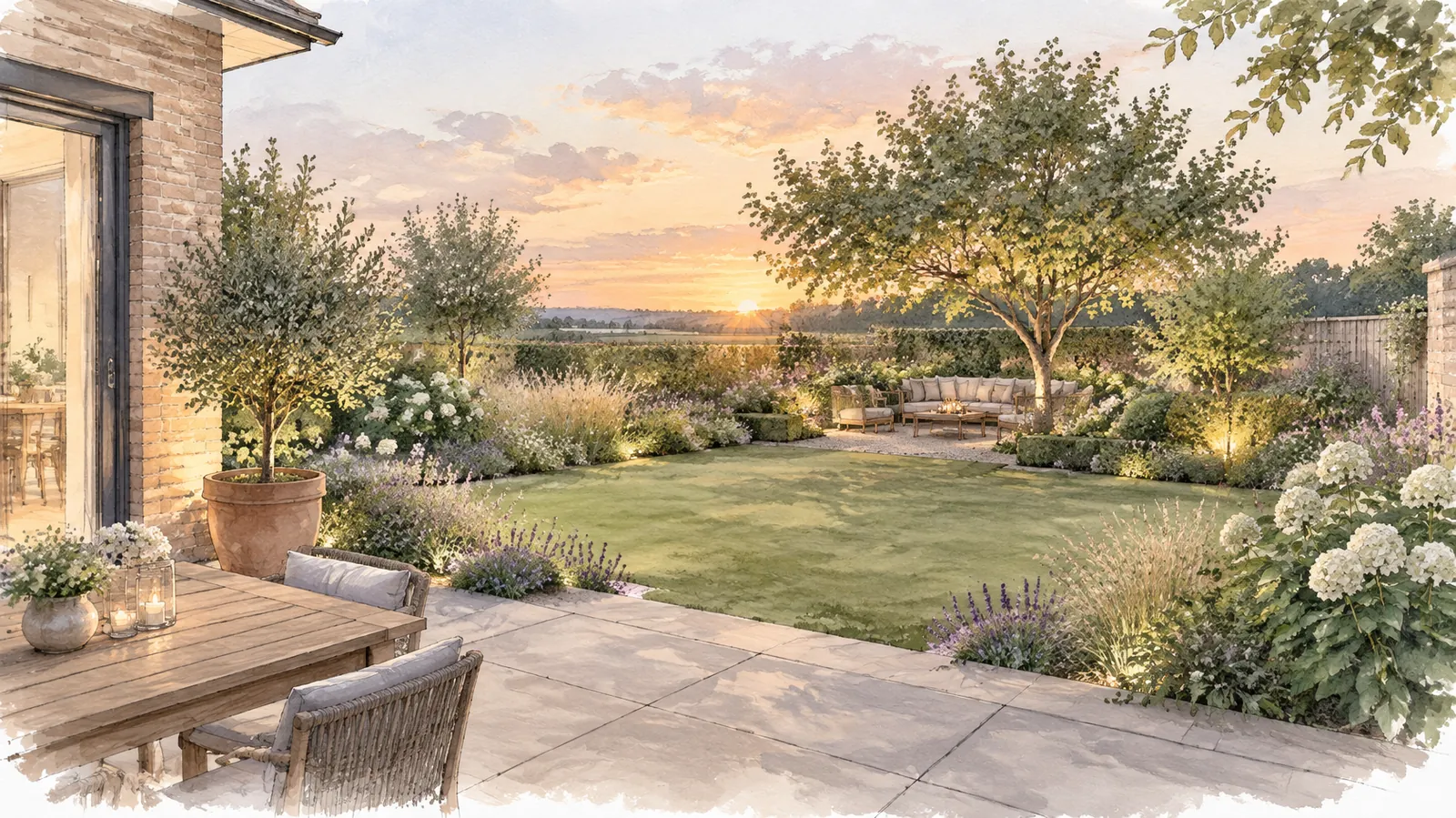
Tell us what you would like to change about your garden. We will come round and show you which trends suit your plot and your everyday life.