
 AI · AI-generated
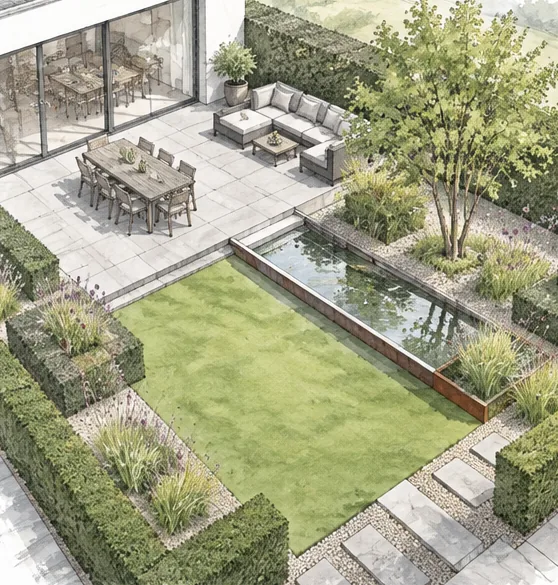
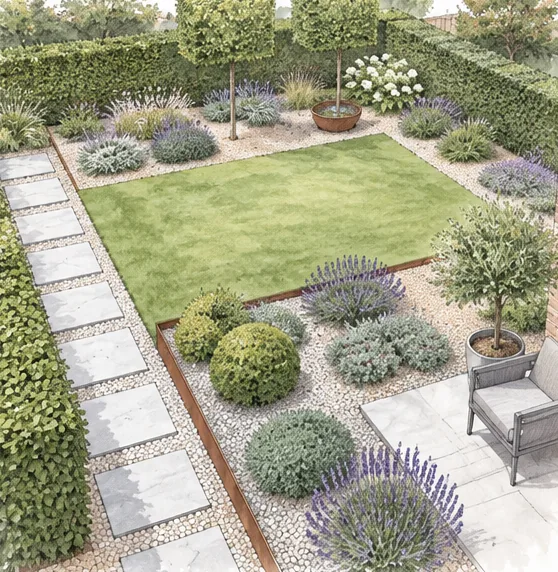
Modern & clean-lined
Large-format slabs, fair-faced concrete or Corten steel, clean lines and a few striking plants. Ideal for modern houses and for anyone who likes a tidy, low-maintenance garden.
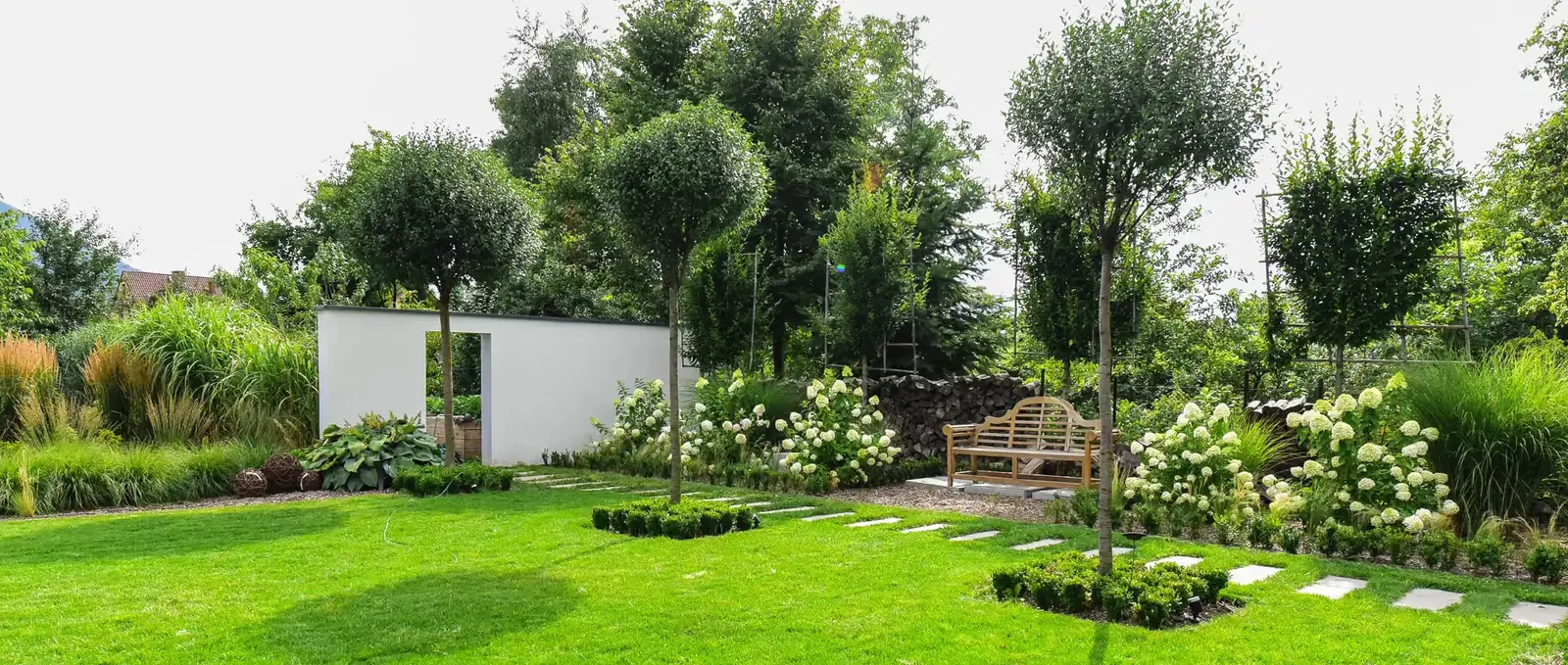
A good garden starts on paper, with a considered plan that ties paths, patio, lawn and planting together. We design and build your garden ourselves, as a landscaping firm based in Tangstedt.
Many gardens in Hamburg and the Pinneberg district grow bit by bit over the years: first the patio, then a bed, later a fence. In the end, much of it doesn't fit together. Paths lead nowhere, the patio sits in shade and the lawn becomes a shortcut.
A design turns that around. We look at the whole plot and at what you want from it. Where is the evening sun? Where do the children play? What should the eye be drawn to, and what should stay out of sight? The result is a concept that can also be built in stages.
Modern, classic or naturalistic: a planned garden feels calmer, is easier to look after and holds its value. Materials, plants and technical systems work together instead of getting in each other's way.
As landscapers, we don't just design gardens, we build them too. That keeps our designs realistic to build, with soil, gradients, drainage and a budget that suits you all taken into account.
Most garden projects don't start with a plan. They start with a sentence. “We never sit outside.” “The lawn is really just work.” “I'd love a spot for the evening sun.” When we come for the site visit, we listen first. Where do you stand with your coffee in the morning? Where do the children play? Which corner do you look at from the living room, and which would you rather not see?
The design grows out of those answers. That is why good garden design is less about taste and more about everyday life. A garden that fits the way you live gets used. One that only looks good on paper is just something to maintain.
Terraced-house gardens in Eimsbüttel or Niendorf are often long and narrow. Here the skill lies in dividing the space cleverly, so the garden doesn't feel like a corridor. On the generous plots in Tangstedt, Quickborn or the Pinneberg district it is the other way round: the art is to give structure to open space without cluttering it. Local rules matter too. In Hamburg many trees are protected by the tree protection ordinance (Baumschutzverordnung). In Schleswig-Holstein, neighbour law sets, among other things, how far hedges must stand from the boundary. We take all of this into account at the design stage, so there are no nasty surprises later.
Every garden is made up of a few basic elements. How they sit in relation to each other decides whether the garden works day to day.
 AI · AI-generated
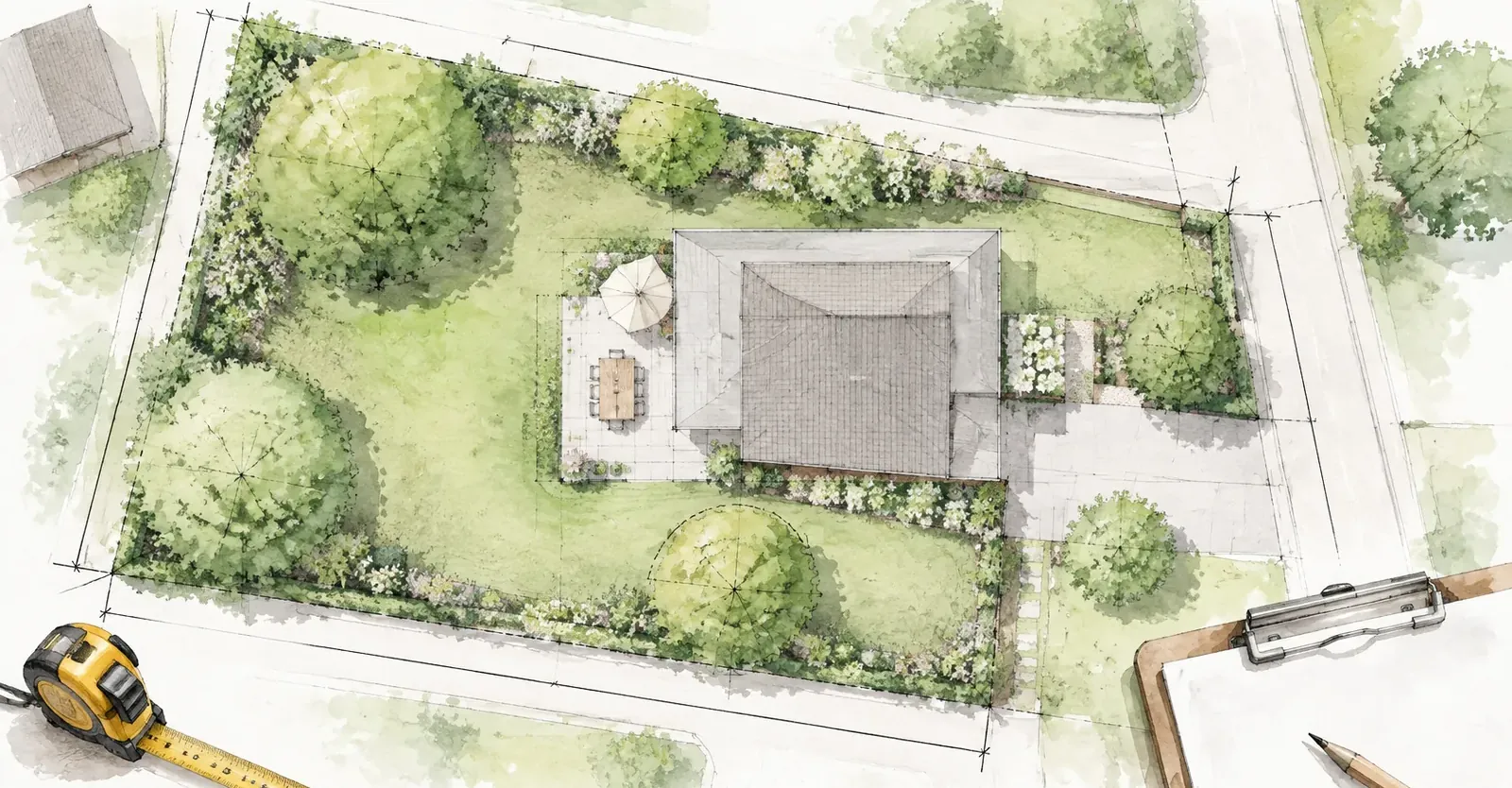
Before we design, we record what is there: plot boundaries, house and patio, existing trees and their canopies, levels and gradients. This survey is the basis for everything that follows, so the design really does fit the plot.
 AI · AI-generated
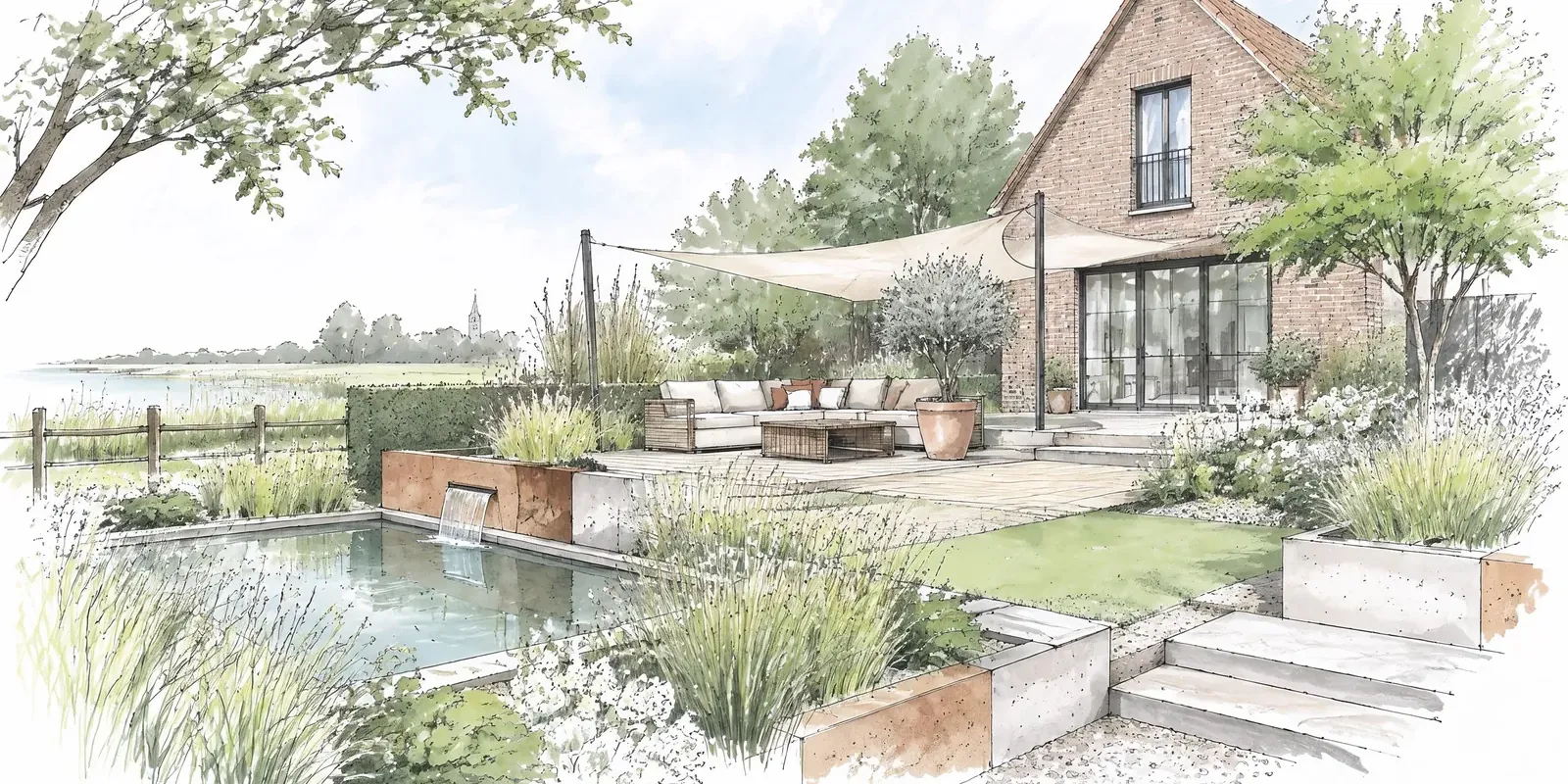
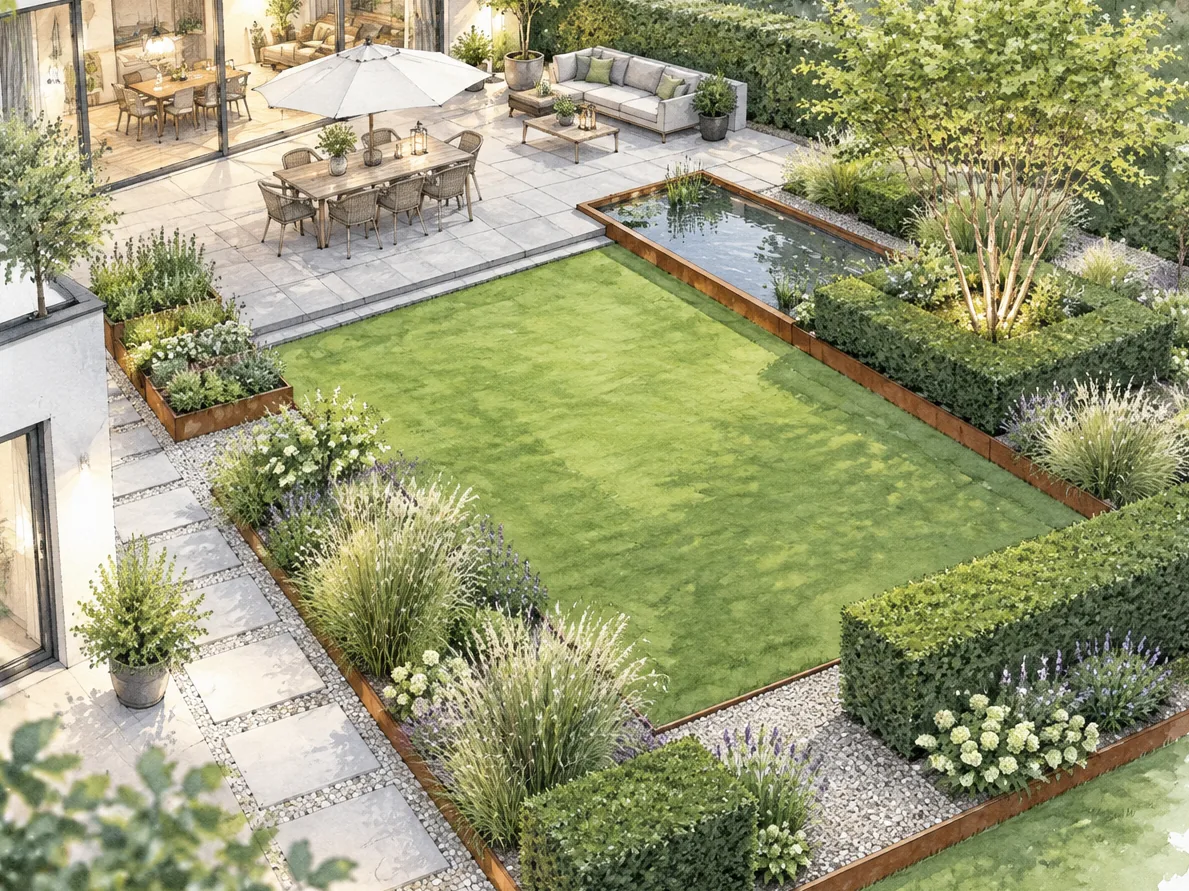
A first concept sketch shows mood, materials and levels before we move on to the detailed plan. Here: a patio with a shade sail in front of the brick house, a water basin edged in Corten steel, beds of ornamental grasses and broad steps.
 AI · AI-generated
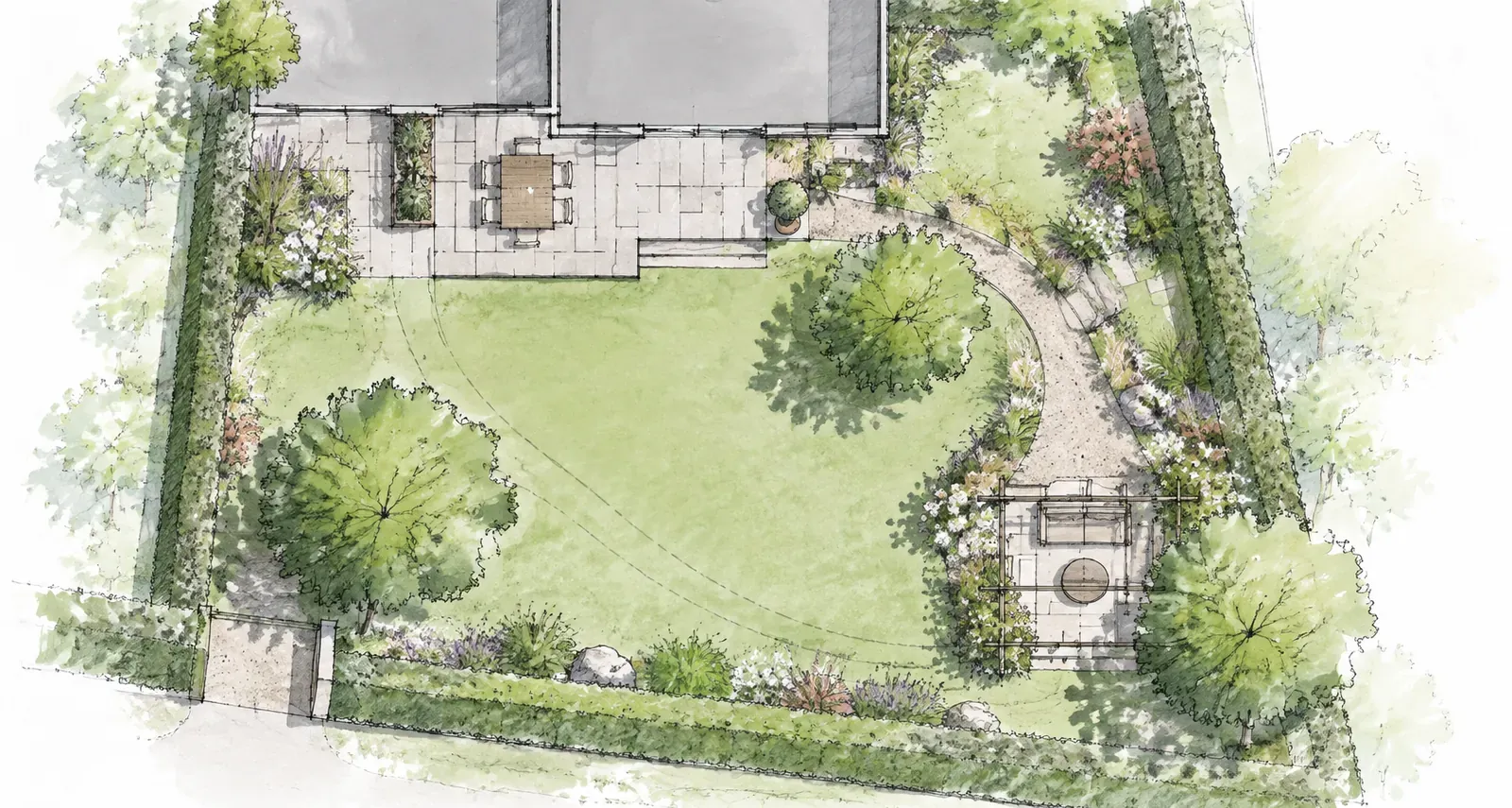
A garden plan shows at a glance how everything works together: the patio by the house, an open lawn, a curving path to a second seating area under the pergola, perennial beds along the edges, hedges as a frame and trees near the house for shade.
Patio, lawn, beds and seating areas are arranged as garden rooms and linked by paths. That keeps routes short and sight lines clear.
Paving, natural stone, timber or concrete, plus steps, walls and gradients. A few well-matched materials make the garden feel calm and well made.
Trees, hedges and perennials chosen to suit the light and soil, plus irrigation, lighting and drainage that run out of sight below ground.
Landscape architects think in spaces. A garden feels generous when you can't take it all in at a glance. A hedge, a band of perennials or a tree divides it into areas you only discover as you walk through. Sight lines guide the eye: from the living-room window to a tree, from a seat to a water basin.
These measurements are not hard rules, but they are good starting points. In the design we show you how they feel in your garden, with a visualisation if you wish.
AI · AI-generatedLarge-format slabs, fair-faced concrete or Corten steel, clean lines and a few striking plants. Ideal for modern houses and for anyone who likes a tidy, low-maintenance garden.
 AI · AI-generated
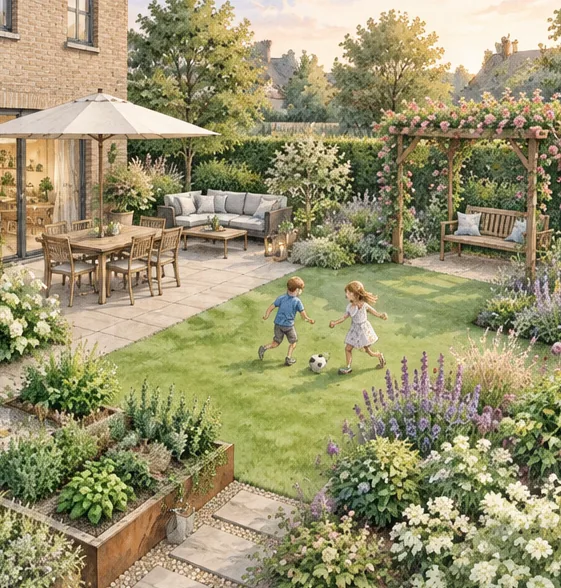
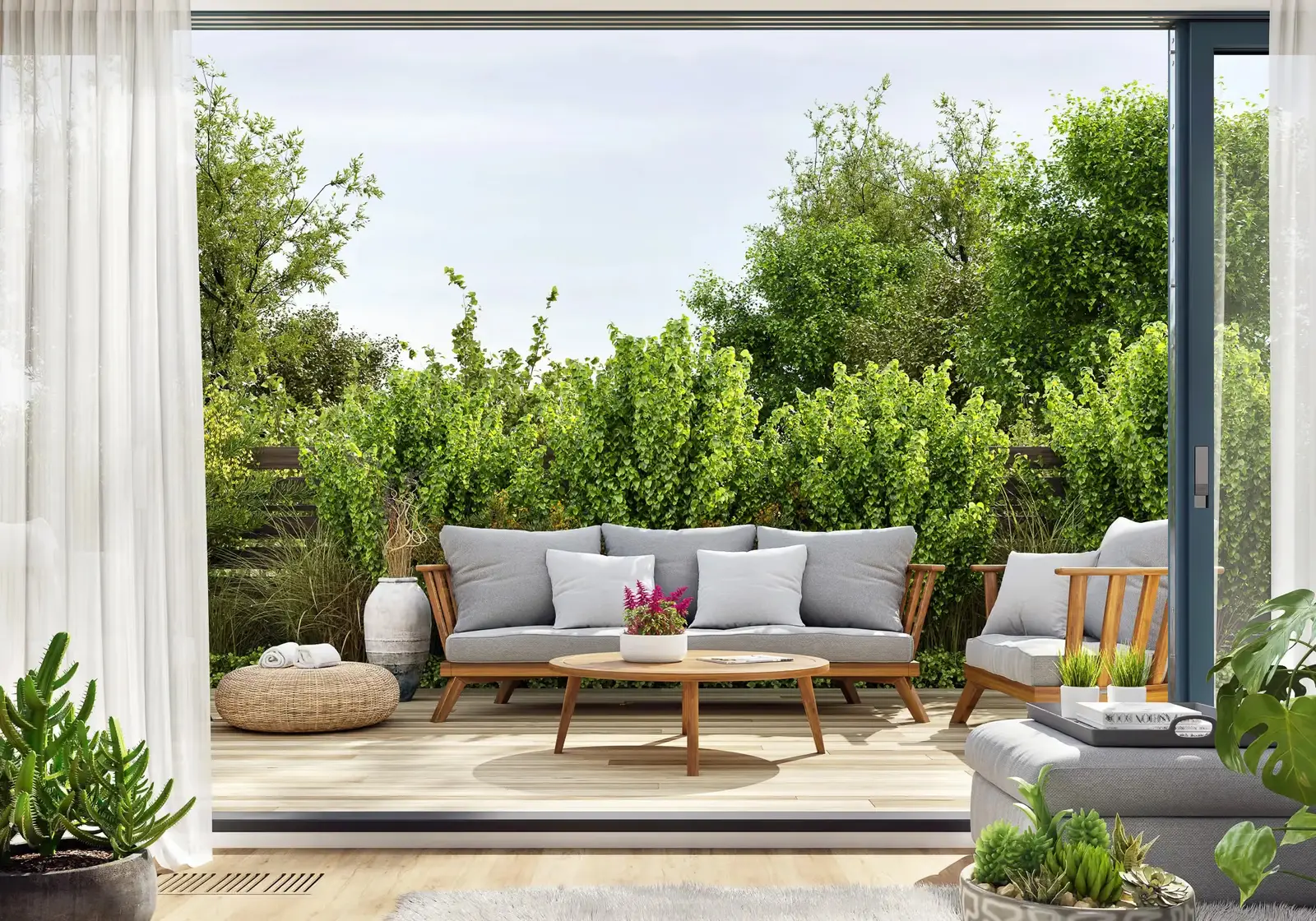
The patio becomes a second living room and the lawn a place to play. We allow enough room for a table and lounge seating, shade in the afternoon and an easy flow from house to garden.
 AI · AI-generated
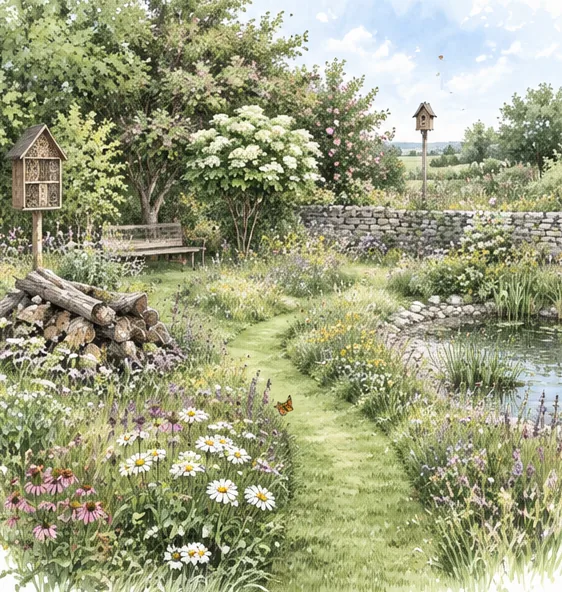
Hedges, shrubs and trees, and flowering perennials create habitat for birds and insects. Stepping stones, seating tucked into the greenery and spots of water turn the garden into a retreat.
 AI · AI-generated
Durable materials, densely planted beds and automatic irrigation keep the work down without making the garden look sterile. Good for people with busy working lives, and for front gardens.
 AI · AI-generated
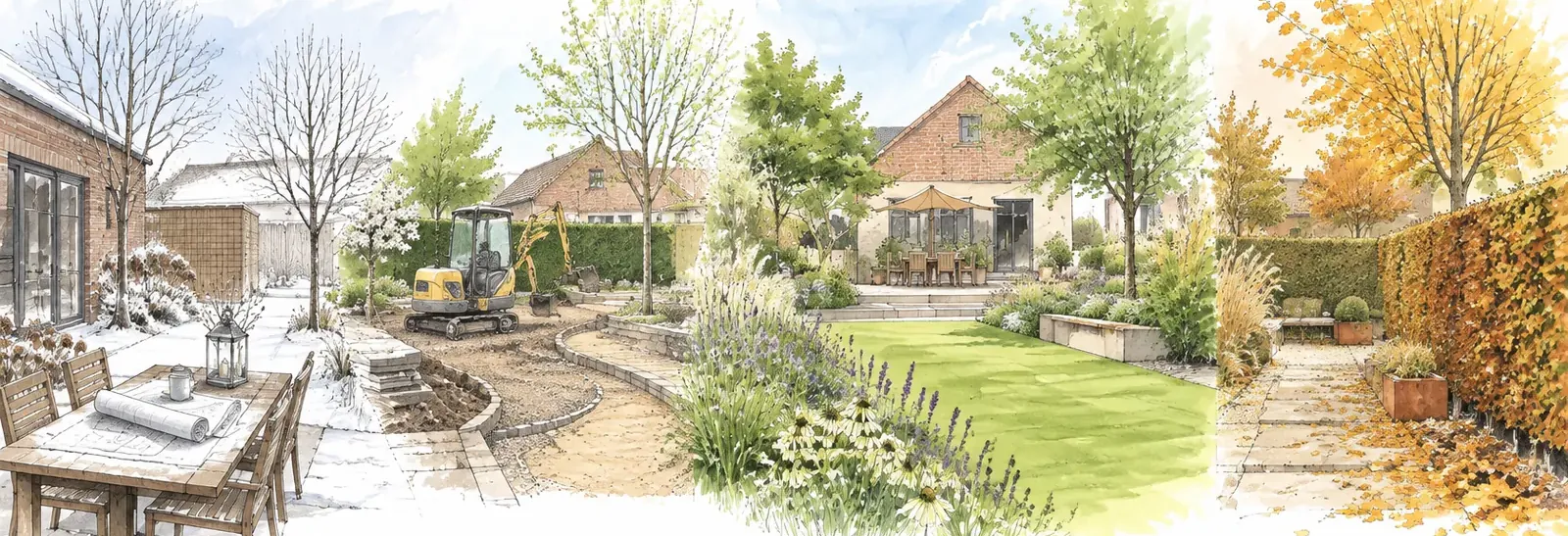
We plan in winter and build from spring: groundworks, pipes and cables, and paths first, then the patio and lawn. Perennials follow in late spring. Shrubs, trees and hedges are best planted in autumn.
 AI · AI-generated
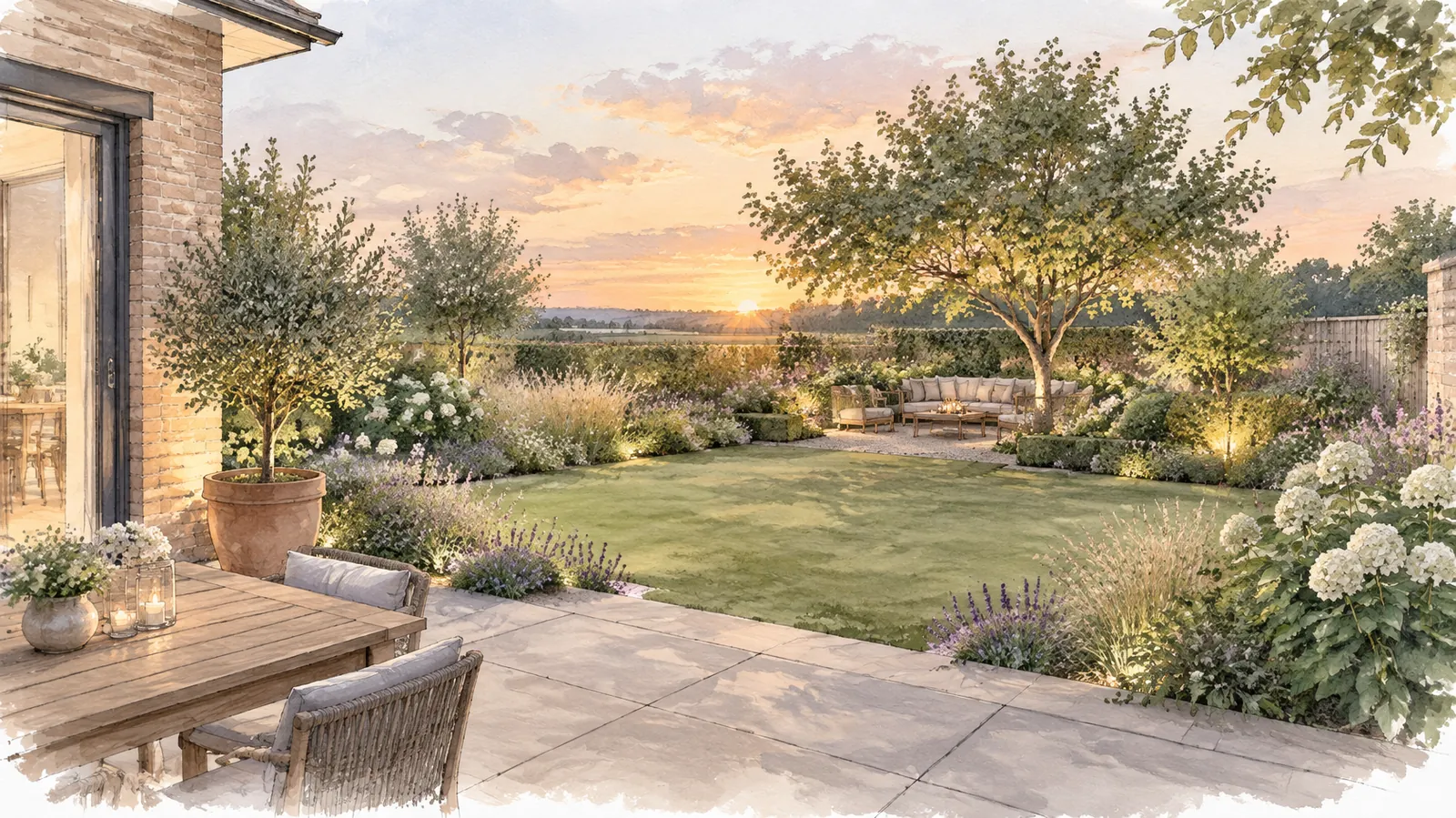
On request, the design includes a perspective drawing. It shows the garden as you will later see it from the patio. That makes sizes, levels and atmosphere tangible before the first spade goes into the ground.
The quiet months are ideal for the site visit and the design. The plan is then ready when the building season starts in spring, and you have a slot before the order books fill up.
Shrubs, trees and hedges root in best in autumn, when the soil is still warm and moist. Perennials and container-grown plants can go in almost all year round, even in summer if there is irrigation.
Summers are getting drier, winters wetter and heavy downpours more frequent. That changes which plants we choose. Instead of nothing but lawn and thirsty thuja hedges, we increasingly use robust perennial plantings, grasses, and shrubs and trees that cope with dry spells and still suit a northern German garden. Field maple, hornbeam and amelanchier are good candidates, as are cranesbill, catmint and sedum in the border.
We plan planting in layers: trees at the top, shrubs beneath, then perennials and ground cover. The planting closes up after two or three years, the soil stays covered and moist, and weeds barely get a chance. It looks better than bare earth between individual plants, and it is much easier to look after.
Our tip: Plan for rainwater from the start. A rainwater tank or a soakaway costs far less to install while the garden is being built than later on.
When a garden stops pleasing after a short time, individual plants are rarely to blame. It usually comes down to decisions made at the start.
Right by the house is not always the best spot. We check where the sun is at the times you actually sit outside and, if need be, plan a second seating area.
Three different types of paving plus timber and gravel in a small area look restless. Two or three well-matched materials are usually enough.
Young plants look small at first, so they are often planted too tightly. We plan for the size they will reach in a few years.
Power for lighting and a pump, water for irrigation, drainage for rain: anything not laid before the paving goes down is expensive to add later.
We look at the plot, soil, light and access, and talk about what you want, your daily life and your budget.
We record measurements, levels, existing trees, pipes, cables and connections. This is the basis for a realistic plan.
We show you the garden as a plan with garden rooms, paths, materials and plants, and agree the details with you.
You receive a quote listing every item. If you wish, we split the work into sensible phases.
Our own team builds your garden: groundworks, technical systems, paths and patio, lawn and planting, all from one firm.
At handover we explain the plants and the technical systems. If you wish, we take on the care for the first year or long term.
You don't need to bring a finished plan. It helps to think a few things through beforehand: how do you use the garden today, what bothers you, and what should it be able to do in future?
Pictures of gardens you like are as useful as a site plan or floor plan. A rough budget makes sure the design matches what you can spend.
Many of our clients build their garden in stages: patio, paths and technical systems in the first year, planting in the second. With an overall plan that is no problem, because each phase fits the next. Without a plan you often get awkward joins: a patio that doesn't match the steps built later, or a path lying exactly where the irrigation pipe should have run.
A new garden needs a little more attention in its first one to two years, until the plants have established. We give you a care plan, or take on pruning, feeding and lawn care for you.
The cost depends on the scope: a small front garden is quicker to design than a large plot with patio, paths and technical systems. Materials and construction make up the largest share later on. The ranges below are a guide. We give you an exact price after the site visit.
 AI · AI-generated
Not every garden has to be built from scratch. Often it is enough to reorganise individual areas: a larger patio, a new path, a privacy screen or planting that pulls the garden back together.
We look at what can stay, such as healthy trees, good hedges or a sound sub-base, and plan the changes so they can be carried out in stages. If you want to renew the lawn and irrigation at the same time, you will find more tips on our lawn page.
More on lawns & turf ⟶That depends on the size and scope. After a free first meeting you receive a quote. If you also commission us to build the garden, we credit part of the design fee.
No. With an overall plan in place, the garden can easily be built in phases, for example patio and technical systems first, planting and privacy screening later.
It usually takes a few weeks from the first meeting to the finished design, depending on the scope and how much there is to agree. Ideally, plan in autumn or winter for a build in spring.
A site plan or floor plan, photos of the plot, examples you like and a rough budget are all helpful. We sort out everything else on site.
Yes. Durable materials, densely planted beds and automatic irrigation cut the upkeep considerably.
Yes. We are a landscaping firm with our own team and build our own designs, from groundworks to planting.
Yes. We plan pipes, cables and drainage in from the start, so they are laid before the paving and before the lawn.
In Hamburg, mainly in the west and north, and in the Pinneberg district: Pinneberg, Halstenbek, Rellingen, Wedel, Quickborn, Schenefeld and Tangstedt.
Tell us about your plot and what you have in mind, ideally with photos or a site plan. We will get back to you and arrange a site visit.